
New concepts are coming! What exactly is the "waste-free city" that every place is scrambling to be?
Reduce plastic to protect the environment

Chongqing, Xining, Guangzhou, Yiwu. A keen reader sent us a question: why is there no waste in the city after the "waste-free city" is being built everywhere overnight?
In fact, the concept of "waste-free city" has been very popular since 2019. By 2021, all over the world are actively trying this advanced concept of urban management, the results have emerged one after another, so that the public gradually taste the benefits of "waste-free city", and the degree of discussion increases.
What is a "waste-free city"? why should we advocate a "waste-free city"? let's explore one by one by taking an inventory of wonderful cases at home and abroad.
What is a waste-free city
"waste-free city" is led by the new development concept of innovation, coordination, green, openness and sharing, by promoting the formation of a green development style and way of life, continuously promoting the source reduction and resource utilization of solid waste, and minimizing the amount of landfill. an urban development model that minimizes the environmental impact of solid waste.
By comprehensively considering the enthusiasm, representativeness, work basis and expected results of the candidate city government, in 2019, China selected 11 cities with conditions, foundation and appropriate scale as "waste-free cities", including Shenzhen City of Guangdong Province, Weihai City of Shandong Province, Shaoxing City of Zhejiang Province and Sanya City of Hainan Province.
At the same time, take Hebei Xiongan New area, Beijing Economic and technological Development Zone, Zhongxin Tianjin Ecological City, Guangze County in Fujian Province, and Ruijin City in Jiangxi Province as special cases, with reference to the pilot project of "waste-free city".
"waste-free city" does not mean that there is no solid waste, nor does it mean that solid waste can be fully utilized as resources, but an advanced concept of urban management. the aim is to achieve the goal of minimizing the production of solid waste, full utilization of resources and safe disposal of solid waste in the whole city.
In order to realize the strategy of ecological civilization and sustainable development, various countries have explored the establishment of a quantitative index system through the pilot construction of "waste-free cities", systematically summed up the pilot experience, and formed a replicable and popularized construction model.
Second, the case of a waste-free city
(1)
Japan
King of Flowers-- Recycling Packaging
The King of Flowers was founded in 1887 and is currently working in five career fields, such as cosmetics and skin care. "4R" action is the design idea that the King of Flowers has always carried out. It is understood that in 1991, the King of Flowers spontaneously began to reduce (Reduce), reuse (Reuse), recycling (Recycle) "3R" action in the enterprise, while reducing costs and promoting environmental protection, but also enhanced brand efficiency, and later increased Replace, forming a "4R" action.
In promoting the "4R" action of the packaging container, Huawang has made a lot of attempts. In order to reduce the plastic consumption of the container, Huawang concentrated the products in the container and designed to reduce the thickness of the bottle wall while maintaining the strength of the container. in order to achieve the miniaturization of the container.
In order to reduce the environmental load, Huawang promotes consumers' recycling of the original containers through the introduction of supplementary and replacement products. The new environmental protection brand "MyKireibyKAO" of Huawang adopts the film container developed by Huawang for packaging, which reduces the plastic consumption of the container by 50%.
(2)
Netherlands
Fenlo-Green Building
Cradle-to-cradle design (C2C design) is a school of circular economy thought, which aims to realize the continuous recovery and reuse of materials in technical or biological systems. The design of the new city hall building in Fenlo incorporates the concept of circular economy, and recyclable materials are selected and used in subsequent stages.
The advantage of this design concept is that the material can be sold back to the manufacturer through the "buy and repurchase" program and eventually reused, thus recouping some of the initial investment. This can not only achieve long-term economic benefits, but also protect the environment and human health.
The establishment of Fenlo City Hall also had a ripple effect on the surrounding area; as a result, an old community factory nearby was renovated to join the dormitory area. In addition, 72 new houses in accordance with the C2C principle will be built next to the Fenluo City Hall.
The city hall building in Fenlo
The plant north facade of the building is composed of more than 100 plants and aims to improve the air quality outside the building. This vibrant facade not only converts carbon dioxide into oxygen, filters particles and provides sound insulation, but also creates a perfect habitat for birds and insects. The green walls inside help to increase the humidity of the air.
(III)
America
1. New York-Recycling clothes
The # WearNext City pilot project, in conjunction with local fashion industry stakeholders, aims to encourage all New Yorkers to reuse clothes and avoid landfills. The project was launched in 2019 by the New York City Department of Sanitation (DSNY) and the New York City Economic Development Corporation (NYCEDC) in conjunction with the Allen MacArthur Foundation's Recycling Fashion initiative, fashion brands, collectors, recyclers and resale companies.
New York City Economic Development Corporation (NYCEDC)
An interactive online map created by the New York City Sanitation Department marks more than 1100 public and private recycling delivery sites across the city where citizens can deliver clothes they no longer need. New Yorkers are encouraged to participate in the donation, repair, resale or exchange of old clothes to give clothing a new life.
Clothing recovery and delivery station
two。 San Francisco-- Green carpet
In the spring of 2018, San Francisco passed a law requiring all carpets in city departments to have at least cradle-to-cradle silver certification. Its materials shall not contain antimicrobials, fluoride, flame retardant chemicals and other dangerous chemicals. Carpet adhesives should also meet similar requirements.
In addition, carpet fibers and gaskets must contain a certain amount of recyclable materials and can be recycled at the end of the product life cycle. The main purpose of San Francisco's initiative is to reduce the number of carpets sent to landfills (currently more than 80% of carpets are discarded after use in the United States).
(4)
Brazil
Belo Horizonte-computer repair Center
The computer Rehabilitation Centre (CRC) plays an indispensable role in the development of digitization, skills development and waste reduction in the city of Belo Horizonte. CRC is an electronics remanufacturing facility where citizens from low-income communities receive regular training on how to repair donated waste electronic equipment to normal working conditions. The refurbished equipment will be shipped to more than 300 "digital inclusive sites" in the city for free use by the people of Belo Horizonte. The computer repair Center is operated by Prodabel, the city's information technology supplier, and is part of the federal government's computer inclusion (Computadores para Inclus o) program. The purpose of the plan is to establish similar centers across the country.
Belo Horizonte community citizens receive regular training
(5)
China
Shenzhen-- electrification of urban travel
In 2017, Shenzhen became the first city in the world to achieve the goal of pure electrification of all buses. The move aims to reduce emissions, reduce noise pollution and improve air quality, while encouraging the development of electric travel. The use of the bus
About the Creator
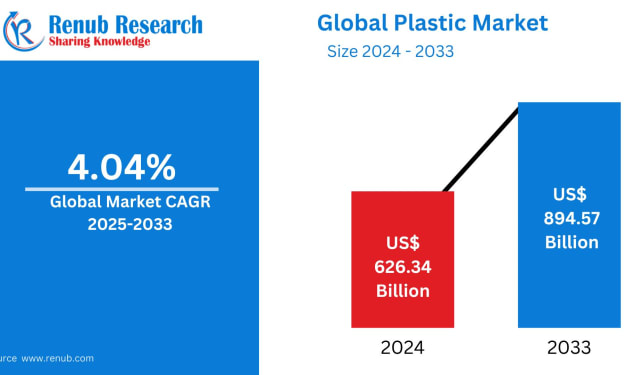
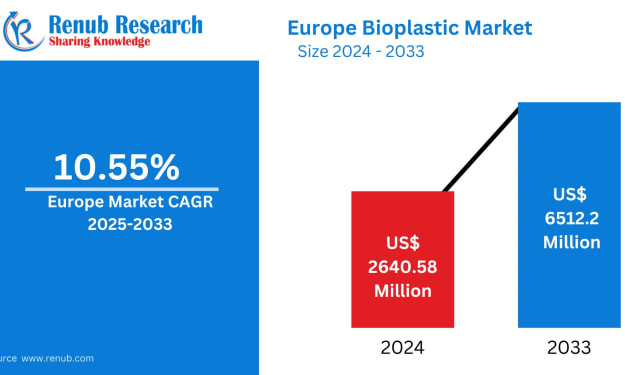
Global Plastic Market Size and Forecast 2025–2033: Innovation, Sustainability, and the Future of a $894 Billion Industry
Introduction: A Market That Touches Every Industry The global plastics industry remains one of the most influential pillars of modern manufacturing, supporting everything from food packaging and construction to healthcare, automotive, and electronics. Despite growing environmental scrutiny, plastics continue to evolve, adapt, and expand—driven by technological innovation, economic growth in emerging markets, and the urgent shift toward recyclable and biodegradable materials.
By Janine Root about 13 hours ago in Earth


Comments
There are no comments for this story
Be the first to respond and start the conversation.