
Most “Eco” Utensils Fail in Heat—CPLA Doesn’t
Why CPLA Cutlery Is the Game-Changer for Sustainable, Heat-Resistant Tableware
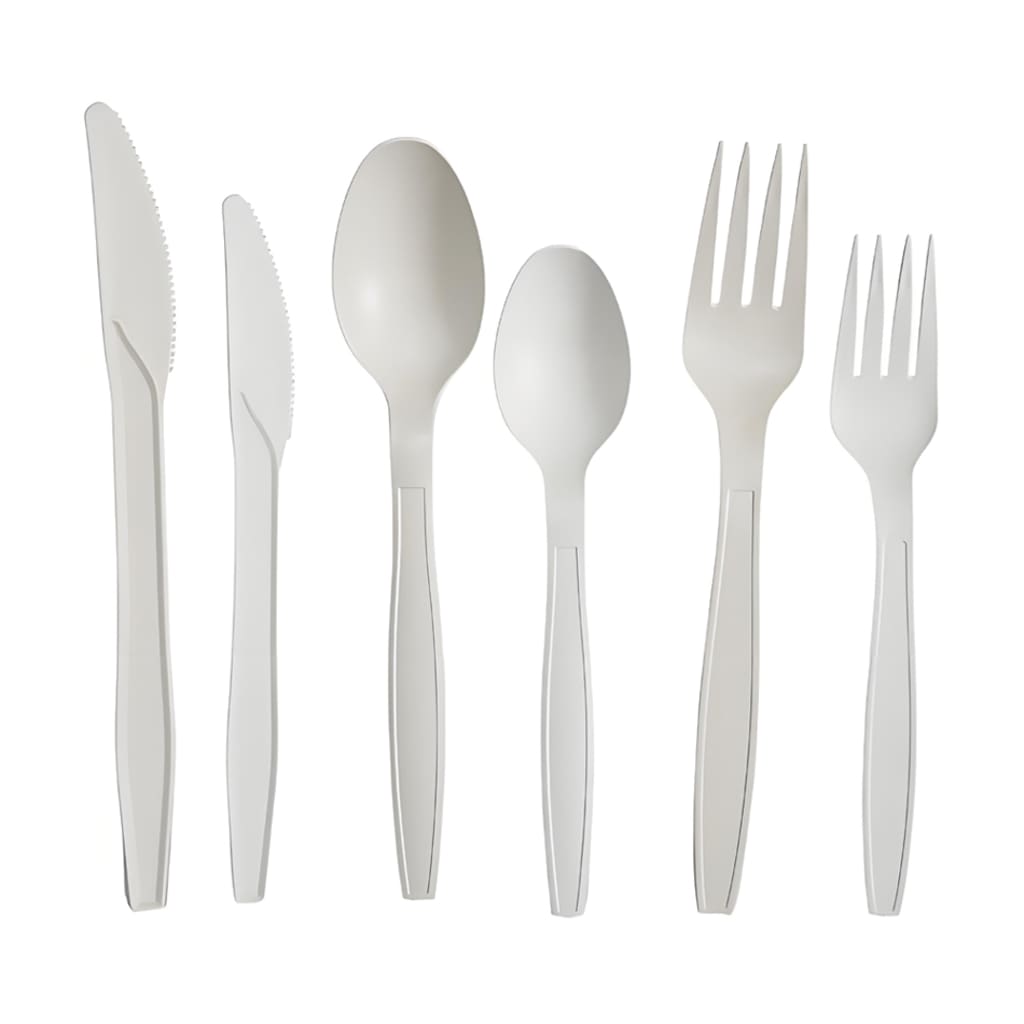
🌱 Introduction: The Hidden Flaw in Many “Eco” Utensils
As sustainability becomes a mainstream requirement in the foodservice industry, brands and businesses are rushing to replace traditional plastic with greener alternatives. From bamboo to wood to cornstarch blends, dozens of materials are being touted as “eco-friendly.”
But there’s a major issue that few people talk about: heat resistance.
While many “green” utensils look the part, they often warp, crack, or even splinter when used with hot food. This not only ruins the dining experience but can also damage your brand reputation.
That’s where CPLA cutlery comes in.
Specifically engineered to withstand high temperatures, CPLA utensils offer a sleek, durable, and compostable alternative to traditional plastic. In this article, we’ll explore why CPLA compostable cutlery stands out, how it performs, and why your brand might want to consider switching to a CPLA cutlery set—especially if you serve hot meals.
🍴 What Is CPLA and Why Does It Matter?
CPLA, or Crystallized Polylactic Acid, is a modified version of PLA—a plant-based plastic derived from corn or sugarcane. Through a crystallization process, PLA is converted into CPLA, which significantly enhances its strength and temperature resistance.
Unlike wood, paper, or bamboo-based utensils, CPLA cutlery:
- Can withstand temperatures up to 100°C (212°F)
- Maintains its shape and rigidity with hot food and liquids
- Offers a smooth, modern finish akin to traditional plastic
- Is certified compostable in industrial composting environments
In short, CPLA compostable cutlery fills the performance gap that most "eco" utensils can’t.
🔥 Why Heat Resistance Is Critical
Serving soup with a spoon that warps? Cutting steak with a flimsy knife? These are common frustrations with many biodegradable utensils.
Why Most Eco Utensils Fail:
- Wood cutlery may splinter or absorb moisture
- Bamboo is strong but expensive and sometimes chemically treated
- PLA utensils (non-crystallized) deform above 45–50°C
- Pape-based options aren’t designed for full meals, especially hot ones
According to a 2021 study in the Journal of Sustainable Materials and Technologies, over 62% of consumer complaints about compostable cutlery involve performance issues under heat.
That’s why businesses seeking function without plastic guilt are switching to CPLA cutlery sets.
🧪 Scientific Evidence: CPLA Performs Under Pressure
A 2022 comparative study by the University of Freiburg’s Environmental Materials Lab tested various bioplastic utensils under real foodservice conditions.
Results:
- CPLA utensils retained 96% of their structural integrity after 15 minutes in 90°C soup
- PLA utensils deformed after 3 minutes
- Wooden utensils showed surface breakdown and absorbency
- CPLA showed no harmful residue or microplastics in post-use composting
This reinforces what many in the industry have already seen: CPLA compostable cutlery offers the best balance of strength, sustainability, and heat resistance.
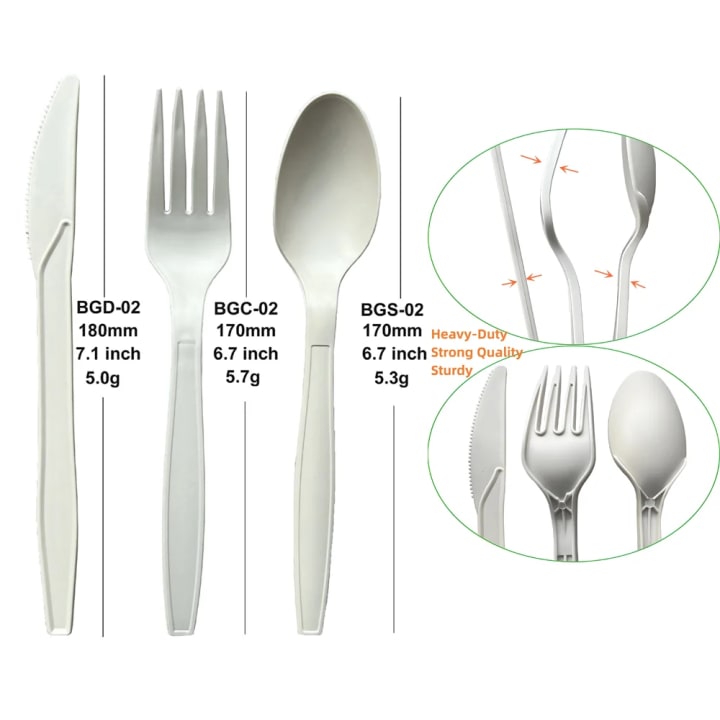
🥄 What Comes in a CPLA Cutlery Set?
A typical CPLA cutlery set includes:
- Fork, knife, and spoon
- Optional napkin or compostable pouch
- Custom branding options (embossing, color, shape)
- Cafés and quick-service restaurants
- Catering and meal delivery kits
- Airlines, trains, and eco-conscious event venues
These sets are widely used in:
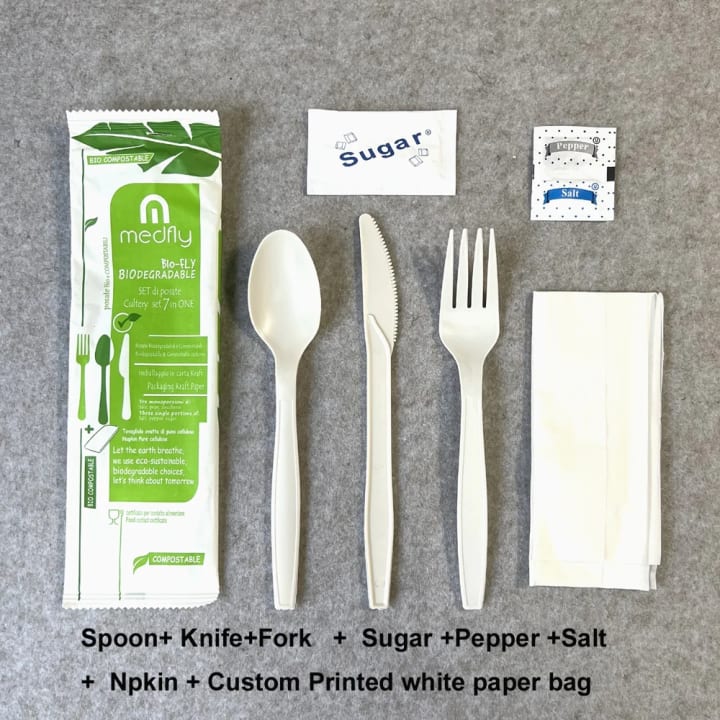
Brands also have the option to produce custom-designed CPLA utensils to align with their visual identity and packaging theme.
♻️ The Compostability Caveat
Like many bioplastics, CPLA compostable cutlery is industrially compostable, meaning it requires:
- High heat (58°C and above)
- Aeration and humidity control
- Specialized composting facilities
Certified Standards to Look For:
- EN 13432 (EU)
- ASTM D6400 (USA)
- OK Compost (TÜV Austria)
In industrial conditions, CPLA breaks down in 90–180 days into water, CO₂, and organic matter—without leaving toxins or microplastics.
Note: CPLA will not compost effectively in backyard compost piles or landfills. Proper disposal systems must be in place.
🧠 Brand Value: Not Just a Functional Tool
Today’s consumers view packaging and utensils as extensions of brand ethics. A 2023 McKinsey study reported that:
- 70% of Gen Z diners judge a restaurant's sustainability by its packaging and cutlery
- 45% say they prefer stylish, compostable utensils over generic eco options
- Businesses using branded sustainable cutlery experience a 12–18% increase in customer retention
This makes CPLA cutlery a tool for brand storytelling, not just environmental compliance.
📦 Real-World Application: A Quick Case Study
TerraBowl, a fast-casual noodle bar in Toronto, switched to CPLA utensils in 2023 after customer complaints about warped PLA spoons.
Impact After 90 Days:
- 🔥 97% reduction in utensil-related complaints (especially with hot soup orders)
- ✅ Met all city compostability regulations
- 📈 Reported a 22% increase in 5-star customer reviews mentioning “eco packaging”
- 🧾 Secured an annual contract with a corporate catering client due to sustainability policies
The key takeaway: Switching to CPLA compostable cutlery solved a performance issue while reinforcing the brand’s green positioning.
🏭 Choosing the Right Supplier
When sourcing CPLA cutlery sets, choose partners that:
- Offer third-party compostability certifications
- Provide OEM/ODM customization (logo, packaging, color)
- Use pure, non-blended materials (no petroleum-based additives)
- Understand export and food-contact compliance (FDA, EU, LFGB)
A reliable supplier ensures your CPLA utensils perform under pressure, communicate your brand values, and meet compliance globally.
🧩 CPLA vs. Other Materials at a Glance
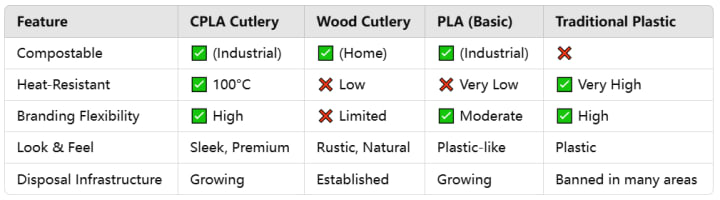
CPLA compostable cutlery uniquely balances durability, aesthetics, and compostability, making it the ideal next-gen replacement.
✅ Final Thoughts: Heat-Proof Your Sustainability Strategy
In a sea of greenwashed packaging and underperforming eco utensils, CPLA cutlery sets stand out for a simple reason: they work—even with hot food.
They combine:
- High-performance engineering
- Modern design and branding potential
- Certified industrial compostability
- A strong alignment with today’s consumer values
If you’re serving meals above room temperature and want true sustainability without compromising usability, it’s time to consider CPLA.
Because most “eco” utensils fail under pressure—but CPLA doesn’t.
About the Creator
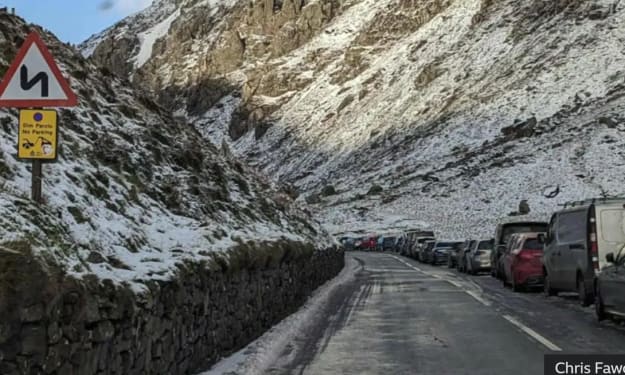
Police Warn Against ‘Ridiculous’ Parking at Beauty Spot Amid Snow Disruption
Heavy snowfall may transform beauty spots into winter wonderlands, but it also brings serious risks when visitors ignore basic safety and parking rules. Police have issued a strong warning against what they describe as “ridiculous” parking at a popular beauty spot, after snow disruption led to blocked roads, stranded vehicles, and delayed emergency access. As wintry conditions continue to affect travel, authorities are urging the public to prioritise safety over scenic photographs, reminding drivers that poor parking decisions can have life-threatening consequences during severe weather. Snowfall Turns Scenic into Hazardous The recent spell of snow attracted large numbers of visitors eager to enjoy picturesque landscapes blanketed in white. Hillsides, national parks, and rural viewpoints quickly became hotspots for walkers, families, and amateur photographers. However, police say the surge in visitors coincided with widespread parking chaos. Cars were left abandoned on narrow roads, grass verges, gateways, and even blocking access routes meant for emergency vehicles and local residents. What may appear to drivers as a harmless decision to “park for just a few minutes” can quickly escalate into a major safety issue—especially when snow and ice reduce road space and visibility. Police Response and Public Warning Local police forces have taken to social media and public statements to express frustration at the situation. Officers described some parking behaviour as not only irresponsible but dangerous, particularly given the weather conditions. Police warned that emergency vehicles, including ambulances and mountain rescue teams, were struggling to reach areas due to blocked roads. In severe weather, response times are already under pressure, and illegally parked vehicles can mean the difference between life and death. Authorities have also made it clear that enforcement action will be taken where necessary. Drivers risk fines, towing, and penalty points if their vehicles obstruct roads or endanger others. Impact on Emergency Services One of the most serious consequences of poor parking during snow disruption is its impact on emergency services. Narrow rural roads, already difficult to navigate in icy conditions, become completely impassable when cars are parked irresponsibly. Fire crews, paramedics, and rescue teams rely on clear access routes, particularly in popular beauty spots where accidents such as slips, falls, or stranded walkers are more likely in winter conditions. Police stressed that emergency vehicles do not have the luxury of “finding another way around” when roads are blocked. Delays caused by inconsiderate parking put both responders and the public at risk. Local Residents Left Frustrated It is not only emergency services that are affected. Residents living near popular beauty spots often bear the brunt of snow-related disruption. Driveways are blocked, access to homes becomes difficult, and essential journeys for work, medical appointments, or supplies are delayed. Many locals report feeling ignored by visitors who treat rural communities like seasonal attractions rather than lived-in areas. During winter weather, this frustration is magnified, as residents may already be dealing with power outages, poor road conditions, and limited access to services. Police have echoed these concerns, reminding visitors that beauty spots are often surrounded by working communities, not just open spaces for leisure. Why Snow Makes Parking More Dangerous Snow significantly reduces road safety margins. It narrows carriageways, hides road markings, and makes verges unstable. A car parked partly on a road might seem manageable in normal conditions, but in snow it can create blind corners, force vehicles into oncoming traffic, or cause skidding accidents. Additionally, snowploughs and gritters require space to operate effectively. Poorly parked vehicles can prevent these essential services from clearing roads, prolonging disruption for everyone. Authorities warn that even experienced drivers can underestimate how quickly conditions can change in winter weather. Social Media and the “Snow Day” Effect Police have also pointed to social media as a contributing factor. Viral images of snow-covered landscapes often encourage spontaneous trips without proper planning. People see beautiful photos and head out without considering parking availability, road conditions, or weather warnings. This “snow day” mentality can overwhelm rural infrastructure not designed for large volumes of traffic, particularly during adverse weather. Police urge visitors to check local advice before travelling and to be prepared to turn back if conditions are unsafe. Advice for Safe Winter Visits In response to the ongoing disruption, authorities have shared clear guidance for anyone planning to visit beauty spots during snowy conditions: Avoid unnecessary travel during severe weather warnings Park only in designated areas, never on roads or verges Do not block gateways, tracks, or emergency access routes Check weather and road conditions before setting off Be prepared to leave if parking is unavailable Police emphasise that no photograph or short walk is worth risking lives or causing serious disruption. Enforcement and Accountability While officers prefer to rely on public cooperation, they have confirmed that enforcement will be stepped up if irresponsible behaviour continues. Vehicles may be ticketed or removed, particularly if they pose a danger or obstruction. Authorities stress that enforcement is not about spoiling enjoyment but about ensuring public safety. Winter conditions demand higher levels of responsibility from drivers, not less. A Shared Responsibility Snow transforms landscapes, but it also tests public behaviour. Police warnings against “ridiculous” parking are not just expressions of frustration—they are urgent reminders that safety must come first. Enjoying nature is a privilege, not a right, especially during extreme weather. By parking responsibly and respecting local communities, visitors can help ensure that beauty spots remain accessible, emergency services remain effective, and winter days do not turn into preventable disasters. As snow disruption continues, the message from police is clear: think before you park, or don’t park at all
By Muhammad Hassan7 days ago in Earth



Comments
There are no comments for this story
Be the first to respond and start the conversation.