
It takes only 100 days to fly from Earth to Venus, so why would humans give up on landing on Venus
Venus landings are risky with little reward

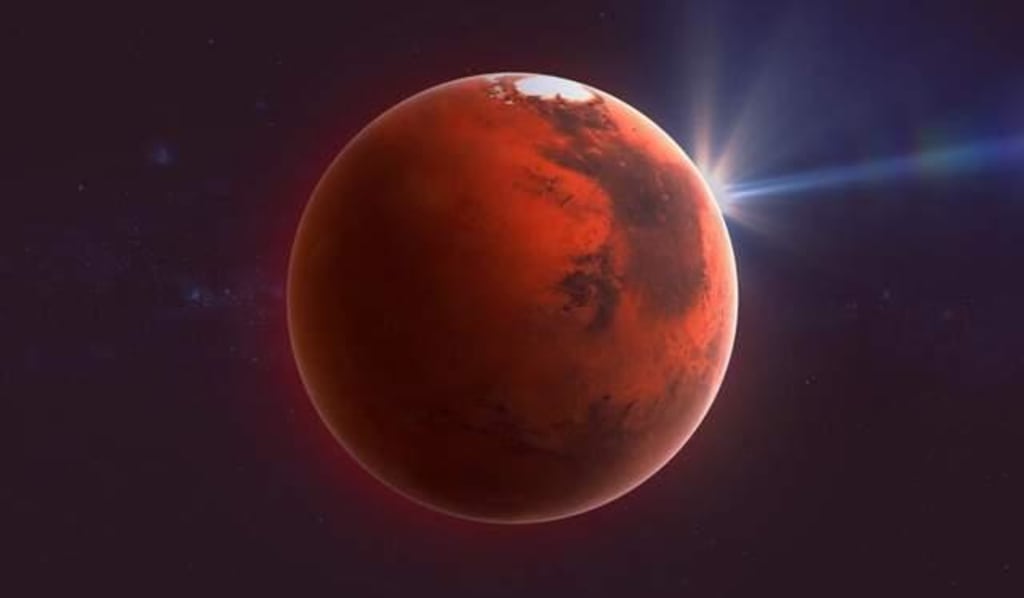
Their dream of mankind is the sea of stars, and the first step to realizing this dream should be to land on other planets, even if mankind cannot go there personally, it is possible to launch some probes. In the solar system, Venus and Mars are both planets adjacent to the Earth, where the closest distance between Venus and the Earth is about 40.5 million kilometers, while the closest distance between Mars and the Earth is about 55 million kilometers.
In contrast, landing on Venus should be easier, in theory, human-launched probes from Earth to Venus in just 100 days, but in recent years, humans are only keen to land on Mars, but not interested in landing on Venus. Why would humans give up on landing on Venus? Let's talk about this topic.
In our human eyes, Venus is the brightest object in the sky except for the Sun and the Moon, so we have been paying extra attention to Venus for a long time.
With the increasing level of observation, humans gradually realized that Venus is a rocky planet very close to the Earth, and its volume, mass, and density are very close to the Earth, which undoubtedly further enhanced the human attention to Venus, and people even optimistically speculate that Venus is likely to be a vibrant planet like the Earth.
However, Venus has a dense atmosphere, which led to the fact that humans on Earth can not see the surface of Venus at all with telescopes alone, so everyone is looking forward to being able to launch a probe into Venus.
In 1961, the Soviet Union launched the first human Venus probe, Venus 1, but unfortunately, the mission failed because the sensor on the sun-facing side of the probe overheated, but it also started the human exploration of Venus. Venus, the prelude to human exploration.
In 1962, the U.S. launched Mariner 2, which became the first probe to successfully fly by Venus, during the flyby, its closest distance to Venus was less than 35,000 kilometers. However, the data returned by Mariner 2 showed that the surface temperature of the planet was as high as 400 degrees Celsius, which is not suitable for life and is undoubtedly very disappointing.
Nevertheless, in the following days, the United States and the former Soviet Union still launched dozens of probes to Venus, and the former Soviet Union also carried out a series of landing missions to Venus. Between 1961 and 1983, the former Soviet Union launched 28 Venus probes, of which 13 entered the atmosphere of Venus, and 8 successfully landed on the surface of Venus.
The measured data from these probes show that Venus has an extremely dense atmosphere, so much so that it's surface atmospheric pressure is about 92 times that of Earth (which is roughly the same as the pressure in Earth's oceans at a depth of 900 meters).
The main gas in Venus' atmosphere is carbon dioxide, which accounts for about 96.5% of its atmospheric mass, while the rest of the gas is mostly nitrogen, with traces of other gases (such as sulfur dioxide).
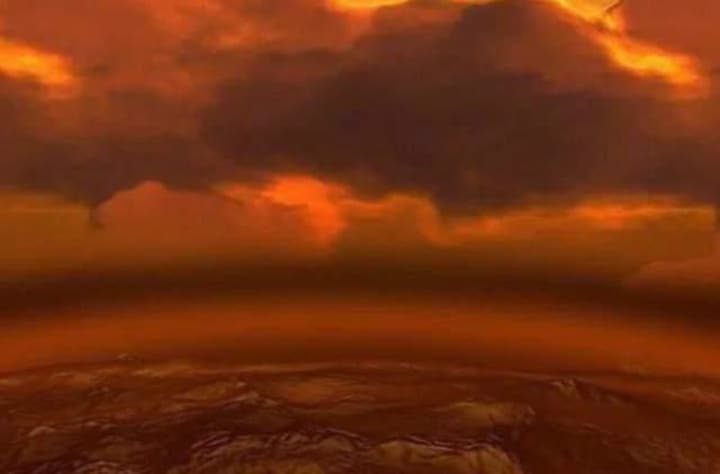
A large amount of carbon dioxide on Venus produces the strongest greenhouse effect in the solar system, resulting in an average temperature of 464 degrees Celsius on the surface of Venus, so high that it even exceeds the melting point of some metals (such as lead), so liquid water can't exist on the surface of Venus.
What's more, the surface of Venus is isotherm, whether at the equator or the poles, high mountains or low valleys, its temperature is similar to 464 degrees Celsius, which means that there is no "cool place" on Venus, no matter where the probe lands on the surface of Venus, it can not escape from the heat.
In addition, there is a large amount of sulfuric acid in the thick clouds of Venus, this sulfuric acid will occasionally condense into "raindrops" to the ground, and due to the high temperature of the surface of Venus, these "sulfuric acid rain" will evaporate before falling to the ground, with As this process is repeated, a large acidic environment is formed in the near-Earth space of Venus.
The high temperature, high pressure, and high corrosives make the natural environment on Venus so harsh that it has been described as a "hell planet". In such a planet, not to mention humans, even sturdy probes can not last long. In fact, among the eight probes that successfully landed on Venus mentioned earlier, the longest one, Venus 13, only lasted 127 minutes on the surface of Venus.
Thus we can clearly see that the risk of landing on Venus is very high, but the reward is very small, after all, each probe requires a lot of human and material resources. Because of this, after the 1980s, mankind gave up landing on Venus, and the only two ways to explore Venus at close range are flyby and orbit. Predictably, mankind will not restart the mission of landing on Venus until technology develops enough to cope with the harsh environment on Venus.
Compared with Venus, Mars is much better, although Mars is more distant, and its natural environment is also very unfriendly to humans, but human es can work here for a long time, and with the current human technology, can also be built on Mars for a long time to stay closed base, so of course, Mars has become the first choice of human landing on other planets, perhaps shortly, the human figure can appear on Mars.
Well, that's all for today, welcome to follow us and we'll see you next time.
About the Creator
Baudamolova
Science is the graveyard of buried faded the various ideas。
Keep reading
More stories from Baudamolova and writers in Earth and other communities.
If there are "Venusian" on Venus, how scary would the Earth be in their eyes?
In the eyes of our earthlings, Venus is undoubtedly a terrible planet, and conversely, if there are "Venusian" on Venus, how terrible would the earth be in their eyes? First of all, this is an impractical question, after all, according to our earthly observation for many years, Venus is not even the simplest life, not to mention intelligent life.
By Baudamolova3 years ago in Earth
Elon Musk Says Retirement Savings “Won’t Matter” in 20 Years—Here’s What Experts Think
Recently, Elon Musk sparked a heated debate on social media with a bold claim: in 20 years, traditional retirement savings “won’t matter.” The Tesla and SpaceX CEO suggested that the way people think about money and retirement today might be completely obsolete in a couple of decades. As usual, Musk’s statements are equal parts provocative and visionary, leaving many wondering whether they should rethink their financial plans entirely. To get clarity, we reached out to seven personal finance and AI experts to hear their thoughts on Musk’s prediction. Their insights provide a mix of caution, optimism, and futuristic thinking. 1. The Case for Obsolescence: AI and Automation AI strategist Dr. Karen Liu believes Musk isn’t exaggerating when he talks about the diminishing importance of retirement savings. “If AI and automation continue at the current pace, many traditional jobs could disappear,” she explains. “By 2046, people might earn income from AI-driven ventures, digital assets, or royalties rather than a 9-to-5 paycheck. In that case, the way we save for retirement could indeed look very different.” She emphasizes that new financial models might emerge, such as universal basic income (UBI) or AI-managed wealth portfolios, making conventional retirement accounts less critical. “People might no longer need 401(k)s or IRAs in the same way we do now,” she adds. 2. The Human Factor: Some Things Don’t Change Personal finance advisor Marcus Bell takes a more conservative view. “Even if the economy changes drastically, money management skills won’t be irrelevant,” he says. “Musk may be right that retirement savings as we know them may evolve, but having a financial cushion will always matter. Emergencies, healthcare costs, and life changes won’t disappear.” Bell suggests a hybrid approach: continue contributing to traditional retirement accounts while exploring alternative investments like digital currencies, AI-managed funds, or entrepreneurial ventures. 3. Cryptocurrency and the Digital Asset Revolution Crypto expert Priya Desai sees Musk’s comment as a nod toward the rise of digital assets. “By 2046, much of personal wealth may reside in cryptocurrencies, tokenized real estate, and NFTs rather than bank accounts or pensions,” she says. Desai believes that blockchain technology could redefine ownership and wealth accumulation, making traditional retirement savings less central. However, she cautions: “Digital assets are highly volatile. While they may replace some retirement vehicles, they aren’t a guaranteed substitute. Diversification will remain crucial.” 4. AI-Powered Wealth Management AI entrepreneur Rohan Kapoor points out that AI itself could make traditional retirement planning almost obsolete. “Imagine AI systems that continuously optimize your investments, taxes, and spending in real-time,” he says. “If AI handles wealth accumulation more efficiently than humans, you may not need to manually save and plan decades in advance.” Kapoor predicts that by 2046, AI advisors could create personalized financial lifelines that automatically adjust for inflation, market changes, and lifestyle goals. In this scenario, traditional 401(k)s might feel outdated. 5. The Social Safety Net Factor Economist Dr. Elise Morgan reminds us that social and political structures will also play a role. “Even if technology changes how wealth is accumulated, government programs like Social Security, healthcare, or UBI will shape retirement,” she explains. “Musk’s statement assumes a high-tech, highly automated economy, which is just one possible scenario.” Morgan urges caution: relying solely on futuristic predictions could be risky. Traditional savings may still act as a fallback if economic or technological disruptions fail to deliver as Musk anticipates. 6. Mindset and Wealth Beyond Money Financial psychologist Sandra Liu emphasizes that wealth isn’t only monetary. “Even if retirement accounts lose their traditional meaning, financial literacy, resourcefulness, and the ability to leverage technology will remain critical skills,” she says. “Musk’s prediction is more about mindset than accounts. People who can adapt, innovate, and use technology to generate income will thrive regardless of conventional savings.” 7. Preparing for the Future, Not Panicking Finally, futurist Jared Thompson encourages a pragmatic approach: “Don’t panic or abandon your retirement plan just because Elon Musk said so. Think of it as a signal to diversify—invest in tech, learn AI skills, and explore new income streams.” Thompson suggests a “layered strategy”: keep some traditional retirement savings while experimenting with AI-driven investment platforms, cryptocurrencies, and entrepreneurial projects. What Does This Mean for You? Musk’s prediction may sound extreme, but the expert opinions reveal a spectrum of possibilities. Here’s a practical takeaway: Keep saving, but diversify: Don’t abandon retirement accounts, but explore AI-driven investments, crypto, or digital assets. Invest in skills: AI, coding, and tech literacy may be as valuable as cash reserves in 20 years. Embrace flexibility: Financial plans should be adaptable to rapid technological and societal changes. Mind the basics: Emergency funds, debt management, and smart spending remain essential regardless of tech trends. In short, Musk’s warning isn’t necessarily a call to abandon traditional retirement planning—it’s a reminder that the future of money is changing rapidly. Those who combine conventional strategies with an eye on emerging technologies may be the ones who truly thrive in 2046. Conclusion: Elon Musk’s claim that retirement savings “won’t matter” in 20 years is provocative, but it opens an important conversation about the intersection of finance, technology, and the future of work. While some experts see it as a harbinger of radical change, others stress prudence and flexibility. Either way, the message is clear: the next two decades will demand both financial savvy and tech literacy. The question isn’t whether retirement savings will disappear—it’s whether you’ll adapt to the evolving financial landscape.
By Muhammad Hassan4 days ago in Earth
Things you don't know about Africa
Africa: What You Probably Didn’t Know Article No. 1671 Tuesday, 25 February 2020 By Wardah Baloch In terms of land area, Africa is the second-largest continent in the world. It covers nearly 22 percent of the world’s total landmass and about 6 percent of the Earth’s total surface area. Only Asia is larger than Africa in size.
By Sudais Zakwan5 days ago in Earth



Comments
There are no comments for this story
Be the first to respond and start the conversation.