
Israel and Palestine: A History of Conflict and Hope for Peace
Decades of Dispute: Tracing the Israel-Palestine Conflict
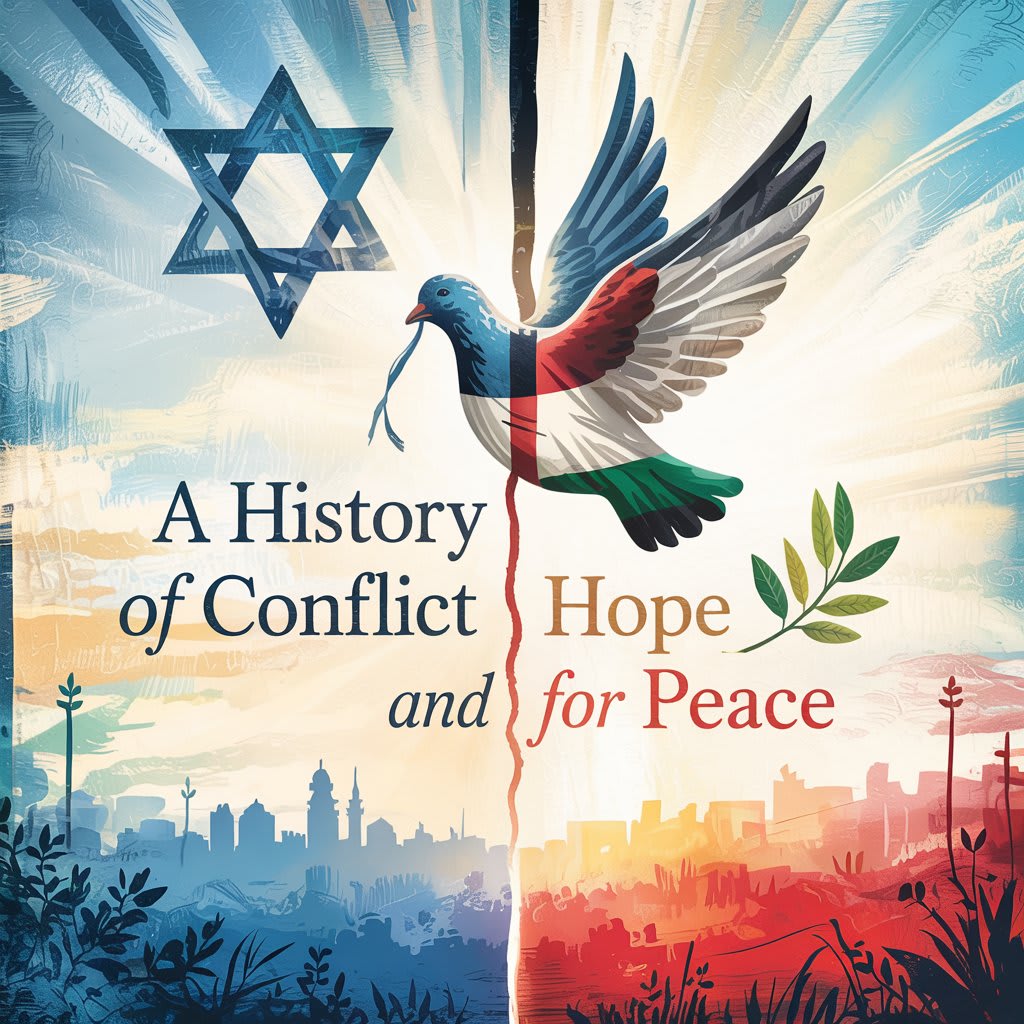
- Israel and Palestine: A History of Conflict and Hope for Peace
The conflict between Israel and Palestine is one of the most well-known and long-lasting struggles in modern history. It is a story of land, identity, religion, and hope. For over a century, both Israelis and Palestinians have claimed the same land as their home. Understanding the history, especially from the Palestinian point of view, helps us better understand why peace has been so difficult—but also why it is so important.
- The Land Before the Conflict
Before the 20th century, the land known today as Israel and Palestine was called Palestine, and it was part of the Ottoman Empire. People of different religions—Muslims, Christians, and Jews—lived there, mostly in peace. The population was mostly Arab Palestinians, who lived in cities and villages, farming and trading.
In the late 1800s, a movement called Zionism began. Zionists were Jews who wanted to create a homeland for Jewish people in Palestine. At the same time, many Jews in Europe were facing discrimination and violence, so some began to move to Palestine in search of safety and freedom.
- British Control and Growing Tensions
After World War I, the Ottoman Empire collapsed, and the British took control of Palestine under a plan called the British Mandate. During this time, the British made conflicting promises—they told the Arab Palestinians they would support their independence, but also promised to help Jews build a "national home" in Palestine.
As more Jews moved to Palestine, tensions grew between the Jewish and Arab communities. Palestinians feared losing their land and their identity. In the 1930s, protests and clashes broke out. Palestinians demanded independence and the end of mass Jewish immigration, but the British suppressed the uprisings.
- The Creation of Israel and the Nakba
In 1947, the United Nations suggested a plan to divide Palestine into two states—one for Jews and one for Arabs. The Jewish leaders accepted the plan, but the Arab leaders rejected it, believing it was unfair and took too much land from the native population.
In 1948, Jewish leaders declared the creation of the state of Israel. This event is celebrated by Israelis as independence, but for Palestinians, it is remembered as the Nakba, or "catastrophe." During the war that followed, over 700,000 Palestinians were forced to flee or were expelled from their homes. Many became refugees in neighboring countries and have never been allowed to return.
- Life Under Occupation
In 1967, after another war, Israel took control of the West Bank, East Jerusalem, and Gaza Strip—lands where many Palestinians lived. This event is called the Six-Day War. Since then, millions of Palestinians have lived under Israeli military occupation. Their daily lives are controlled in many ways—through checkpoints, restricted movement, and military laws.
Israel also began building settlements in the West Bank—communities where Israeli citizens live on land Palestinians claim as their own. These settlements are considered illegal under international law, but they have continued to grow.
Palestinians have responded in many ways. Some have protested peacefully, others have joined political movements, and some have turned to violence. Groups like Hamas, which rules the Gaza Strip, have fought deadly battles with Israel. Both sides have suffered, but civilians—especially Palestinians—have often paid the highest price.
- The Struggle for Peace
Over the years, there have been many attempts to make peace. In 1993, the Oslo Accords were signed, creating hope for a two-state solution—one country for Israel, and one for Palestine. Palestinian leaders accepted the idea of sharing the land, but the process has been slow and difficult.
Many peace talks have failed due to distrust, violence, political divisions, and disagreement over key issues—like the status of Jerusalem, the right of Palestinian refugees to return, and the future of Israeli settlements.
Today, the conflict continues. The Gaza Strip suffers from extreme poverty, blockades, and frequent fighting. The West Bank remains under Israeli control. Many young Palestinians grow up without knowing freedom or peace.
- A Hope That Still Lives
Despite the long history of violence, hope still lives. Many Israelis and Palestinians—ordinary people, students, artists, and activists—are working for peace. They believe that both peoples deserve freedom, dignity, and safety.
Some dream of two separate states, living side by side. Others dream of one shared state, where everyone has equal rights. No matter the solution, one truth remains: peace cannot come without justice, and justice cannot come without understanding.
To move forward, the world must listen to both sides, especially the voices of those who have suffered the most. History is not just about what happened—it’s about what we learn, and how we choose to build a better future.
- Stop ceasefire in Palestine
About the Creator
Plans Lodged for Assembly Rooms Replacement
Plans have been officially submitted for the replacement of the historic Assembly Rooms, signaling a significant transformation in the heart of the city. The Assembly Rooms, long regarded as a cultural and architectural landmark, have been a venue for public gatherings, performances, and civic events for decades. With the new plans now lodged, the community, local authorities, and heritage groups are preparing for a debate over modern development versus preserving historical character.
By Muhammad Hassanabout 23 hours ago in Earth
Top Australian Writers’ Festival Cancelled After Palestinian Author Barred
One of Australia’s most respected literary festivals has been cancelled following a fierce backlash over the decision to bar a Palestinian author from participating. What began as a programming dispute quickly escalated into a national debate about free speech, cultural inclusion, and political pressure in the arts. The cancellation has sent shockwaves through Australia’s literary community, raising urgent questions about whose voices are allowed on public platforms and at what cost.
By Aarif Lashari7 days ago in Earth


Comments
There are no comments for this story
Be the first to respond and start the conversation.