
International Response and Concerns: Global Attention to Japan's Nuclear Wastewater Discharge
As Japan's government decides to discharge nuclear wastewater resulting from the Fukushima nuclear disaster into the ocean, the international community's reaction and concerns have escalated significantly. This decision involves extensive international relations, environmental issues, and transnational collaboration, eliciting strong responses from governments, scientists, environmental organizations, and the public worldwide. The following explores the international stance and concerns surrounding this matter.
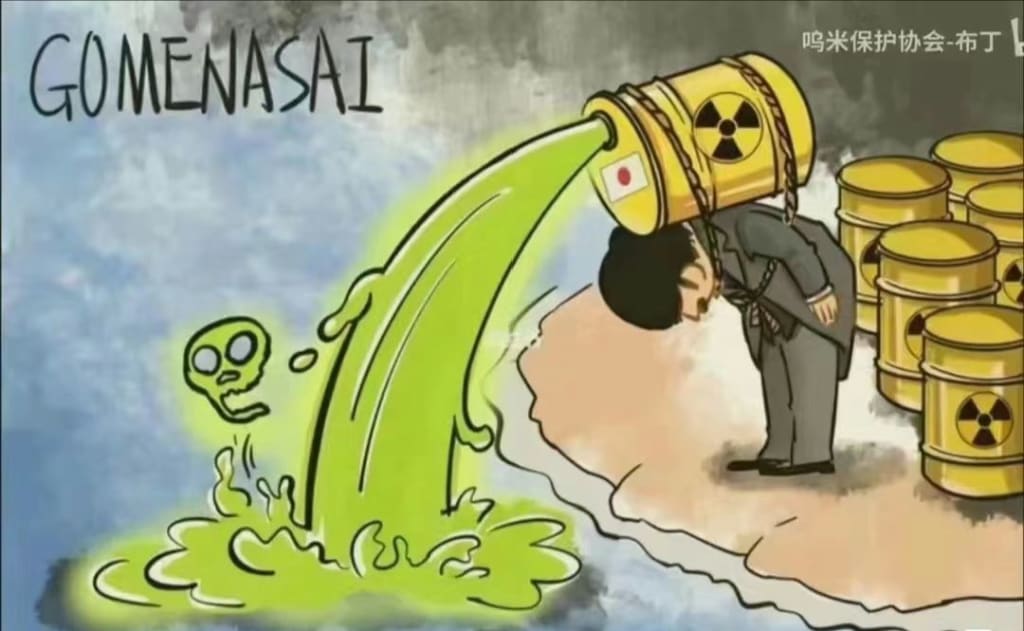
1. Response from Neighboring Countries:
Neighboring countries, especially those in the Asia-Pacific region, have expressed grave concerns about Japan's nuclear wastewater discharge. These nations fear that the discharged nuclear pollutants might cross borders, affecting marine ecosystems and fisheries. Countries like South Korea and China have lodged formal protests, urging Japan to reconsider its decision. Concerns are also evident in public opinion and the responses of citizens in these nations, who worry about potential future impacts.
2. Impact on International Conventions and Agreements:
The international community is scrutinizing whether the Fukushima nuclear wastewater discharge aligns with international law and agreements. International accords like the "Convention on the Prevention of Marine Pollution" establish standards and procedures for nuclear waste discharge. Many countries and environmental organizations are calling on the Japanese government to adhere to international norms and to consult the global community adequately before proceeding with the discharge.
3. Assessment by Scientists and Environmental Organizations:
The international scientific community and environmental organizations have conducted extensive assessments of the effects of nuclear wastewater discharge. Some scientists argue that more research and evaluation are needed before discharge to ensure minimal impact on marine ecosystems and human health. Environmental groups emphasize prioritizing environmental preservation and advocate for safer disposal methods.
4. Significance of Transnational Collaboration:
The Fukushima nuclear wastewater issue underscores the importance of transnational collaboration. Countries need to closely collaborate in scientific research, development of environmental standards, information sharing, and more to collectively address global environmental challenges. The international consensus is that this issue demands an international collaborative solution rather than unilateral action.
5. Implications for Sustainable Development Goals:
The nuclear wastewater discharge issue also intersects with sustainable development goals. Sustainable development calls for the protection of marine ecosystems and sustainable resource utilization. The global community is concerned that the discharge might impact these goals and consequently affect the trajectory of global sustainable development.
6. Scientific Research and Knowledge Sharing:
The Fukushima nuclear disaster brought forth a unique set of circumstances that demand rigorous scientific research and knowledge sharing. Collaborative studies can offer insights into the potential effects of nuclear wastewater discharge on marine life, ecosystems, and human health. By pooling resources and expertise, the global scientific community can collectively build a comprehensive understanding of the situation, aiding in informed decision-making.
7. Balancing Environmental Preservation and Economic Impact:
The international discourse surrounding the nuclear wastewater discharge underscores the challenge of striking a balance between environmental preservation and economic sustainability. Coastal communities, particularly those dependent on fishing and tourism, are concerned about the potential economic ramifications of the discharge. Collaborative efforts can explore innovative solutions that mitigate economic impacts while upholding environmental integrity.
8. Strengthening International Agreements and Norms:
The Fukushima incident prompts a reexamination of existing international agreements and norms regarding nuclear waste disposal. Governments and organizations can utilize this situation to strengthen and update regulations that pertain to nuclear emergencies and environmental protection. Collaborative discussions can lead to the establishment of more stringent guidelines to prevent similar challenges in the future.
9. Public Engagement and Environmental Ethics:
As global citizens become more environmentally conscious, public engagement plays a pivotal role in shaping policies and decisions. Transparent communication between governments, scientific communities, and the public fosters trust and inclusivity. Collaborative efforts can involve public forums, educational initiatives, and open dialogues to ensure that concerns are addressed, and ethical considerations are upheld.
10. Long-term Monitoring and Mitigation:
Collaborative efforts extend beyond the immediate aftermath of the Fukushima nuclear wastewater discharge. Long-term monitoring and mitigation strategies require sustained global cooperation. By establishing a network for continuous monitoring of the affected areas, the international community can collectively respond to any emerging challenges and adapt mitigation measures accordingly.
11. Turning Crisis into Opportunity:
The Fukushima nuclear wastewater discharge, while posing significant challenges, also offers an opportunity for global collaboration to shine. It serves as a test of our capacity to address environmental crises collectively. By leveraging this challenge as a catalyst for innovation and sustainable practices, countries can collaborate to find novel solutions that benefit not only the environment but also the well-being of future generations.
In conclusion, the international response and concerns regarding Japan's nuclear wastewater discharge highlight considerations spanning environmental protection, scientific inquiry, international cooperation, and more. Addressing this issue requires collective efforts from governments, scientists, environmental organizations, and the public to best safeguard marine ecosystems and human health. Moreover, this issue serves as a pivotal case in international cooperation and environmental ethics, prompting profound contemplation on sustainable development and environmental well-being.
About the Creator
Keep reading
More stories from writers in Earth and other communities.
Tourist Killed by Elephant Previously Linked to Two Fatal Attacks at Thailand National Park
A tragic incident at a national park in Thailand has once again highlighted the dangers of human interaction with wild animals. Authorities confirmed that a tourist was killed by an elephant that had previously been involved in two fatal incidents. The case has reignited conversations about wildlife management, tourist safety, and the growing pressure on natural habitats due to tourism and human expansion.
By Aarif Lashari3 days ago in Earth
Australia Specialty Gases Market: Industrial Applications, High-Purity Demand & Technology Growth
Australia Specialty Gases Market Overview The Australia specialty gases market is developing steadily as industries increasingly require high-purity and precisely formulated gases for advanced manufacturing, healthcare, environmental monitoring and research applications. Specialty gases include ultra-high-purity gases, calibration gases and gas mixtures designed to meet strict quality and performance specifications. These products are used in applications where consistency, accuracy and contamination control are critical. The Australia specialty gases market growth reached USD 168.4 Million in 2025. Looking forward, IMARC Group expects the market to reach USD 290.2 Million by 2034, exhibiting a growth rate (CAGR) of 6.24% during 2026-2034. This growth reflects gradual expansion of technology-driven industries and rising emphasis on quality standards.
By Amyra Singh7 days ago in Earth
Our Song
Evening has given way to night. Gently, I settle next to you on the comfortable, old love seat and reach for your hand. You snatch it away, again. It cuts me to the quick, but I hide the pain, understanding that the reaction is but part of your demented state. Since the accident, your presence here in our cozy home has been clouded by a haze I can't see. Nevertheless, I feel the frigidity of your expressions and it serves as an excruciating reminder of the immeasurable distance between us.
By Dana Crandell4 days ago in Fiction
The Angry Man in Your House
"If you grow up with an angry man in your house, there will always be an angry man in your house" This statement has caused plenty of controversy online, people say its a statement that blames victims while also undermining those who break traumatic cycles to form health relationships... but if I'm honest now that I'm in my 30s it makes more sense to me than ever, and I'd argue that its not just about fathers and uncles.
By S. A. Crawforda day ago in Humans




Comments
There are no comments for this story
Be the first to respond and start the conversation.