
How Science Has Changed Our Lives: A Journey Through Advancements
Science has fundamentally altered the way we live, interact with the world, and approach the future


Science has fundamentally altered the way we live, interact with the world, and approach the future. From the discovery of fire to the development of quantum mechanics, scientific advancements have dramatically shaped human civilization. Whether it’s through the evolution of medicine, communication technologies, or the understanding of the universe, science has reshaped our lives in unimaginable ways.
In this essay, we will explore how science has changed our lives, highlighting the most significant contributions in various fields such as medicine, technology, transportation, communication, and environmental science. These fields not only showcase human innovation but also highlight the need for continued scientific research and exploration to address the challenges of the future.
The Impact of Science on Medicine
One of the most profound ways science has changed our lives is through the field of medicine. In ancient times, disease was often met with confusion and superstition, as medical knowledge was limited. Today, however, thanks to advances in biology, genetics, and pharmacology, we have developed treatments for countless diseases, many of which were once considered fatal.
Vaccination and Disease Control
One of the earliest and most impactful discoveries in medicine was the development of vaccines. Edward Jenner’s work in the late 18th century laid the foundation for immunology by developing the smallpox vaccine, which eventually led to the eradication of smallpox. Modern vaccines continue to save millions of lives every year by preventing diseases like polio, measles, and influenza. The rapid development of COVID-19 vaccines in 2020 further highlighted the ability of science to respond quickly to global health crises.
Antibiotics and Pharmaceuticals
The discovery of antibiotics, particularly penicillin by Alexander Fleming in 1928, marked another pivotal moment in medical science. Antibiotics revolutionized the treatment of infections, transforming healthcare and increasing life expectancy worldwide. Moreover, the development of pharmaceuticals has led to effective treatments for chronic conditions such as diabetes, heart disease, and mental health disorders, improving the quality of life for millions of people.
Genetics and Personalized Medicine
Genetic research has also made a significant impact on medical science. The mapping of the human genome in the early 2000s has led to breakthroughs in understanding inherited diseases, genetic disorders, and cancer. This knowledge has paved the way for personalized medicine, where treatments are tailored to an individual’s genetic makeup, increasing the efficacy of therapies and reducing side effects.
Technology and the Digital Revolution
Advancements in technology have had an equally transformative effect on our lives. The digital revolution, which began in the mid-20th century, has radically reshaped the way we communicate, work, and entertain ourselves.
The Birth of the Computer and the Internet
The development of the computer in the 20th century, starting with early machines like the ENIAC and the UNIVAC, laid the groundwork for the information age. The invention of the personal computer in the 1970s, followed by the rise of the internet in the 1990s, revolutionized how we access information, conduct business, and socialize. The internet, in particular, has created a global network that connects billions of people, opening up opportunities for communication, education, and commerce on a scale never before seen.
The Smartphone and Mobile Technology
The advent of smartphones has further amplified the impact of technology on our lives. What began as simple mobile phones have evolved into powerful devices that combine computing, communication, and entertainment in one handheld package. The introduction of apps has transformed nearly every aspect of life, from banking and shopping to fitness and navigation. Mobile technology has also bridged gaps in education and healthcare, enabling remote learning and telemedicine in areas previously underserved by traditional infrastructure.
Artificial Intelligence and Automation
Artificial intelligence (AI) and automation are some of the most exciting and potentially disruptive fields in technology today. AI algorithms are now used in everything from voice assistants and recommendation systems to autonomous vehicles and medical diagnostics. The ability of AI to process and analyze vast amounts of data is revolutionizing industries, improving decision-making, and driving efficiency. While automation may change the landscape of work, it also promises to free people from mundane tasks, allowing them to focus on more creative and intellectually stimulating pursuits.
The Transformation of Transportation
Transportation is another area where science has had a dramatic impact. Early human societies relied on walking, animal power, or simple watercraft for mobility. However, the industrial revolution in the 19th century sparked a series of inventions that forever altered the way we travel.
The Automobile and Mass Transit
The invention of the automobile by Karl Benz in 1885 revolutionized personal transportation. Cars have become an essential part of modern life, providing freedom and flexibility to individuals and reshaping cities. The development of mass transit systems, such as buses, trains, and subways, has made it easier for people to commute and access economic opportunities.
Air Travel
The Wright brothers' first powered flight in 1903 marked the beginning of the aviation era. Today, air travel has become an integral part of global transportation, allowing people to travel across continents in a matter of hours. This has not only boosted tourism but also facilitated international business, global trade, and cultural exchange. Modern airplanes, powered by jet engines, are faster, safer, and more efficient than ever before, providing a level of mobility that was once unimaginable.
Space Exploration
Perhaps the most awe-inspiring advancement in transportation is space exploration. The successful landing of humans on the moon in 1969 by NASA’s Apollo 11 mission marked a monumental achievement in science and engineering. Since then, space exploration has led to the development of space stations, space telescopes, and probes sent to the farthest reaches of the solar system and beyond. As private companies like SpaceX push the boundaries of space travel, we are moving closer to the possibility of commercial space tourism and even interplanetary colonization.
Communication: Connecting the World
Science has revolutionized communication, enabling us to connect with people on the other side of the world in an instant. Before the advent of modern technology, communication was limited to face-to-face interaction, written letters, or messengers.
The Telephone and Radio
The invention of the telephone by Alexander Graham Bell in 1876 made it possible for people to communicate over long distances. A few decades later, the invention of radio and later television enabled mass communication, allowing news and entertainment to be broadcast to millions. These inventions fundamentally altered how information was shared and consumed.
The Internet and Social Media
The rise of the internet in the late 20th century transformed communication in unprecedented ways. Email, instant messaging, and social media platforms have made it easier than ever to connect with people, share information, and build online communities. Social media has given a voice to individuals and movements, while also providing a platform for entertainment and marketing. It has connected people across cultures and continents, creating a more interconnected world.
Video Conferencing and Virtual Reality
Advances in video conferencing technology have made remote work and virtual collaboration a reality. Platforms like Zoom and Skype have become staples in both professional and personal communication, especially during the COVID-19 pandemic. Moreover, virtual reality (VR) and augmented reality (AR) are taking communication and entertainment to new levels, allowing for immersive experiences that were once confined to science fiction.
Environmental Science and Sustainability
As science has advanced, so too has our understanding of the environment and the need to protect it. The rapid industrialization and urbanization of the past few centuries have led to significant environmental challenges, including climate change, deforestation, and pollution. However, science is also offering solutions to these problems.
Renewable Energy
The development of renewable energy technologies, such as solar, wind, and hydroelectric power, is providing alternatives to fossil fuels, helping to reduce greenhouse gas emissions and mitigate climate change. Advances in battery storage and grid technology are also making renewable energy more efficient and accessible, ensuring that future generations can rely on sustainable power sources.
Conservation and Biodiversity
Scientific research in the fields of ecology and conservation biology has led to a deeper understanding of the importance of biodiversity and the need to protect ecosystems. Efforts to conserve endangered species and restore natural habitats are essential in maintaining the balance of life on Earth. Additionally, the study of climate change and its impact on global ecosystems has spurred international efforts to reduce carbon emissions and develop strategies for adaptation.
Sustainable Agriculture
Agricultural science has made significant strides in improving food security and sustainability. Advances in genetic engineering have led to the development of genetically modified organisms (GMOs) that are more resistant to pests, diseases, and environmental stresses. Additionally, research into sustainable farming practices, such as precision agriculture, is helping to reduce the environmental footprint of food production.
Conclusion
Science has undoubtedly changed our lives in ways that were once unimaginable. From the discovery of antibiotics and vaccines to the creation of the internet and space exploration, science has revolutionized how we live, work, and interact with the world. While these advancements have brought countless benefits, they have also raised new challenges, particularly in the areas of ethics, environmental sustainability, and technological disruption.
As we look to the future, it is clear that science will continue to shape our world in profound ways. By investing in research, education, and innovation, we can ensure that the benefits of science are shared by all and that future generations inherit a world that is more connected, healthier, and sustainable than ever before.
About the Creator
Rony
My job is to highlight people's lives and real-world activities.
Homeowners Don’t Want to Move: The Big Deal About Shrinking Backyards
In neighborhoods across the country, a subtle but growing trend is taking root: homeowners aren’t moving, and it’s not just because of the housing market. Many are staying put because their backyards—once spaces for relaxation, gardening, and family fun—are shrinking, either physically due to new development or symbolically as life priorities shift. What may seem like a minor detail—an ordinary backyard—is, for many, a defining feature of home life. Losing it can change how people live, play, and even feel about their communities. This shift has consequences for families, urban planning, and even the way cities are designed. It also sheds light on why homeowners are willing to compromise on size, style, or even location rather than give up their outdoor space. Why Backyards Matter More Than Ever Backyards are more than just patches of grass. They are extensions of our living space, providing: Personal outdoor retreats for reading, gardening, or hosting friends. Safe spaces for children and pets to play. Social hubs for barbecues, birthdays, and neighborhood gatherings. Mental and physical health benefits, including fresh air, sunlight, and exercise. For families who have invested years into landscaping, planting trees, or building decks and patios, the backyard is an emotional asset. Moving to a new home often means losing these personal touches—and many homeowners aren’t willing to take that step. “Backyards are part of our identity,” says Laura Jennings, a landscape designer in suburban Chicago. “People have memories tied to them—first steps, garden harvests, family barbecues. That’s why so many homeowners are staying put, even if it’s tempting to relocate for a bigger house or a better neighborhood.” The Trend of Shrinking Yards Urban densification and suburban development have slowly eaten into traditional backyard space. In many cities, large lots are being replaced with townhomes, duplexes, or small-lot single-family homes. Even in suburban neighborhoods, new constructions often prioritize indoor square footage over outdoor space. The shrinking backyard trend has several effects: Less room for recreation: Families may struggle to fit a swing set, pool, or garden into a smaller yard. Increased desire to stay put: Homeowners prefer maintaining a familiar outdoor space rather than trading it for a slightly larger indoor area. Higher emotional attachment: As yards become more limited, the significance of every tree, patch of grass, or vegetable garden grows. For many, the choice isn’t just about square footage—it’s about quality of life. Homeowners Are Making Trade-Offs As a result, more homeowners are staying in place longer, even if it means: Skipping a bigger kitchen or extra bedroom. Living in a less “trendy” neighborhood. Paying more in maintenance or property taxes to keep a cherished yard intact. Some have embraced innovative backyard solutions to maximize smaller spaces: Vertical gardens and container planting. Multi-functional patios that serve as dining, lounging, and play areas. Creative landscaping, including raised beds, pergolas, and tiny ponds. These adaptations allow homeowners to maintain the sense of space and enjoyment they’ve built over years without relocating. Emotional and Social Dimensions Beyond practical reasons, the backyard has a symbolic meaning. It represents: Continuity and stability: Homeowners see staying put as preserving a lifestyle. Family history: Many yards hold stories—graduations, summer afternoons, first bike rides. Community connection: Long-term residents know neighbors, local schools, and nearby amenities. Moving often means giving up these ties. A survey by the National Association of Home Builders found that over 60% of homeowners aged 35–55 preferred staying in their current homes, citing yard size and outdoor enjoyment as key factors. For these individuals, giving up a backyard is not a small inconvenience—it’s a major life decision. The Impact on Neighborhoods and Cities The trend of staying put also affects broader urban and suburban planning. Fewer homeowners moving means: Less turnover in neighborhoods, which can reduce housing market fluidity. Pressure on developers to include quality outdoor space in new builds. Greater demand for parks and community green spaces, as private yards shrink. Urban planners and developers are noticing the importance of outdoor space in retention and satisfaction metrics. Homes with usable yards, green roofs, or communal gardens often have higher value and attract long-term residents. The Future of Backyard Living As city lots shrink and suburban sprawl continues, homeowners are adapting: Smaller, highly curated gardens instead of sprawling lawns. Multi-functional backyards designed for work, play, and entertainment. Investment in outdoor amenities such as fire pits, decks, or small pools. Some communities are exploring shared backyard concepts, like community gardens and pocket parks, to supplement shrinking private spaces. While these aren’t a complete replacement for personal yards, they provide social and environmental benefits and may encourage homeowners to stay in their homes longer. Conclusion: More Than Grass and Trees Shrinking backyards might seem like a minor design issue, but for homeowners, it’s deeply tied to lifestyle, family life, and personal identity. The reluctance to move is not just a reaction to the housing market; it reflects an emotional, social, and practical connection to outdoor space that indoor square footage alone can’t replace. As urban density grows and lot sizes shrink, the importance of backyards will continue to shape homeowner decisions, neighborhood design, and community dynamics. Families are showing that a yard is not just grass and trees—it’s a place of memory, freedom, and connection. In a world where real estate trends often prioritize indoor luxury, the backyard remains a powerful symbol of home, anchoring families to the places they love—and keeping many from moving at all
By Muhammad Hassan3 days ago in Earth
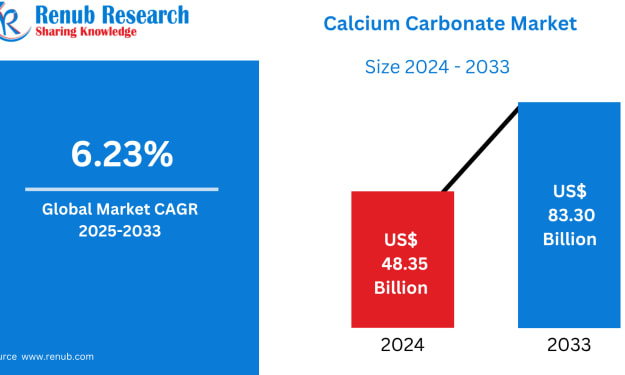
Global Calcium Carbonate Market Size & Forecast 2025–2033
Introduction: A Quiet Giant of Global Industry Calcium carbonate may not be a headline-grabbing material, but it is one of the most indispensable compounds in modern industrial life. Found naturally in limestone, marble, and chalk, this humble mineral underpins everything from the buildings we live in to the paper we write on and the plastics we use every day. Its low cost, wide availability, and remarkable versatility have made it a cornerstone raw material across multiple industries worldwide.
By jaiklin Fanandish3 days ago in Earth
Smart phones, Humans and Aliens.
WARNING. I will be tapping into one of your favorite creative tensions: The absurdity of humans worshipping their glowing rectangles as if they were tiny oracles. There’s something deliciously poetic about that contradiction, and it lends itself beautifully to an instructive proviso.
By Novel Allen6 days ago in Poets



Comments
There are no comments for this story
Be the first to respond and start the conversation.