
From Overconsumption to Conscious Consumerism: A Critical Shift for a Sustainable Future
Embracing Mindful Choices in a World of Excess
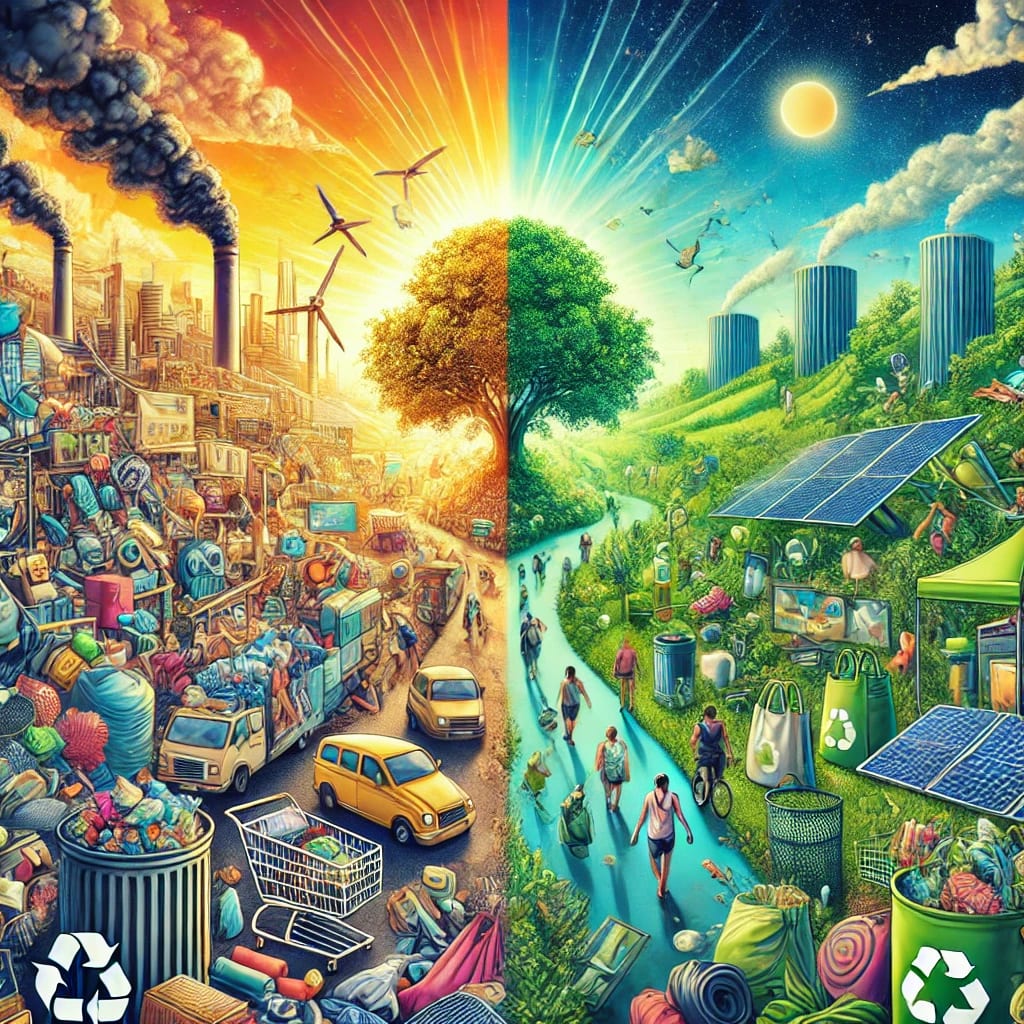
Did You Know?
- The fashion industry alone contributes to 10% of global carbon emissions annually—more than international flights and maritime shipping combined.
- In 2019 alone, the world generated 53.6 million metric tons of e-waste—equal to the weight of 350 cruise ships—yet only 17.4% was recycled.
- An average American home contains 300,000 items, with many sitting unused, destined for landfills.
- Americans throw away up to 81 pounds of clothing per person every year.
In a world where overconsumption has become the norm, transitioning to conscious consumerism is not just a choice—it's an urgent necessity. This shift is crucial for addressing environmental degradation, fostering economic stability, and improving societal well-being. Here's why this change matters and how we can collectively drive it forward.
What Is Overconsumption?
Overconsumption is the use of resources at a rate that surpasses what the Earth can sustain. It reflects the growing trend of buying more than we need, often influenced by consumerist culture and unsustainable business practices.
The Concept of Conscious Consumerism
Conscious consumerism, or ethical consumerism, means making mindful purchasing decisions that align with sustainability and ethical values. It’s about evaluating the environmental, social, and economic impact of every product or service we consume.
What Happens If We Don’t Act?
Environmental Consequences
- Climate change accelerates due to increased greenhouse gas emissions.
- Natural resources are depleted at an unsustainable rate.
- Biodiversity suffers, leading to ecosystem collapse.
Economic Repercussions
- Resource scarcity disrupts supply chains.
- Inequalities between nations widen as developing countries bear the brunt.
- Individuals face financial instability from debt-driven consumption.
Social Impacts
- Rising mental health issues linked to materialism and financial stress.
- Exploitation of vulnerable workers in developing countries.
Steps Towards Conscious Consumerism
Here’s how we can make a difference, starting today:
Small Steps for Individuals
- Embrace Minimalism: Buy only what you truly need.
- Practice the 30-Day Rule: Delay non-essential purchases to curb impulsive buying.
- Choose Quality Over Quantity: Invest in durable, high-quality items.
- Support Sustainable Brands: Research and support companies with eco-friendly practices.
- Follow the 4Rs: Reduce, Reuse, Recycle, and Rethink.
Long-Term Efforts
- Advocate for Policy Change: Support sustainability-focused legislation.
- Promote Education: Teach sustainability in schools and communities.
- Adopt Circular Economies: Encourage businesses to recycle and reuse resources.
- Leverage Technology: Use apps that promote sharing economies or help track carbon footprints.
What Can Businesses Do?
Businesses play a vital role in shaping consumption habits:
Positive Practices
- Implement sustainable production and supply chain processes.
- Offer repair and recycling programs.
- Provide transparency about environmental impact.
Pitfalls to Avoid
- Greenwashing: Avoid misleading claims about sustainability.
- Planned Obsolescence: Stop designing products with limited lifespans.
- Aggressive Marketing: Shift from promoting overconsumption to fostering mindful choices.
- 66% of global consumers rank sustainability as a top priority.
- 73% of Gen Z is willing to pay more for eco-friendly products.
- 61% of UK adults actively reduce new purchases by opting for repairs and reuse.
Reasons for Hope
The shift toward conscious consumerism is gaining traction:
These trends reflect growing awareness, but we must continue pushing for broader adoption of sustainable practices.
Conclusion: A Call to Action
The journey from overconsumption to conscious consumerism requires collective action. By making informed decisions, supporting ethical businesses, and advocating for systemic change, we can build a more sustainable and equitable world.
Every purchase we make and every decision we take counts. Let’s shift the narrative from wasteful consumption to mindful living—for the sake of our planet and future generations.
About the Creator
Naman Mehta
Chartered Accountant with 8+ years of experience in Special Audits & Management Consultancy. Passionate about AI, business strategy, and problem-solving. Entrepreneur in home decor and global e-commerce. Lifelong learner.
Keep reading
More stories from Naman Mehta and writers in Earth and other communities.
Small Steps, Big Impact: Your Role in Creating a Sustainable Future
In an era where environmental challenges are becoming increasingly visible in our daily lives, the need for sustainable living has never been more urgent. From the smog-filled skies of our cities to the chemical-laden waters of our sacred rivers, the impacts of unsustainable practices are impossible to ignore. As a Chartered Accountant and sustainability advocate based in Jaipur, I've witnessed firsthand how our actions, both individual and collective, can shape the world around us.
By Naman Mehtaabout a year ago in Earth
Japan Furniture Market Size and Forecast 2025–2033
Introduction Japan’s furniture industry stands at a unique intersection of tradition and innovation. Renowned worldwide for its craftsmanship, minimalist design, and functional aesthetics, Japanese furniture reflects the nation’s cultural emphasis on harmony, efficiency, and simplicity. Today, as Japan’s population becomes increasingly urban, digitally connected, and environmentally conscious, the furniture market is undergoing a quiet but significant transformation.
By Janine Root 5 days ago in Earth
Maryland to Get Its Own Smaller Version of the Las Vegas Sphere
Maryland is about to become home to a new entertainment icon. Inspired by the famous Sphere in Las Vegas, a smaller version of the massive immersive venue is planned for the state, promising to deliver a combination of live entertainment, cutting-edge technology, and a new tourist attraction. While the Las Vegas Sphere has already made headlines worldwide for its futuristic design and mind-blowing shows, Maryland’s version aims to bring a scaled-down but equally captivating experience to the East Coast.
By Muhammad Hassanabout 11 hours ago in Earth




Comments
There are no comments for this story
Be the first to respond and start the conversation.