
From Flush to Faucet: Unveiling the Journey of Recycling Wastewater"
Recycling wastewater


In 2003, Singapore embarked on an unparalleled mission driven by its national water agency. The goal? To harness an extraordinary solution: recycling wastewater to account for more than half of the nation's water supply. Yes, you read that right—wastewater. While it might sound like a last-ditch effort, this program was meticulously planned for decades to ensure Singapore's resilience against the threat of water scarcity. As climate change intensifies the frequency and duration of droughts across the globe, more and more regions are grappling with similar water-related challenges. But the question remains: is it genuinely safe to recycle what we typically flush down the toilet? To answer this, we need to unravel the complex composition of wastewater.
Wastewater is broadly categorized into three main types: gray water, originating from sinks, baths, and laundry; yellow water, comprising only urine; and black water, tainted by contact with feces. On a global scale, our daily wastewater production could fill approximately 400,000 Olympic-sized swimming pools. In urban areas with established sewage systems, this wastewater converges within underground pipelines, which, contrary to common belief, aren't predominantly filled with fecal matter. In fact, within an average sewage volume of 4,000 liters, only one liter constitutes solid fecal material. Nevertheless, sewage carries a load of hazardous contaminants, including billions of pathogens, microorganisms, trace chemicals, and excessive inorganic nutrients, capable of polluting rivers and lakes. Hence, even if the aim isn't to consume treated wastewater, thorough purification is indispensable. This is why sewage systems direct wastewater to specialized treatment plants.
Within these treatment plants, a comprehensive decontamination process takes place, targeting key pollutants such as fecal matter, pathogens, and excessive nitrogen. Achieving this involves an intricate interplay of biological, chemical, and physical interventions. Significant methods encompass settling tanks for the removal of larger particles, biological reaction tanks where microorganisms consume undesirable substances, and chemical disinfection processes to neutralize pathogens. Following these measures, the treated wastewater in the United States surpasses the cleanliness of most natural bodies of water, rendering it suitable for release into rivers and lakes. When earmarked for non-potable applications, such as irrigation or car washing, additional disinfection steps are taken to prevent bacterial growth during storage. However, if the intent is to purify it to a level fit for human consumption, a more advanced treatment process is necessary.
A common approach involves microfiltration, where membranes with pores one millionth of a meter across filter out small particles and larger microorganisms. Subsequently, the water passes through a more refined reverse osmosis membrane, capable of excluding particles as minuscule as one-tenth of a billionth of a meter. This semi-permeable membrane facilitates the passage of water while obstructing substances like salt, viruses, and undesirable chemicals. Following this stage, the water undergoes exposure to UV lamps, emitting radiation that disrupts the genetic material of any remaining organisms. In some cases, UV disinfection is followed by supplementary processes involving chemicals like hydrogen peroxide, effectively neutralizing a broad spectrum of microorganisms and micropollutants. Once these exhaustive treatment measures conclude, the treated wastewater is subjected to rigorous testing. Should it meet the stringent criteria, it can seamlessly integrate into the regular drinking water pipeline, undergoing conventional treatment processes before joining the municipal supply. This method is known as direct potable reuse; however, despite its efficacy, concerns linger about such a direct approach.
As an alternative, many regions opt for indirect potable reuse. Here, the treated wastewater is released into an environmental buffer, such as a reservoir, lake, wetland, or groundwater aquifer. After a certain duration in this environment, any residual chemicals from the treatment process disperse and degrade. Subsequently, the water can be extracted and channeled into the drinking water pipeline. This approach, utilized in Singapore, has gained traction as a lifeline for arid regions within the United States. However, this strategy is only viable in areas with centralized sewer systems and the requisite infrastructure for water delivery to homes. This limitation means it falls short in aiding communities grappling with dire sanitation challenges where access to clean water remains a daily struggle.
In parallel, researchers are exploring smaller-scale technologies to convert sewage into potable water at the local level. Nonetheless, addressing the long-term needs of these vulnerable communities demands a comprehensive reevaluation of our water consumption practices and an increased emphasis on water conservation.
About the Creator
Andra Ama
A multi-talented writer, speaker, and beauty entrepreneur, who crafts compelling narratives. With a passion for creativity, self-expression, and positive change, has left a significant impact in various fields.
Homeowners Don’t Want to Move: The Big Deal About Shrinking Backyards
In neighborhoods across the country, a subtle but growing trend is taking root: homeowners aren’t moving, and it’s not just because of the housing market. Many are staying put because their backyards—once spaces for relaxation, gardening, and family fun—are shrinking, either physically due to new development or symbolically as life priorities shift. What may seem like a minor detail—an ordinary backyard—is, for many, a defining feature of home life. Losing it can change how people live, play, and even feel about their communities. This shift has consequences for families, urban planning, and even the way cities are designed. It also sheds light on why homeowners are willing to compromise on size, style, or even location rather than give up their outdoor space. Why Backyards Matter More Than Ever Backyards are more than just patches of grass. They are extensions of our living space, providing: Personal outdoor retreats for reading, gardening, or hosting friends. Safe spaces for children and pets to play. Social hubs for barbecues, birthdays, and neighborhood gatherings. Mental and physical health benefits, including fresh air, sunlight, and exercise. For families who have invested years into landscaping, planting trees, or building decks and patios, the backyard is an emotional asset. Moving to a new home often means losing these personal touches—and many homeowners aren’t willing to take that step. “Backyards are part of our identity,” says Laura Jennings, a landscape designer in suburban Chicago. “People have memories tied to them—first steps, garden harvests, family barbecues. That’s why so many homeowners are staying put, even if it’s tempting to relocate for a bigger house or a better neighborhood.” The Trend of Shrinking Yards Urban densification and suburban development have slowly eaten into traditional backyard space. In many cities, large lots are being replaced with townhomes, duplexes, or small-lot single-family homes. Even in suburban neighborhoods, new constructions often prioritize indoor square footage over outdoor space. The shrinking backyard trend has several effects: Less room for recreation: Families may struggle to fit a swing set, pool, or garden into a smaller yard. Increased desire to stay put: Homeowners prefer maintaining a familiar outdoor space rather than trading it for a slightly larger indoor area. Higher emotional attachment: As yards become more limited, the significance of every tree, patch of grass, or vegetable garden grows. For many, the choice isn’t just about square footage—it’s about quality of life. Homeowners Are Making Trade-Offs As a result, more homeowners are staying in place longer, even if it means: Skipping a bigger kitchen or extra bedroom. Living in a less “trendy” neighborhood. Paying more in maintenance or property taxes to keep a cherished yard intact. Some have embraced innovative backyard solutions to maximize smaller spaces: Vertical gardens and container planting. Multi-functional patios that serve as dining, lounging, and play areas. Creative landscaping, including raised beds, pergolas, and tiny ponds. These adaptations allow homeowners to maintain the sense of space and enjoyment they’ve built over years without relocating. Emotional and Social Dimensions Beyond practical reasons, the backyard has a symbolic meaning. It represents: Continuity and stability: Homeowners see staying put as preserving a lifestyle. Family history: Many yards hold stories—graduations, summer afternoons, first bike rides. Community connection: Long-term residents know neighbors, local schools, and nearby amenities. Moving often means giving up these ties. A survey by the National Association of Home Builders found that over 60% of homeowners aged 35–55 preferred staying in their current homes, citing yard size and outdoor enjoyment as key factors. For these individuals, giving up a backyard is not a small inconvenience—it’s a major life decision. The Impact on Neighborhoods and Cities The trend of staying put also affects broader urban and suburban planning. Fewer homeowners moving means: Less turnover in neighborhoods, which can reduce housing market fluidity. Pressure on developers to include quality outdoor space in new builds. Greater demand for parks and community green spaces, as private yards shrink. Urban planners and developers are noticing the importance of outdoor space in retention and satisfaction metrics. Homes with usable yards, green roofs, or communal gardens often have higher value and attract long-term residents. The Future of Backyard Living As city lots shrink and suburban sprawl continues, homeowners are adapting: Smaller, highly curated gardens instead of sprawling lawns. Multi-functional backyards designed for work, play, and entertainment. Investment in outdoor amenities such as fire pits, decks, or small pools. Some communities are exploring shared backyard concepts, like community gardens and pocket parks, to supplement shrinking private spaces. While these aren’t a complete replacement for personal yards, they provide social and environmental benefits and may encourage homeowners to stay in their homes longer. Conclusion: More Than Grass and Trees Shrinking backyards might seem like a minor design issue, but for homeowners, it’s deeply tied to lifestyle, family life, and personal identity. The reluctance to move is not just a reaction to the housing market; it reflects an emotional, social, and practical connection to outdoor space that indoor square footage alone can’t replace. As urban density grows and lot sizes shrink, the importance of backyards will continue to shape homeowner decisions, neighborhood design, and community dynamics. Families are showing that a yard is not just grass and trees—it’s a place of memory, freedom, and connection. In a world where real estate trends often prioritize indoor luxury, the backyard remains a powerful symbol of home, anchoring families to the places they love—and keeping many from moving at all
By Muhammad Hassan4 days ago in Earth
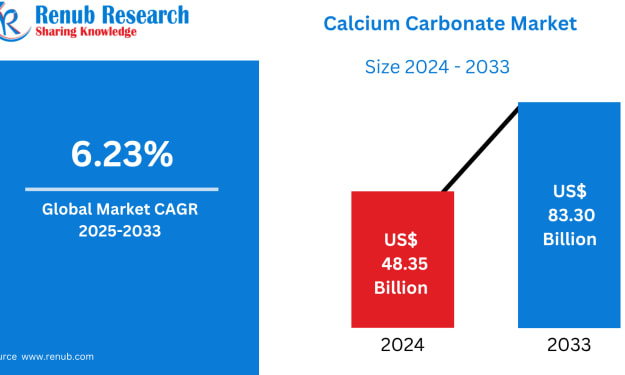
Global Calcium Carbonate Market Size & Forecast 2025–2033
Introduction: A Quiet Giant of Global Industry Calcium carbonate may not be a headline-grabbing material, but it is one of the most indispensable compounds in modern industrial life. Found naturally in limestone, marble, and chalk, this humble mineral underpins everything from the buildings we live in to the paper we write on and the plastics we use every day. Its low cost, wide availability, and remarkable versatility have made it a cornerstone raw material across multiple industries worldwide.
By jaiklin Fanandish4 days ago in Earth
Smart phones, Humans and Aliens.
WARNING. I will be tapping into one of your favorite creative tensions: The absurdity of humans worshipping their glowing rectangles as if they were tiny oracles. There’s something deliciously poetic about that contradiction, and it lends itself beautifully to an instructive proviso.
By Novel Allen7 days ago in Poets



Comments
There are no comments for this story
Be the first to respond and start the conversation.