
Europe Series - The Geographical Relations of Three Civilizations in the Mediterranean
The Geographical Relations of Three Civilizations in the Mediterranean

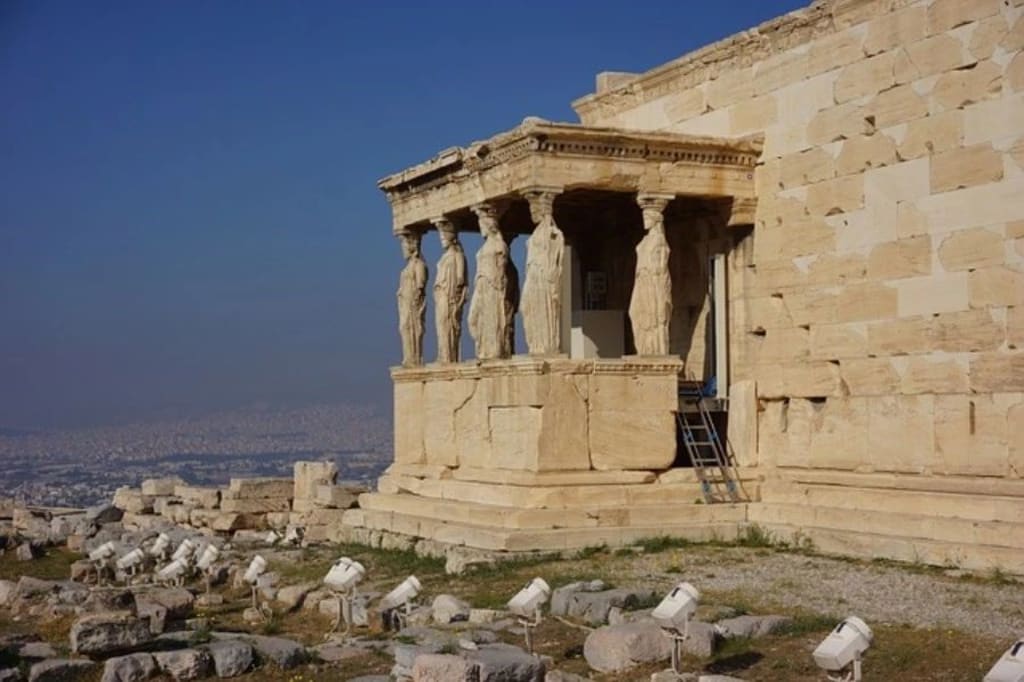
It is a recognized fact that European civilization originated in Greece. Of course, the debate about the authenticity of ancient Greek civilization has also been a hot topic on the Internet in recent years. However, the evidence that is indisputable will not affect the following content. Because according to the consistent perspective of this post, the geography itself is the focus of our attention.
Just like the so-called "Goguryeo" dispute between China and Korea, the focus of the debate is nothing more than the Goguryeo people, who should be counted as "country" people. But in fact, this kind of controversy is more of a political issue, an issue related to contemporary politics. What no one denies is that there used to be a country called "Goguryeo" in the Northeast that has entered the civilization system.
The extent to which Greek civilization has borrowed from foreign civilizations is also not the crux of the issue, because no one thinks that Greek civilization, like South American civilization, originated in isolation and grew up in the southeastern corner of the European continent. The question we are going to address today is, why did history choose Greece? This peninsula, which is densely covered with mountains and seems to have no geographical potential, has become the birthplace of European civilization.
If the fire of Greek civilization was introduced from the outside, then the first thing we look for is the location of this alien civilization. This should not be a problem if you have a little understanding of history, or friends who have read the previous part of the Middle East. The eastern section of the "Fertile Crescent" of the Arabian Peninsula, that is, the "Two River Basin", is now recognized as the earliest civilization on earth. In 4000 BC, the Sumerians had already begun to develop irrigated agriculture on this land and gave birth to the first civilization.
The civilization initiated by the Sumerians is also known as the "Mesopotamian civilization" (meaning between two rivers in Greek). Before its civilization status was confirmed, the Nile River Basin, with its magnificent ground buildings such as pyramids and sphinxes, was usually recognized as the earliest civilization of mankind. In this regard, there is now enough archaeological evidence to support it. However, it is necessary to confirm the order of this civilization from a geographical point of view.
There is no doubt about the importance of agriculture (here only refers to planting) to the emergence of human civilization. Even in ancient times, the land suitable for planting can bring dozens of times the benefits to the sower. When the scale of agriculture expands to a certain extent, there will be enough manpower and material resources to develop other elements required by civilization.
From today's perspective, the alluvial plains downstream of the river are undoubtedly the areas with the greatest agricultural potential. Flat land, sufficient water sources, and fertile soil from the upper mountains are all natural elements required for large-scale planting.
However, the original agricultural technology was not produced in these fertile lowlands, because for early humans, the lower reaches of the frequently diverted rivers were far less safe than their upper mountains. Humans who first tried food cultivation were more willing to burn forests and shrubs on high ground to enrich the soil; rely on natural rainfall to supplement the land needed for crop growth. This "slash and burn" form of agriculture is also known as primitive agriculture.
Due to geographical conditions, highland agriculture is generally difficult to scale, especially when some ethnic groups with primitive agricultural technology begin to try to develop "irrigated agriculture" in the lowlands by regulating river channels. These alluvial plains with huge agricultural potential, usually It will soon allow its owners, in terms of population and food production, to open a geometric gap with their mountain neighbors, and finally win the tectonic competition. This is also the reason why the major civilizations in the early Eurasian and African continents all displayed the characteristics of river civilization and water control civilization.
The role of highlands in the origin of agricultural technology can help us explain why the agricultural civilization of the Nile River Basin was slightly later than that of the Two Rivers Basin. Because it is covered by arid deserts, the lower reaches of the fertile Nile River has no adjacent mountains, for which agricultural technology is directly imported.
In contrast, the Two Rivers Plain, which is closely adjacent to the Iranian Plateau - the Armenian Plateau, can complete the chain of agricultural development within one basin. The Sumerians, who were the first to emerge from the northern mountains, created the Mediterranean civilization circle, and even the earliest civilization in the world. Once the irrigated agricultural technology in the two river areas matures, the other closest river alluvial plain, the middle and lower reaches of the Nile River, will naturally become the second person to eat crabs.
The origin of the two river civilization and the Nile civilization is still a somewhat controversial matter. By this point in time the case is swinging around 4000 BC. However, for the tribes living in Europe at this time, it does not matter how big this time swing is. Because Europe is closest to the Greek peninsula, it is impossible to develop its own river civilization independently after the introduction of irrigated agricultural technology. different).
The Horn of Europe, which is densely covered with mountains, needs to directly input more civilization factors from the outside in order to develop its own unique civilization in combination with its own geographical characteristics. In view of this, Greek civilization came into being much later than its Asian and non-neighbors.
So it seems that which of the two major civilizations not far from the Greek peninsula has a greater direct impact on the formation of European civilization? In other words, who first ignited the fire of Greek civilization? Let's read on.
About the Creator
Keep reading
More stories from guanjianwenti001 and writers in Earth and other communities.
European Series - Macedonian Phalanx
The endless civil wars in Thebes, Athens, and Sparta, which ultimately benefited the Macedonians of the northern "barbarians" in their eyes, are not uncommon in the history of the Middle Kingdom. Just like the "Jin Dynasty", which glided through the history of the Central Kingdom like a shooting star shortly after the end of the Three Kingdoms period, was soon driven to the Yangtze River by those northern peoples. Under normal circumstances, those who can quickly enter the political arena of the Central Plains after the civil strife in the Central Plains are those marginalized ethnic groups who have accepted the Central Plains culture to a certain extent before. That is, they are familiar with the rules of the game of the Central Kingdom and the military efficiency of the northern horse race is the reason why they can be one step ahead (the Wuhu Luanhuazhihu is the nomadic people attached to it before).
By guanjianwenti0013 years ago in Earth
Hotel Giant Collapses into Administration — 8,300 Employees Affected
In a shocking turn for the European hospitality sector, Revo Hospitality Group, one of the continent’s largest hotel operators, has filed for insolvency, putting about 8,300 jobs at risk. The move comes amid mounting financial pressures, rising costs, and an unstable post-pandemic market for travel and tourism.
By Aarif Lashari29 minutes ago in Earth
Why Is the USA Natural Gas Price Rising Today
The sudden rise in U.S. natural gas prices has caught the attention of consumers, investors, and policymakers alike. After a long period of relatively low prices, the market has shifted direction, leaving many people asking a simple but important question: why is the USA natural gas price rising today?
By Muhammad Hassanabout 2 hours ago in Earth



Comments
There are no comments for this story
Be the first to respond and start the conversation.