
Cut Carbon by 65% With Wholesale Bagasse Packaging Deals
Discover how bagasse food packaging slashes emissions, meets global regulations, and offers scalable, eco-friendly solutions for modern foodservice businesses.
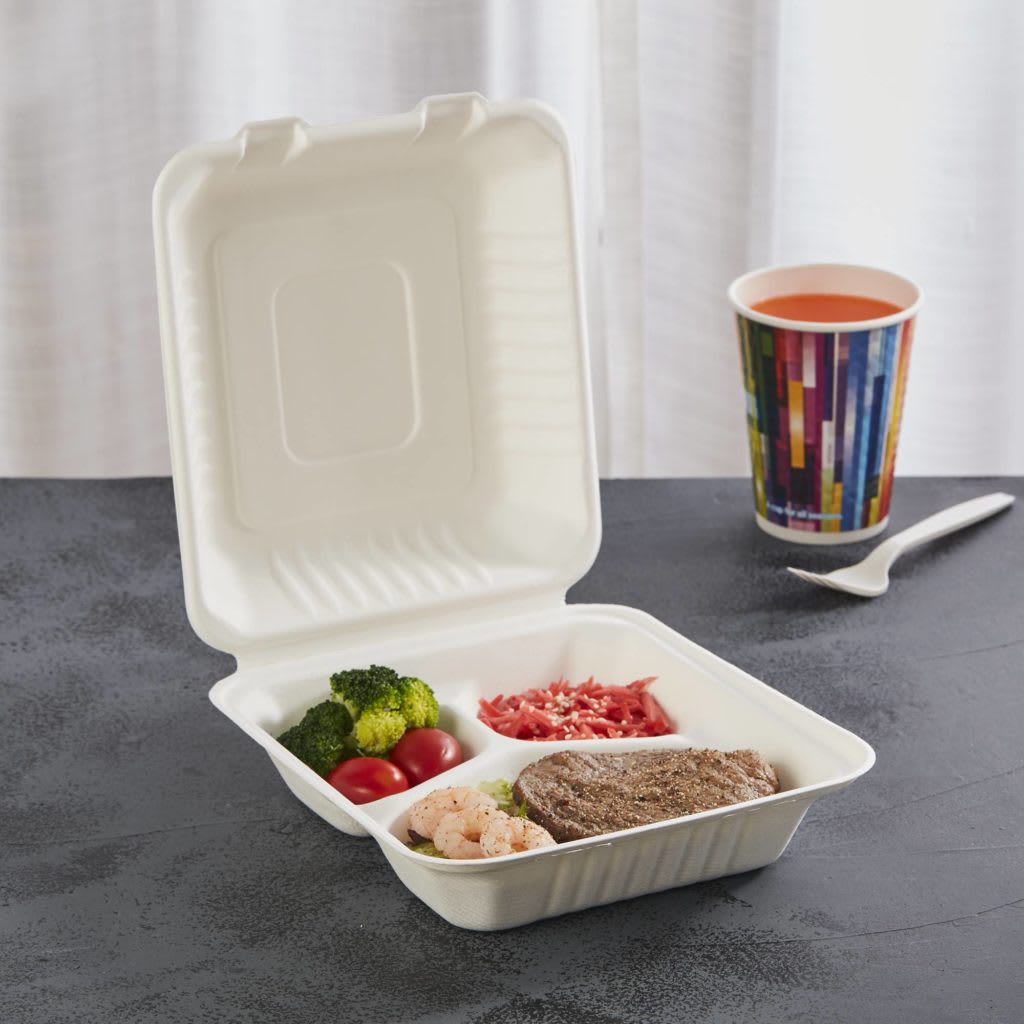
Climate change is no longer a distant threat—it’s a measurable crisis accelerating faster than most business models can adapt. With the global packaging industry contributing up to 5% of total greenhouse gas emissions (UNEP, 2022), companies are under increasing pressure to reduce their carbon footprint. In particular, single-use plastic food packaging has become a major target, both for regulatory reform and sustainable innovation.
Fortunately, the rise of bagasse packaging offers a powerful way forward. As a byproduct of sugarcane processing, bagasse food packaging is not just biodegradable—it’s carbon-efficient, renewable, and increasingly affordable. When purchased in volume, wholesale biodegradable food packaging solutions can slash a business’s emissions by up to 65% compared to plastic-based alternatives, according to lifecycle assessment studies from the Journal of Cleaner Production.
For food businesses, hospitality groups, and eco-conscious brands, switching to biodegradable food packaging wholesale is no longer just a green gesture—it’s a smart, scalable strategy for climate leadership.
The Carbon Problem with Conventional Packaging
Traditional food packaging—particularly plastic and polystyrene—relies heavily on fossil fuels. From extraction and processing to manufacturing and incineration, plastic contributes to significant carbon emissions at every stage of its lifecycle.
A 2021 report by the Center for International Environmental Law (CIEL) found that global plastic production and incineration contribute over 850 million metric tons of greenhouse gases annually, expected to surpass 1.3 billion metric tons by 2030 if unchecked.
Worse still, the recycling system is broken. Less than 10% of plastic gets recycled worldwide, with the rest ending up in landfills, waterways, or the open environment—releasing more greenhouse gases as they break down into microplastics.
Why Bagasse Packaging Is a Climate-Smart Alternative
So, what makes bagasse packaging different?
🌿 1. From Waste to Resource
Bagasse is the fibrous residue left after sugarcane stalks are crushed for juice. Rather than being burned or discarded, this agricultural byproduct can be molded into containers, bowls, plates, and more. This transforms waste into a low-carbon raw material, minimizing resource extraction and maximizing circular value.
⚡ 2. Low Energy Manufacturing
Compared to plastic or even virgin paper, bagasse requires significantly less energy to produce. According to a lifecycle assessment published in Environmental Progress & Sustainable Energy (2022), bagasse-based packaging emits 65% less CO₂ than polystyrene during production and disposal.
🍽️ 3. Compostable and Non-Toxic
Bagasse food packaging is biodegradable and compostable under commercial conditions. Within 60–90 days, it decomposes into nutrient-rich organic matter—no toxins, no microplastics. That means zero methane emissions (common in landfill conditions), and less burden on waste systems.
Functional Advantages for Food Service
Beyond sustainability, bagasse food packaging offers performance advantages that make it ideal for real-world food applications:
✅ Heat Resistant up to 200°C
✅ Microwave and Freezer Safe
✅ Oil and Water Resistant
✅ Rigid and Durable
✅ Breathable for Freshness
These features make it ideal for hot meals, takeaways, catering, and delivery—all without the environmental cost of foam or plastic.
Why Buy Wholesale Biodegradable Food Packaging?
Transitioning to sustainable materials is a noble step, but the key to large-scale success lies in wholesale procurement. Here's why:
📉 Cost Efficiency
Purchasing biodegradable food packaging wholesale reduces per-unit costs dramatically, making sustainable solutions viable even for budget-conscious businesses.
🔄 Supply Chain Stability
Bulk orders help ensure consistency in size, quality, and certification—critical for food safety and branding.
🌎 Lower Transport Emissions
Wholesale biodegradable food packaging means fewer shipments, reduced packaging waste, and optimized logistics—all of which contribute to a smaller carbon footprint.
✅ Compliance Made Simple
Governments worldwide are tightening restrictions on single-use plastics. Countries like India, the UK, and members of the EU are banning foam and plastic packaging in phases. Wholesale biodegradable options ensure proactive compliance.
Why Bioleaderpack?
When sourcing bagasse packaging in bulk, reliability and certification are everything. That’s why we recommend Xiamen Bioleaderpack Co., Ltd.—a leading innovator in the compostable packaging space.
✅ International Certifications: EN 13432, ASTM D6400, OK Compost
✅ Customized OEM Services
✅ Wide Range: From bagasse clamshells and trays to PLA lids and bamboo forks
✅ Global Export Ready
✅ Factory-Direct Pricing
As a trusted supplier for brands across North America, Europe, and Asia, Bioleaderpack has helped countless companies cut carbon and waste without sacrificing quality or performance.
Whether you’re a restaurant group, e-commerce food brand, or corporate catering provider, Bioleaderpack’s wholesale biodegradable food packaging will help you meet both operational needs and sustainability goals.
FAQ
1. What is bagasse packaging made of?
Bagasse packaging is made from the pulp of sugarcane after juice extraction. It is molded into trays, containers, and plates using heat and pressure—no plastics or harmful chemicals involved.
2. Is bagasse food packaging safe for hot meals and microwaves?
Yes. Bagasse containers are heat-resistant up to 200°C and safe for microwaves. They don’t release harmful substances when heated, unlike some plastic-based alternatives.
3. Where can I buy biodegradable food packaging wholesale?
We recommend Xiamen Bioleaderpack Co., Ltd., a leading supplier of wholesale biodegradable food packaging, offering certified bagasse and compostable products with international shipping.
4. How long does it take for bagasse to decompose?
In commercial composting facilities, bagasse decomposes within 60–90 days. It breaks down into natural compounds without leaving any toxic residue or microplastic pollution.
5. Is biodegradable packaging more expensive than plastic?
Initially, yes—but bulk purchasing greatly reduces cost per unit. Additionally, bagasse helps businesses avoid fines from non-compliance and enhances brand value through visible sustainability efforts.
The Bigger Picture: Why It’s Time to Act
We’re approaching a pivotal moment where packaging choices have global consequences. With only 10% of plastic being recycled, the default material used by millions of food businesses is no longer defensible.
Bagasse packaging changes the game—it reduces carbon, closes the loop, and performs just as well as traditional materials. For forward-thinking brands, it’s not only an ethical move but a strategic one.
By investing in wholesale biodegradable food packaging, companies not only shrink their emissions, but also future-proof their operations. And with global suppliers like Xiamen Bioleaderpack, the switch has never been more accessible or cost-effective.
About the Creator
Time Out Market to Close in Fulton Market
After years of drawing locals and tourists alike to Fulton Market, Time Out Market Chicago is set to close its doors. The popular food hall, known for bringing together some of the city’s best chefs, artisans, and culinary experiences under one roof, has announced that it will cease operations later this year. The closure marks the end of an era for one of Chicago’s most vibrant dining destinations and reflects broader trends in the restaurant and hospitality industry that have reshaped urban dining spaces over the past decade. The Rise of Time Out Market in Fulton Market Time Out Market first opened in Chicago’s Fulton Market District in 2019, quickly gaining a reputation as a destination where visitors could sample some of the city’s most celebrated chefs and street‑food vendors all in one place. The market followed a model that had already been successful in cities like Lisbon and New York: a curated collection of high-quality, chef-driven eateries, communal seating areas, and a lively atmosphere that combined dining with culture and entertainment. Located in a district already famous for its mix of historic meatpacking warehouses and trendy loft conversions, Time Out Market quickly became a hub for both food lovers and tourists seeking an authentic Chicago experience. (timeoutmarket.com) Why the Closure Is Happening While the exact reasons behind the closure are complex, several key factors appear to have contributed: 📉 Shifting Consumer Behavior The COVID-19 pandemic dramatically changed dining habits, with many customers moving toward delivery, takeout, and smaller neighborhood restaurants rather than large food halls. Even as in-person dining rebounded, some communal spaces struggled to maintain consistent foot traffic. 💰 Operational Costs Maintaining a high-quality, multi-vendor space in Fulton Market comes with significant overhead, from leasing costs to staffing and compliance with city regulations. Rising costs for ingredients, labor, and real estate have challenged profitability. 🌆 Urban Development Trends Fulton Market has evolved rapidly, attracting corporate offices, luxury condos, and boutique hotels. While the area’s growth has been positive for real estate, it has also intensified competition for dining options and raised expectations for commercial spaces, putting additional pressure on large-scale food halls. Impact on Local Vendors and Chefs One of the hallmarks of Time Out Market was its curated roster of local vendors. From acclaimed pastry chefs to innovative street-food vendors, many found a platform at Time Out Market that allowed them to reach a wide audience without the overhead of opening a standalone restaurant. The closure will leave dozens of small business owners seeking new spaces or alternative ways to reach their customers. While some may move to other neighborhoods or pop-up concepts, others may struggle to find affordable options in the city’s increasingly expensive food scene. For food lovers, the market’s closure means the loss of a one-stop destination to sample a variety of Chicago’s culinary talent in a single, vibrant location. The Cultural Significance Time Out Market was more than just a food hall—it was a social and cultural gathering place. Its communal tables encouraged interaction, its events showcased local music and arts, and its central location made it a natural meeting point for tourists and locals alike. For many, it represented the spirit of Chicago’s Fulton Market district: a place where history, innovation, and creativity intersected. Its closure will leave a gap not only in dining options but in the neighborhood’s cultural fabric. Industry Experts Weigh In Analysts note that the closure of Time Out Market is part of a broader trend affecting large-scale food halls across the U.S.. While some continue to thrive, particularly in cities with high tourist traffic or strong corporate sponsorship, others have struggled to adapt to post-pandemic consumer habits. In interviews with hospitality experts, several key points emerged: Adaptability Is Key: Food halls that survive often offer flexible layouts, hybrid dining and retail options, or smaller-footprint satellite locations. Experience Still Matters: While convenience and takeout are important, consumers continue to seek memorable experiences. Large markets must find ways to balance these two priorities. Local Partnerships Help: Collaboration with local businesses, breweries, and cultural institutions can drive consistent traffic and community engagement. What’s Next for Fulton Market? The closure of Time Out Market opens up opportunities for other businesses. Fulton Market remains a hotspot for culinary innovation, with new restaurants, bars, and pop-up venues continuing to open each year. Some industry insiders speculate that the space may be repurposed for smaller, boutique eateries, event spaces, or mixed-use commercial developments that cater to the neighborhood’s evolving demographics. Others believe the closure may inspire new concepts that combine food, culture, and technology in innovative ways. Reflections from Visitors For regular patrons, the news is bittersweet. Many recall their first visits to Time Out Market—sampling different cuisines, sharing tables with strangers, or attending weekend events. Social media posts following the announcement highlighted memories of birthday celebrations, first dates, and casual gatherings, underscoring the market’s role in the city’s social life. “It was our go-to spot for trying new chefs,” one visitor commented. “It’s sad to see it go, but we’re hoping whatever comes next keeps that spirit alive.” Conclusion: The End of an Era, and the Beginning of Something New The closure of Time Out Market in Fulton Market represents the end of a significant chapter in Chicago’s food and cultural scene. While it may be disappointing for fans and vendors alike, it also reflects broader trends shaping urban dining, commercial real estate, and consumer behavior. As the neighborhood continues to grow and evolve, there’s hope that new concepts will emerge, preserving the community-focused, culinary-driven spirit that made Time Out Market special. In the meantime, Chicagoans and visitors alike will treasure the memories and flavors that the market brought to Fulton Market, even as the city’s food scene moves forward into a new chapter.
By Muhammad Hassan3 days ago in Earth
Greenland News
Greenland News Greenland has increasingly drawn global attention in recent years due to its political developments, environmental changes, and growing strategic importance. As the world looks more closely at the Arctic region, news from Greenland reflects a unique mix of local priorities and international interest. From climate-related challenges to economic opportunities and governance issues, Greenland continues to shape its own path while remaining closely connected to global affairs.
By America today about 5 hours ago in Earth


Comments
There are no comments for this story
Be the first to respond and start the conversation.