
Cosseting the City or Keeping It in Check?
Why economic growth may depend less on pleasing lenders and more on rebalancing UK plc
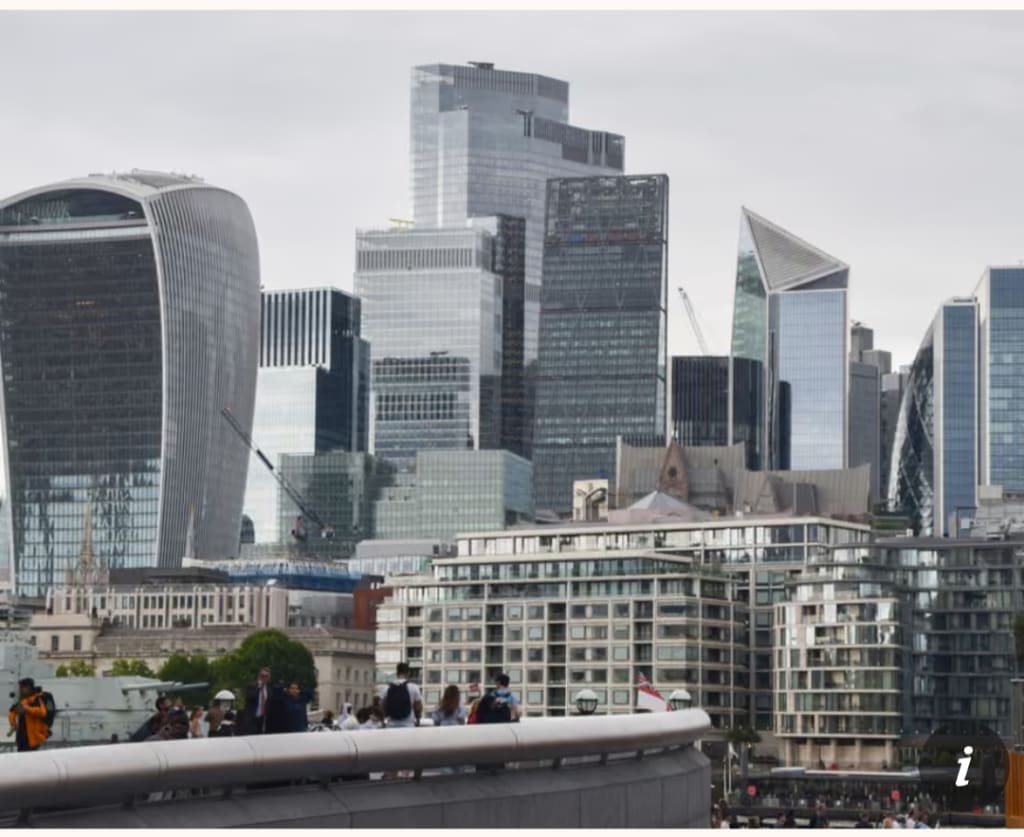
For decades, the City of London has been treated as the crown jewel of the British economy. Governments of all political colours have cosseted banks and financial institutions, convinced that a thriving financial sector is the key to faster economic growth, higher tax revenues, and global influence. The current chancellor is no exception, signalling a desire to keep City lenders comfortable in the hope they will fuel growth across UK plc.
Yet a growing body of evidence suggests this long-held assumption may be flawed. Far from acting as an engine for broad-based prosperity, an overpowered financial sector can distort the economy, drain talent, and divert capital away from productive investment. Instead of pampering lenders, studies increasingly argue that Britain would be better served by keeping finance firmly in check.
The Logic Behind Cosseting the City
The case for supporting the City appears straightforward. Financial services are a major contributor to UK GDP, provide high-value jobs, and generate significant tax revenues. The City also underpins Britain’s role as a global hub for investment, insurance, and capital markets.
From this perspective, loosening regulations and creating a “competitive” environment for banks seems sensible. If lenders are free to innovate, lend more, and attract global capital, the theory goes, growth will follow.
This belief has shaped policy for years. Regulation is often framed as a threat to competitiveness, while bankers are presented as vital partners in national prosperity.
The Growth That Never Quite Arrives
Despite this preferential treatment, the promised growth has often failed to materialise. UK productivity has stagnated, regional inequality has widened, and real wages have struggled to keep pace with inflation.
One reason is that financial sector growth does not automatically translate into economic growth elsewhere. Banks frequently channel capital into property, financial speculation, and asset inflation rather than into manufacturing, innovation, or small business expansion.
When finance grows faster than the real economy, it can become detached from productive activity. The result is higher house prices, rising debt, and fragile growth built on paper wealth rather than real output.
What the Evidence Says
Multiple academic studies have shown that beyond a certain point, an oversized financial sector actually drags on economic growth. Countries with disproportionately large banking sectors often experience:
Lower productivity growth
Greater economic volatility
Increased inequality
Reduced investment in productive industries
Finance is essential, but excess finance can crowd out other sectors. Talent that could drive innovation in engineering, technology, or science is instead absorbed by banking and financial services, where returns are higher but broader economic benefits are weaker.
Lending Priorities Matter
A key issue is not how much banks lend, but what they lend to. UK lenders have long favoured property and financial assets because they are perceived as safer and more profitable than investing in businesses that produce goods or develop new technologies.
This bias creates a cycle where:
House prices rise faster than wages
Businesses struggle to access patient capital
Innovation is underfunded
Economic growth becomes unbalanced
Cosseting lenders without guiding their behaviour reinforces these distortions rather than correcting them.
Regulation as an Economic Tool, Not a Burden
The idea that regulation stifles growth is deeply ingrained in political discourse. In reality, smart regulation can redirect financial activity toward productive ends.
Rules that discourage excessive risk-taking, speculative lending, and short-term profit chasing can help ensure banks support the wider economy. Far from driving finance away, stable and well-regulated systems often attract long-term investment by reducing the risk of crises.
The 2008 financial crash remains a stark reminder of what happens when lenders are left unchecked. The cost of rescuing the banking system was borne not by financiers, but by taxpayers and public services.
UK plc Needs Balance, Not Blind Faith
UK plc is not a bank. It is an economy made up of workers, businesses, communities, and regions with diverse needs. Treating the City as the primary engine of growth ignores the importance of:
Manufacturing and industry
Research and development
Infrastructure
Skills and education
Regional investment
When policy is overly focused on appeasing lenders, these areas risk being neglected. Growth becomes concentrated in London and the South East, while other regions fall further behind.
International Lessons
Countries with strong, sustainable growth often maintain tighter control over finance while actively supporting productive sectors. Germany’s regional banking model, for example, emphasises long-term lending to local businesses. East Asian economies have historically used financial policy as a tool to support industrial strategy rather than speculation.
These models challenge the idea that a lightly regulated, finance-led economy is the optimal path to prosperity.
The Political Comfort of the City
Part of the reason chancellors continue to cosset the City is political convenience. Financial markets react quickly to policy signals, and governments fear capital flight, falling investment, or market backlash.
But governing in the long-term interest of UK plc requires resisting short-term pressure. Appeasing lenders may buy temporary calm, but it does little to address the structural weaknesses holding the economy back.
A Different Approach to Growth
Rather than treating finance as an untouchable engine of growth, policymakers could:
Strengthen regulation to curb speculative excess
Incentivise lending to productive businesses
Support regional and sectoral investment banks
Align financial policy with industrial strategy
This does not mean punishing banks, but redefining their role as servants of the economy rather than its masters.
Final Thoughts
The chancellor’s instinct to cosset City lenders reflects a deeply rooted belief in finance-led growth. But mounting evidence suggests that this approach has delivered diminishing returns for UK plc.
Finance is a powerful tool, but like any tool, it must be used carefully. Left unchecked, it distorts incentives and weakens the foundations of long-term growth. Kept in balance, it can support innovation, productivity, and shared prosperity.
If Britain is serious about rebuilding its economy, the challenge is not how to please the City, but how to put it back in its proper place — as a means to an end, not the end itself.
About the Creator
Keep reading
More stories from Aarif Lashari and writers in Earth and other communities.
How Much Do You Need in an ISA for a Passive Income That Beats the State Pension?
For many people in the UK, the State Pension is expected to form the backbone of retirement income. But with rising living costs and growing uncertainty about the future, more savers are asking a crucial question: Can I build a passive income that beats the State Pension — and how much would I need in an ISA to do it?
By Aarif Lashariabout 22 hours ago in Earth
Ghana Wheat Market Size & Forecast 2025–2033
Introduction Ghana’s wheat market is steadily emerging as an essential segment of the country’s food economy. Driven by rapid urbanization, changing dietary habits, and the expansion of bakeries, fast-food outlets, and packaged food manufacturing, wheat has become a key ingredient in everyday Ghanaian diets. According to Renub Research, the Ghana wheat market was valued at US$ 46.20 million in 2024 and is projected to reach US$ 79.89 million by 2033, growing at a compound annual growth rate (CAGR) of 6.27% during 2025–2033.
By Marthan Sir6 days ago in Earth
Met Office Issues Yellow Fog Warnings After Parts of UK Battered by Rain
After days of relentless rainfall sweeping across large parts of the United Kingdom, the Met Office has issued yellow fog warnings, cautioning residents and travelers to prepare for reduced visibility and hazardous conditions. The sudden shift from heavy rain to dense fog highlights the volatile nature of the UK’s winter weather and underscores the challenges it poses to transport, public safety, and daily life. From Heavy Rain to Thick Fog The recent spell of intense rain saturated the ground across England, Wales, and parts of Scotland, leaving rivers swollen and fields waterlogged. As calmer weather followed the downpours, a combination of high moisture levels, falling temperatures, and light winds created ideal conditions for fog formation. According to meteorologists, this type of fog—often called radiation fog—develops when moisture near the ground condenses overnight, forming thick, low-lying clouds that can linger well into the morning. The Met Office’s yellow warning signals that fog could significantly reduce visibility, in some areas dropping below 100 meters. While not the most severe level of weather alert, yellow warnings are designed to prompt awareness and caution, particularly for motorists, cyclists, and pedestrians who may be caught off guard during early morning commutes. Travel Disruptions and Safety Concerns Fog is one of the most dangerous weather conditions for road travel, as it can dramatically shorten reaction times and obscure hazards. Authorities have urged drivers to slow down, use fog lights appropriately, and maintain greater distances between vehicles. Motorways and rural roads alike are vulnerable, with sudden patches of thick fog appearing without much warning. Rail services may also experience delays, as drivers are required to reduce speeds when visibility drops. At airports, fog can disrupt flight schedules, causing delays or cancellations, particularly during peak morning hours. Aviation authorities closely monitor visibility thresholds, and even a short-lived fog bank can ripple through tightly scheduled operations. Emergency services have emphasized that pedestrians and cyclists should wear reflective clothing where possible, especially during early mornings and evenings. With darker winter days already limiting visibility, fog compounds the risks for vulnerable road users. Why Fog Follows Heavy Rain Meteorologists explain that fog warnings often follow periods of heavy rainfall. When rain saturates the ground, it leaves behind large amounts of surface moisture. If skies then clear and winds ease, the ground cools rapidly overnight, allowing moisture to condense into fog. This pattern is becoming increasingly familiar in the UK, where weather systems are growing more erratic. Climate scientists note that a warming atmosphere holds more moisture, increasing the likelihood of intense rainfall events followed by fog, frost, or sudden temperature drops. Regional Impact Across the UK The yellow fog warnings are not uniform across the country. Low-lying areas, river valleys, and rural regions are particularly susceptible. Parts of southern England, the Midlands, and eastern regions are among those most at risk, though localized fog could appear almost anywhere conditions align. In Scotland and northern England, lingering wet ground combined with colder overnight temperatures raises the possibility of fog forming alongside icy patches. This mix of hazards further complicates travel and increases the risk of accidents. What a Yellow Warning Really Means A yellow weather warning does not mean severe disruption is guaranteed, but it does indicate a heightened likelihood of impacts. The Met Office uses yellow alerts to encourage the public to stay informed and take sensible precautions. For fog, that means checking travel updates, allowing extra journey time, and staying alert to rapidly changing conditions. Weather experts stress that fog can be highly variable. One area may experience clear skies while another, just a few miles away, is blanketed in thick mist. This unpredictability is what makes fog particularly dangerous. Looking Ahead: More Changeable Weather Forecasts suggest that unsettled weather will continue in the coming days, with further spells of rain interspersed with calmer, colder nights—conditions that could lead to additional fog warnings. While no prolonged severe weather is currently expected, the pattern reflects the broader trend of increasingly changeable winters in the UK. For many residents, this serves as another reminder that winter weather is no longer defined by just cold or snow. Instead, a mix of heavy rain, flooding risks, fog, and sudden temperature shifts is becoming the new normal. Staying Prepared The Met Office advises the public to regularly check forecasts, especially before traveling, and to remain flexible with plans during periods of weather warnings. Simple measures—such as cleaning car windows, ensuring lights are functioning, and staying updated via official channels—can significantly reduce risk. As the UK continues to navigate this wet and fog-prone winter, awareness and preparation remain the best defenses. While the fog may lift by midday in many areas, its early impact serves as a timely reminder that even seemingly mild weather hazards can have serious consequences.
By Fiaz Ahmed 4 days ago in Earth



Comments
There are no comments for this story
Be the first to respond and start the conversation.