


Conspiracy theories themselves are not a modern phenomenon, with conspiracy documented as far back as the burning of Rome circa AD 64, one of the original examples that, in times of crisis or uncertainty – conspiracy will flourish. To define conspiracy, we must think of it as separate to other forms of belief; superstitious, religious or paranormal. Conspiracy, described briefing here, is a proposed plot carried out in secret with a sinister goal, carried out by powerful people. In this essay, we will initially look at neuronal mechanisms such as a heightened need for cognitive closure, as well as what primes people to become fixed on a belief even when presented with evidence on the contrary.
The need for cognitive closure can be triggered by threat, real or perceived. Conspiracy theory could take root in an individual if we are to follow the aforementioned point that conspiracy thrives in uncertain times, when cognitive closure offers a solution to uncertainty. The fear response that is present when an individual feels threatened leads to an amygdala arousal response. Under test conditions, it was also evidenced that a galvanic skin response showed heightened arousal and distress when cognitive closure could not be reached.
It is shown during test conditions that certain individuals have amplified need for cognitive closure. A higher score would indicate a greater need for cognitive closure. Questions could be adapted as long as they were coded/reverse-coded, following the same pattern. The outcome was that greater need for cognitive closure was a strong indicator of adopting conspiratorial thinking when presented with an uncertain narrative.
It is prescient to acknowledge that during stressful situations or emotional arousal there is a temporary increase in neuroplasticity. This mechanism is thought to initiate memory formation and rapid-learning around threat in order to protect against or prevent future occurrences. Neurotransmission originates in the brain stem then travels through pathways which ascend and activate serotonin, norepinephrine, acetylcholine, and dopamine systems. However, after the arousal has ebbed or the threatening situation is no longer there, there is seen to be a rapidly reduced plasticity – due to overload or cognitive exhaustion when neurotransmitters are depleted. This has the outcome of freezing or staying fixed on said data or information. The term “Seizing and Freezing” has been adopted for this occurrence when it is shown that modification of the fixed belief is not easily made.
One reason that specifically conspiracy belief is seized-upon when presented alongside other causation is that when individuals are using sense-making motivation, proportionality bias is at play – the idea that the size and impact of the consequence must have a comparably large, albeit, secretive cause. Another area of study that contributes is pattern perception. Pattern perception is a functional and automatic neural-process which is intended as brain data-collection to keep us safe. However, as it is also heightened in times of threat, it’s vulnerable to distortion through an increase in perception of such patterns, giving motive to otherwise random events. This ultimately leads to misinterpreting random stimuli as having meaning and internalizing it. An example of this in action can be shown on forums such as Reddit under the heading r/conspiracy, in which users compare the amount of times celebrities wore a certain color or covered one eye during photoshoots as a nod to supposed Illuminati membership.
In a second experiment, they sought to show that those already screened for a high need for cognitive closure would be more likely to seize upon information if it was made “temporarily salient” during pre-defined uncertainty. This would be seen to form a schema – defined as a construct or encoded bundle of data seen repeatedly in society and used to aid us to cognitively digest the world with rapidity and ease. They form our beliefs, and though they are internally developed in our benefit and ultimately safety, they can be said to contribute to unconscious bias, which occurs when our automatic thoughts remain unchecked even if they don't represent our more rational moral code. It would be fair now to say that “Memes” as a visual communication tool are comparable to a public form of Schemata, particularly the element in which the information becomes salient because it is repeated. In the aforementioned experiment, it was shown that more easily accessible information, when paired with uncertainty and a need for cognitive closure, was most readily appropriated.
Memeplex as a neurological term refers to multiple concepts which positively interact and reinforce one another. Again, comparable to the bundling effect of a schemata, this is due to non-conflicting pieces of data being less cognitively demanding to commit to memory than conflicting data that requires plasticity. The magnetic effect of memeplexes neurologically could be what is said to lead to individuals developing a “conspiracy mindset” rather than attaching to one singular conspiracy.
Updating belief involves advanced functionality of many areas of the brain including the frontal lobe, as well as the amygdala, insula, and striatum – this comes at significant cognitive cost. It has been shown that there are three distinctive brain states when it comes to belief; believing, not believing, and being uncertain. Belief and disbelief are binary states which, though contrasting, are at least a point of closure that informs our next steps and modulates our emotion. In fMRI testing, the brain areas implicated are the medial PFC, the anterior insula, the superior parietal lobule, and the caudate. Belief and disbelief states are shown through acute signal deviations in the claudate, whereas in comparison, the state of uncertainty is not fixed – representing an inertia state that is not sustainable.
This work shows that our least costly cognitive state to be in would be “believing" - most comparable, therefore, to what is known as the Default Mode Network. The Default Mode Network encapsulates the posterior and anterior midline structures and the lateral inferior parietal lobes. In an experiment developed by Kaplan, Gimbel, and Harris, which looked to monitor the Default Mode Network using FMRI as people analyzed data which was counter to their beliefs, showed less BOLD signal in the amygdala and also the insula when appraising evidence.
Before concluding, we must look at one of the more pertinent areas of belief-maintenance, cognitive dissonance. Cognitive dissonance is the negative valence felt when experiencing inconsistent or conflicting cognitive notions. It is felt internally as a threat to our emotional homeostasis and defined by a desire to take immediate steps to rebalance. The pattern outlaid shows that resolution is sought by following these approximate steps “perception of inconsistency, followed by dissonance discomfort, accompanied by aversive emotions and sympathetic activation which serve as a drive to motivate efforts to reduce the dissonance in a wide variety of ways". Using fMRI, they showed that the areas which were activated are implied in emotional processing, memory, and attentional motor control such as the anterior cingulate cortex, anterior insular cortex, inferior frontal gyrus, and praecuneus. Dissonance also occurs when an individual is being challenged - they found that the same set of brain areas are implicated in conflict of ideas.
One promising area of study in the prevention of conspiratorial thinking is metacognition, which is essentially thinking about thinking. Being able to reflect on our own cognitive journey to personal belief while monitoring our internal valence-gauge could be the answer to resisting the conspiratorial rabbit holes presented to us on the internet or by casual word of mouth. Self-affirmation is another, the act of encouraging individuals a safe space to contemplate and validate their own intrinsic personal values has been shown to reduce our reactivity to threat and dissonance meaning, less necessity to compensate with outlandish thinking.
The most recent and more radical research looks at belief as scalable in its utility – does your belief offer you access to a particular group (i.e., pro-social) or allow you to maintain particular entrenched behaviors such as continuing to fly, though we know the environmental implications? Revealing new evidence may not be enough to change belief unless the new information does not have a higher utility attached.
Another discouraging concept is the Backfire Effect, when new compelling contrary evidence results in a doubling down or increase in the original conviction. Seen as a form of confirmation bias, it arises when an individual seeking information that proves that they are not incorrect reinforces neural pathways and increases memory formation, leaving the original belief stronger than before the challenge or conflict. However, this has not been easily replicated in test conditions, and in tests, it was found that in those who did show signs of the backfire effect also displayed more rage and discord than those able to reappraise their beliefs.
In conclusion, neuroscience has broadened this field hugely by utilizing FMRI, electrodermal, and EEG studies as well as instruments all designed to reveal the internal processes involved. However, a clear pathway to prevention is not yet clear. Further research is needed to understand the mechanisms underlying conspiracy thinking and to develop effective strategies for mitigating its impact.
About the Creator
Nathalie Limon
Human in semi-good condition, fascinated by the human condition.
See more of me on instagram: @nathalie.limon_moves
Keep reading
More stories from Nathalie Limon and writers in Earth and other communities.
A Wandering Nerve
Waking in unfamiliar surroundings was a feeling she knew well, confused and dehydrated, with a dull ache in the head that made her reluctant to open her vinegar eyelids. A white hot light met her pupils causing her lids to snap shut again replacing the bright light with large seared orbs, seemingly trapped beneath the membrane of skin.
By Nathalie Limon4 years ago in Fiction
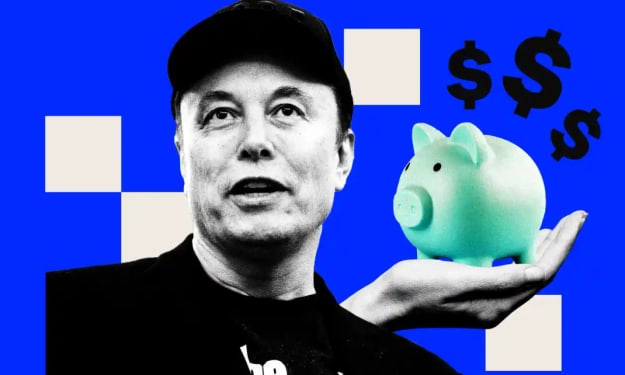
Elon Musk Says Retirement Savings “Won’t Matter” in 20 Years—Here’s What Experts Think
Recently, Elon Musk sparked a heated debate on social media with a bold claim: in 20 years, traditional retirement savings “won’t matter.” The Tesla and SpaceX CEO suggested that the way people think about money and retirement today might be completely obsolete in a couple of decades. As usual, Musk’s statements are equal parts provocative and visionary, leaving many wondering whether they should rethink their financial plans entirely. To get clarity, we reached out to seven personal finance and AI experts to hear their thoughts on Musk’s prediction. Their insights provide a mix of caution, optimism, and futuristic thinking. 1. The Case for Obsolescence: AI and Automation AI strategist Dr. Karen Liu believes Musk isn’t exaggerating when he talks about the diminishing importance of retirement savings. “If AI and automation continue at the current pace, many traditional jobs could disappear,” she explains. “By 2046, people might earn income from AI-driven ventures, digital assets, or royalties rather than a 9-to-5 paycheck. In that case, the way we save for retirement could indeed look very different.” She emphasizes that new financial models might emerge, such as universal basic income (UBI) or AI-managed wealth portfolios, making conventional retirement accounts less critical. “People might no longer need 401(k)s or IRAs in the same way we do now,” she adds. 2. The Human Factor: Some Things Don’t Change Personal finance advisor Marcus Bell takes a more conservative view. “Even if the economy changes drastically, money management skills won’t be irrelevant,” he says. “Musk may be right that retirement savings as we know them may evolve, but having a financial cushion will always matter. Emergencies, healthcare costs, and life changes won’t disappear.” Bell suggests a hybrid approach: continue contributing to traditional retirement accounts while exploring alternative investments like digital currencies, AI-managed funds, or entrepreneurial ventures. 3. Cryptocurrency and the Digital Asset Revolution Crypto expert Priya Desai sees Musk’s comment as a nod toward the rise of digital assets. “By 2046, much of personal wealth may reside in cryptocurrencies, tokenized real estate, and NFTs rather than bank accounts or pensions,” she says. Desai believes that blockchain technology could redefine ownership and wealth accumulation, making traditional retirement savings less central. However, she cautions: “Digital assets are highly volatile. While they may replace some retirement vehicles, they aren’t a guaranteed substitute. Diversification will remain crucial.” 4. AI-Powered Wealth Management AI entrepreneur Rohan Kapoor points out that AI itself could make traditional retirement planning almost obsolete. “Imagine AI systems that continuously optimize your investments, taxes, and spending in real-time,” he says. “If AI handles wealth accumulation more efficiently than humans, you may not need to manually save and plan decades in advance.” Kapoor predicts that by 2046, AI advisors could create personalized financial lifelines that automatically adjust for inflation, market changes, and lifestyle goals. In this scenario, traditional 401(k)s might feel outdated. 5. The Social Safety Net Factor Economist Dr. Elise Morgan reminds us that social and political structures will also play a role. “Even if technology changes how wealth is accumulated, government programs like Social Security, healthcare, or UBI will shape retirement,” she explains. “Musk’s statement assumes a high-tech, highly automated economy, which is just one possible scenario.” Morgan urges caution: relying solely on futuristic predictions could be risky. Traditional savings may still act as a fallback if economic or technological disruptions fail to deliver as Musk anticipates. 6. Mindset and Wealth Beyond Money Financial psychologist Sandra Liu emphasizes that wealth isn’t only monetary. “Even if retirement accounts lose their traditional meaning, financial literacy, resourcefulness, and the ability to leverage technology will remain critical skills,” she says. “Musk’s prediction is more about mindset than accounts. People who can adapt, innovate, and use technology to generate income will thrive regardless of conventional savings.” 7. Preparing for the Future, Not Panicking Finally, futurist Jared Thompson encourages a pragmatic approach: “Don’t panic or abandon your retirement plan just because Elon Musk said so. Think of it as a signal to diversify—invest in tech, learn AI skills, and explore new income streams.” Thompson suggests a “layered strategy”: keep some traditional retirement savings while experimenting with AI-driven investment platforms, cryptocurrencies, and entrepreneurial projects. What Does This Mean for You? Musk’s prediction may sound extreme, but the expert opinions reveal a spectrum of possibilities. Here’s a practical takeaway: Keep saving, but diversify: Don’t abandon retirement accounts, but explore AI-driven investments, crypto, or digital assets. Invest in skills: AI, coding, and tech literacy may be as valuable as cash reserves in 20 years. Embrace flexibility: Financial plans should be adaptable to rapid technological and societal changes. Mind the basics: Emergency funds, debt management, and smart spending remain essential regardless of tech trends. In short, Musk’s warning isn’t necessarily a call to abandon traditional retirement planning—it’s a reminder that the future of money is changing rapidly. Those who combine conventional strategies with an eye on emerging technologies may be the ones who truly thrive in 2046. Conclusion: Elon Musk’s claim that retirement savings “won’t matter” in 20 years is provocative, but it opens an important conversation about the intersection of finance, technology, and the future of work. While some experts see it as a harbinger of radical change, others stress prudence and flexibility. Either way, the message is clear: the next two decades will demand both financial savvy and tech literacy. The question isn’t whether retirement savings will disappear—it’s whether you’ll adapt to the evolving financial landscape.
By Muhammad Hassan5 days ago in Earth
Things you don't know about Africa
Africa: What You Probably Didn’t Know Article No. 1671 Tuesday, 25 February 2020 By Wardah Baloch In terms of land area, Africa is the second-largest continent in the world. It covers nearly 22 percent of the world’s total landmass and about 6 percent of the Earth’s total surface area. Only Asia is larger than Africa in size.
By Sudais Zakwan5 days ago in Earth



Comments
There are no comments for this story
Be the first to respond and start the conversation.