
Come and see where oil comes from, is it really going to be used up? It's actually for the environment!
Take a look at the origins of oil

The year 2020 was a remarkable one, as the whole of humanity suffered a tragic loss due to the invasion of Newcastle Pneumonia. Our country was the first to respond to and contain the outbreak, which gave our people a great sense of pride. Although the epidemic had just started, the response was timely and the outbreak did not expand further.
During the New Year, people travelled less and mostly stayed at home to avoid contact with others. Petrol prices became so cheap at that time that many people lamented that they hadn't seen such low gas prices for a long time. The rising gas prices over the past few years have finally bowed in the face of the epidemic and he dares not be proud.
At first, I thought it was because people across the country were travelling less and using less petrol, so naturally, the price came down. After all, oil, which is the raw material for petrol, is a non-renewable resource. Use less and the price will only go up in the future, not down. So mankind is constantly choosing and developing new energy sources, partly to avoid CO2 emissions and partly because oil is a non-renewable resource that will one day run out.
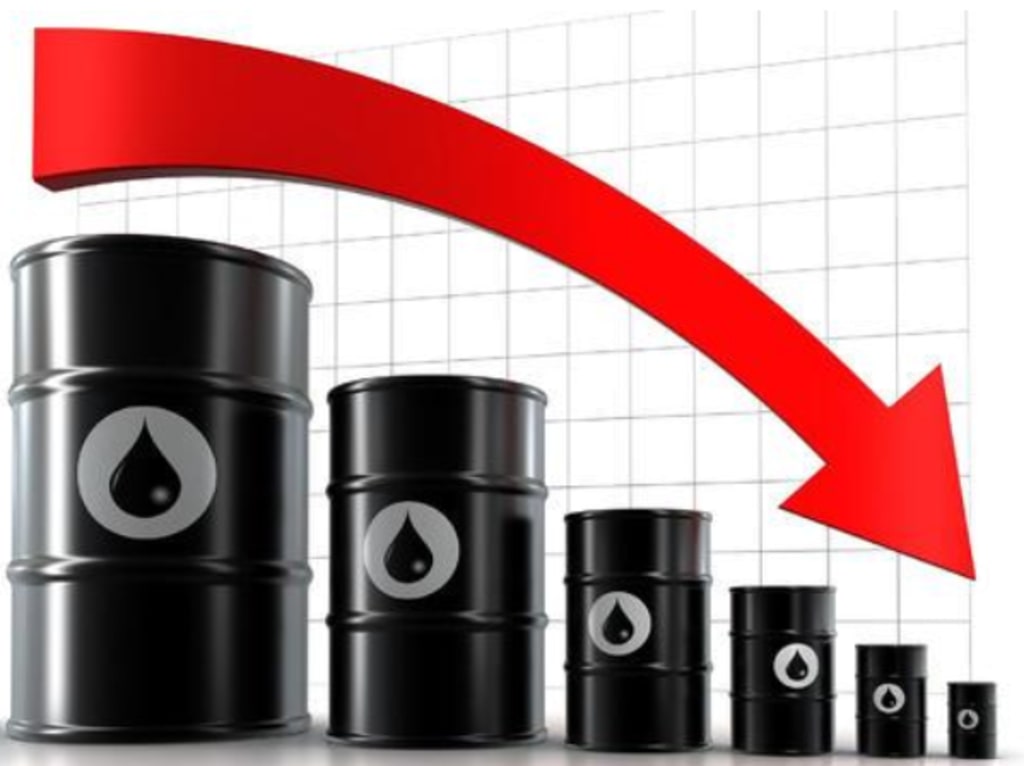
However, I was shocked by a news story in April. The price of US crude oil futures fell below zero dollars, closing at -$37.63 per barrel. The futures price is not the spot price, but it reflects the depressed state of crude oil. The news drew my attention to oil and I went to find out more.
You may notice that I have just talked about oil and crude oil. So first, let's sort out the relationship between the two.
Typically, oil is a mixture of naturally occurring gaseous, liquid and solid hydrocarbons. It is a mixture of liquid hydrocarbons such as alkanes, cycloalkanes, aromatic hydrocarbons and olefins.
Generally, crude oil is unprocessed oil extracted directly from the ground or the sea floor and is a viscous, oily liquid with a dark brown colour, green fluorescence and a distinctive odour.
But what we are used to talking about is the definition of crude oil, which is a viscous, oily liquid. But the definition of petroleum is a little bigger than crude oil. This is because petroleum contains not only liquid crude oil, but also gaseous and solid hydrocarbon substances.
Petroleum products are all over our lives, not just as fuel. So assuming that one day we run out of oil, then we don't just run out of one of the most commonly used fuels, which affects our travel. But life would be affected.
Let's look at the products of oil. The first is the fuel just mentioned. From small boilers and oil lamps to large aircraft and ships, all need to use fuel to function. Petroleum is processed by various physicochemical methods to obtain different fuels, and a wide range of fuels can be used for a variety of instruments and equipment.
The second is a bitumen. In our cities, the main roads are paved with asphalt. Because there are many advantages of using asphalt paving, the surface is flat, comfortable to drive, low vibration, low noise, wear-resistant, dust-free, easy to clean, short construction period, segmented construction, simple maintenance, and recyclable, these are all advantages.
The third is the lubricant. Our vehicles and various machinery at home can be used more smoothly by applying lubricant to reduce friction and thus reduce wear and tear and prolong life. In addition, it has the function of heat dissipation, insulation and sealing. Even Vaseline, which we use, is a lubricant, but we will make it more suitable for human use.
Fourthly, it is a solvent. In the chemical industry, this is indispensable. In addition to preparing various reagents, they can be cleaned according to their reactivity or solubility. For example, when we get to paint, we can clean it with petrol or paraffin.
Since we need oil so much, let's explore the causes of oil. To be honest, there is no definite conclusion so far. The two most dominant theories are the biogenic theory of oil formation (organic genesis) and the abiogenic theory (inorganic genesis). Let's look at them separately.
Biogenic oil theory (organic genesis theory): This theory suggests that oil was buried in thick sedimentary rocks (sedimentary rocks are organic matter that is constantly decomposing and mixed with sediment or carbonate deposits in a large number of plants and animals) after the death of ancient organic matter (animals and algae), and then mixed with sediment over a long geological period.
Under high temperatures and pressures underground, they were gradually transformed, first into waxy oil shales and then degraded into liquid and gaseous hydrocarbons. Because these hydrocarbons are lighter than the nearby rocks, they permeate upwards into the nearby rock formations until they penetrate the tightly impermeable empty rock layers above. The oil that slowly gathers together forms the oil field.
This theory is arguably the most mainstream and is used in our textbooks to tell us how oil is formed. So we all know from a young age that oil is a non-renewable energy source and will one day run out. We need to conserve energy and reduce our energy consumption. So how would you feel if one day you were told that oil is inexhaustible, or that it will not run out in a short time? See another theory.
The abiotic oil theory (inorganic genesis theory): This theory is a developing theory. Because scientists believe that the bio-oil theory is still flawed, they have been studying the origin of oil. Dr Cui Yongqiang of the Daqing Oilfield Exploration and Development Research Institute in China has pointed out that in astronomy, geology, scientific experiments and exploration and development practice, we have found that the large-scale existence of hydrocarbons is not based on the presence of biogenic material. For example, large amounts of methane have been found on Titan.
And there is one more thing that proves the bio-oil-forming theory wrong: entropy, which is the second law of thermodynamics. Thermodynamic calculations show that the chemical potential of all biomolecules is less than that of methane and decreases as their degree of polymerisation increases. In contrast, the chemical potential of hydrocarbon molecules above ethane is greater than that of methane and increases with their degree of polymerisation. The evolution of life molecules to hydrocarbon molecules is a process from low chemical potential to high chemical potential, which violates the second law of thermodynamics spontaneous process must evolve towards entropy increase.
Dr Cui Yongqiang also published a paper "Modern Petroleum Geology - Mantle Source Oil and Gas Theory" to explain the formation of oil, in which he pointed out that oil and magma are different products of mantle fluids, both originated from hydrocarbon-alkaline fluids. The hydrocarbon component of alkaline fluids is the source of mantle source hydrocarbons. Mantle-derived hydrocarbons are at the heart of modern petroleum geology.
In the simplest terms (if you want to see the exact principle, please search for your paper), it is the high temperature and pressure conditions in the mantle that allow oil to form. Then, as the crust moves, hydrocarbons and alkaline fluids are enriched in the vacant sites.
All in all, according to current scientific knowledge, the bio-oil theory as we originally knew it has been disproved. And based on current oil extraction, oil production is only increasing. We have never heard of an oil field running out of oil.
However, this does not mean that we can squander oil energy as much as we like, because the increase in CO2 does have a significant impact on our environment. From an environmental point of view, let's reduce the burning of oil energy. We can already see an improvement in the environment by reducing car trips due to this year's epidemic. So no matter how high the price of oil is, please start with me!
I think it's a summary of the main points :
1. Oil is usually a mixture of naturally occurring gaseous, liquid and solid hydrocarbons. It is a mixture of liquid hydrocarbons such as alkanes, cycloalkanes, aromatic hydrocarbons and olefins.
2. Crude oil is generally unprocessed oil extracted directly from the ground or the seabed. It is a viscous, oily liquid, dark brown, with a green fluorescent colour and a peculiar odour.
3. But what we are used to saying about oil is the definition of crude oil, which is a viscous, oily liquid. But the definition of oil is a little larger than crude oil. This is because oil contains not only liquid crude oil but also gaseous and solid hydrocarbon substances.
4. Petroleum products are all over our lives. The first is fuel oil, the second is bitumen, the third is lubricants and the fourth is solvents.
The two most dominant theories of the genesis of petroleum are the biogenic theory (organic genesis) and the abiogenic theory (inorganic genesis).
6. The biological oil theory (organic genesis theory) refers to the gradual conversion of ancient organic matter (animals and algae) into oil after death due to high temperatures and pressures underground.
7. The abiogenic theory (inorganic genesis theory) refers to the formation of oil due to high temperature and pressure conditions in the earth's mantle. Then, due to the movement of the crust, hydrocarbons and alkaline fluids are enriched to the vacant position.
8. According to current scientific knowledge, the bio-oil theory, as we originally knew it, has been disproved. However, this does not mean that we can squander oil energy as much as we like, as the increase in CO2 does have a significant impact on our environment. Let's reduce the burning of petroleum energy from an environmental point of view.
About the Creator
De pepper
Share a little science every day
Britain in Talks With NATO to Boost Arctic Security
The Arctic Is No Longer a Frozen Backwater For decades, the Arctic sat quietly on the margins of global politics—remote, frozen, and largely ignored. That era is over. Britain is now in talks with NATO to strengthen Arctic security, acknowledging growing risks posed by Russia and China. In a notable shift, London’s assessment aligns closely with warnings long emphasized by Donald Trump, particularly as he continues to express strategic interest in Greenland. What once sounded like an eccentric fixation has evolved into a serious geopolitical conversation. The Arctic is rapidly becoming one of the world’s most contested regions, and Britain is positioning itself to play a larger role. Why Britain Is Paying Attention Now Although the UK is not an Arctic nation, it is an Arctic-adjacent power with significant strategic interests. British officials increasingly view the High North as critical to national and allied security. Melting ice is opening new shipping routes, exposing untapped natural resources, and making military movement easier than ever before. Britain’s talks with NATO focus on intelligence sharing, joint exercises, surveillance capabilities, and protecting undersea infrastructure such as communication cables and energy pipelines. These are not abstract concerns. Any disruption in the Arctic could have immediate consequences for European security and global trade. In short, what happens in the Arctic does not stay in the Arctic. Russia’s Expanding Arctic Footprint Russia is the dominant military power in the Arctic, and it is not slowing down. Moscow has reopened Soviet-era bases, deployed advanced missile systems, expanded its icebreaker fleet, and increased patrols across the region. The Arctic coastline represents a core part of Russia’s nuclear deterrent, making it strategically vital to the Kremlin. From NATO’s perspective, this military buildup creates both risk and uncertainty. Britain, which has long been vocal about Russian aggression—from Ukraine to cyber warfare—sees the Arctic as another front where deterrence must be strengthened before tensions spiral. The concern is not necessarily an immediate conflict, but miscalculation. In a region with harsh conditions and limited communication infrastructure, even minor incidents could escalate rapidly. China’s Quiet but Steady Arctic Ambitions While Russia’s presence is overt, China’s Arctic strategy is more subtle—and equally concerning to Western planners. Beijing calls itself a “near-Arctic state,” a label that has raised eyebrows in Europe and North America. Through investments, research stations, and partnerships, China is laying the groundwork for long-term influence. Britain shares NATO’s concern that China could use civilian projects for dual-use purposes, blending scientific research with intelligence gathering and infrastructure control. As Arctic shipping routes become commercially viable, China’s interest in controlling parts of the supply chain only grows. London’s alignment with these concerns reflects a broader shift in UK foreign policy: China is no longer viewed solely as an economic partner, but as a strategic competitor. Trump, Greenland, and Strategic Reality Donald Trump’s repeated interest in Greenland—most famously his suggestion that the United States should buy it—was widely mocked at the time. Yet behind the headlines was a strategic logic that many Western governments now openly acknowledge. Greenland sits at the heart of the Arctic, hosting vital air and naval routes between North America and Europe. It is also rich in rare earth minerals critical for modern technology and defense systems. As ice recedes, Greenland’s strategic value only increases. Britain’s current position, which aligns with Trump’s warnings about Arctic vulnerabilities, shows how quickly political perceptions can change. What once seemed unconventional now appears prescient. NATO’s Arctic Awakening NATO has traditionally focused on Eastern Europe and the North Atlantic. The Arctic, despite its importance, received less coordinated attention. That is changing. Britain’s talks with NATO reflect a broader alliance effort to integrate Arctic defense into its core strategy. This includes: Increased joint military exercises in cold-weather environments Enhanced monitoring of Russian and Chinese activity Strengthening cooperation with Arctic nations like Norway, Canada, and Denmark Protecting critical undersea and satellite infrastructure For Britain, this is also about credibility. As a leading NATO member and a key military power, the UK wants to demonstrate that it can contribute meaningfully beyond its immediate geography. Climate Change as a Security Multiplier One of the most striking aspects of Arctic security is how closely it is tied to climate change. Melting ice is not just an environmental issue—it is a strategic one. New sea lanes shorten travel between Asia and Europe, while access to oil, gas, and minerals becomes easier. This transformation increases competition and reduces natural barriers that once limited military movement. Britain’s involvement reflects recognition that climate-driven changes are reshaping the security landscape faster than traditional institutions were designed to handle. In this sense, Arctic security is a preview of future global challenges where environmental change and geopolitics collide. Domestic and Diplomatic Balancing Acts Britain’s Arctic engagement is not without challenges. Increased military involvement raises questions about defense spending, priorities, and escalation risks. Diplomatically, London must balance deterrence with dialogue, avoiding actions that could unnecessarily provoke Russia while still protecting allied interests. There is also the question of public awareness. Arctic security lacks the visibility of conflicts like Ukraine, making it harder to sustain political attention. Yet policymakers increasingly argue that prevention is cheaper—and safer—than crisis response. What This Means Going Forward Britain’s talks with NATO mark an important shift in how the Arctic is viewed: not as a distant frontier, but as a central arena in 21st-century security. Agreement with Trump-era assessments on Russia, China, and Greenland underscores how geopolitical realities can outlast political controversies. As competition intensifies, the Arctic will likely become a testing ground for cooperation, deterrence, and strategic foresight. Britain’s involvement signals that mid-sized powers are no longer content to watch from the sidelines. Final Thoughts The Arctic is warming faster than any other region on Earth—and so are the geopolitical tensions surrounding it. Britain’s move to boost Arctic security with NATO reflects a growing consensus that ignoring the High North is no longer an option. Whether driven by Russia’s militarization, China’s quiet expansion, or lessons drawn from Trump’s blunt warnings, one truth stands out: the future of global security may well be shaped at the top of the world, where ice, ambition, and power now intersect.
By Muhammad Hassan7 days ago in Earth
Miss Persephone's Manual to a Seemingly Ordinary Life
Miss Persephone was found at the dining table, her blue eyes swollen, her tears arriving and retreating like the tides of the ocean. Earlier that day, her family had visited her in the retirement home where she had lived for eight years. It was her eightieth birthday.
By Imola Tóth3 days ago in Fiction



Comments
There are no comments for this story
Be the first to respond and start the conversation.