
China: The Rising Giant of the 21st Century
China


In the 21st century, no discussion about global power and influence is complete without mentioning China. From a once-isolated nation to a dominant global player, China has emerged as a powerful force in almost every domain—economics, military, politics, and technology. With its ancient civilization, massive population, and strategic vision, China today stands as one of the most influential nations in the world.
Economic Powerhouse
China’s economic transformation over the past four decades is nothing short of extraordinary. After introducing market reforms in the late 1970s under Deng Xiaoping, China opened its doors to the global economy. The results were staggering. China rapidly industrialized, becoming the “world’s factory” by producing goods for global consumption. As of today, China is the second-largest economy in the world, just behind the United States, and it is on track to eventually surpass it.
Its Belt and Road Initiative (BRI), launched in 2013, is one of the most ambitious infrastructure and investment projects in history. Through the BRI, China has extended its economic influence across Asia, Africa, and Europe, building ports, roads, railways, and establishing financial ties with dozens of countries. This strategy not only boosts China’s economic reach but also creates long-term strategic partnerships with emerging nations.
China also leads in several cutting-edge industries. It is a global leader in electric vehicles, renewable energy, 5G technology, and artificial intelligence. Companies like Huawei, BYD, and Alibaba have become household names, competing on the global stage and showcasing China's innovation and manufacturing capabilities.
Military Might
Beyond economics, China has invested heavily in modernizing its military. The People’s Liberation Army (PLA), which includes the army, navy, air force, and strategic missile forces, is now one of the most advanced and largest militaries in the world. China has expanded its navy significantly, making it the largest in terms of the number of ships. It has also developed hypersonic weapons, cyber warfare capabilities, and a strong space program, including a space station and lunar missions.
China’s military expansion is particularly evident in the South China Sea, where it has built artificial islands and militarized them, asserting its territorial claims. This not only demonstrates its military strength but also signals its strategic intent to control key maritime routes and influence regional geopolitics.
Political Influence and Diplomacy
China’s global influence is also visible in its diplomatic strategies. It has strengthened its presence in the United Nations, the World Trade Organization, and other international bodies. Through soft power, China promotes its culture, language, and values. The Confucius Institutes, present in over 150 countries, are a part of this cultural diplomacy.
China also plays a key role in regional organizations such as the Shanghai Cooperation Organization (SCO) and BRICS. Its ability to form economic and strategic partnerships with countries in Africa, Latin America, and Southeast Asia shows its intent to be seen not only as a regional leader but also as a global one.
Technological Advancement
In recent years, China has shifted from being a technology imitator to an innovator. The country is making substantial investments in research and development (R&D). In 2023, China’s R&D spending was second only to the U.S. With the rise of companies like Tencent, Xiaomi, and DJI, China has shown the world that it can lead in areas like fintech, consumer electronics, and robotics.
Its digital economy is thriving, and the Chinese government’s push for digital currency (e-CNY) is a significant move toward redefining the future of global finance. With state support and strong policies, Chinese scientists and tech entrepreneurs are now challenging Western dominance in many sectors.
Challenges and Controversies
Despite its achievements, China faces numerous challenges. Internally, it has issues related to human rights, censorship, and lack of political freedoms. The situation in Xinjiang, the suppression of dissent in Hong Kong, and internet restrictions have drawn global criticism.
Externally, China’s assertive foreign policy has created tensions with neighboring countries and the West. Its trade practices, alleged intellectual property theft, and military posturing have led to strained relations, particularly with the United States and some European countries.
However, China has managed to maintain stability and continue its rise despite these challenges, which is a testament to its strategic planning and governance model.
Conclusion
China's rise is reshaping the global order. Whether in economic power, military capabilities, technology, or diplomacy, China has proven that it is no longer just a participant in the global system—it is a key architect of the future. With over 1.4 billion people, a vision rooted in thousands of years of civilization, and a clear strategy for growth, China is undeniably one of the most powerful countries in the world today.
The world must recognize and understand China's ambitions and strengths. Whether seen as a rival, a partner, or a competitor, China’s influence is too significant to ignore. As the 21st century progresses, China will continue to play a central role in shaping the destiny of the world.
About the Creator
Real life 🧬 stories
welcome to my channel this for the story real life my channel
Keep reading
More stories from Real life 🧬 stories and writers in Earth and other communities.
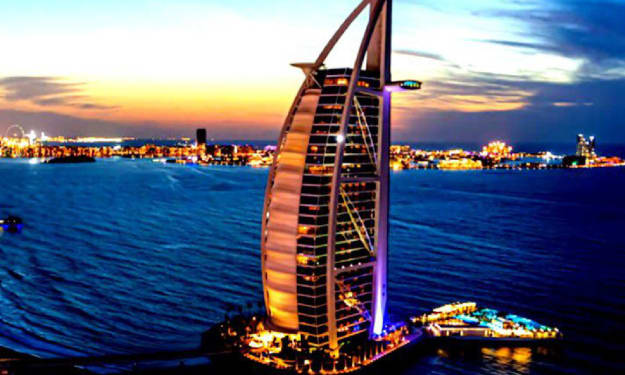
The Jewel of the Gulf: A Tale of Burj Al Arab
Rising proudly from the shores of the Persian Gulf, shaped like the billowing sail of a grand dhow, the Burj Al Arab stands as an enduring symbol of Dubai’s ambition, luxury, and unyielding pursuit of excellence. Often hailed as the world's most luxurious hotel, and sometimes referred to as the only “seven-star” hotel on Earth, the Burj Al Arab is more than just a marvel of engineering—it is a tale of vision, perseverance, and brilliance.
By Real life 🧬 stories 8 months ago in Journal
Frozen Pipes
As winter temperatures continue to dip across the UK, British Gas has issued a clear warning to households: frozen pipes are becoming an increasingly common and costly problem. While icy mornings may feel familiar, the damage caused by frozen pipes often arrives unexpectedly, disrupting daily life and leading to expensive repairs. The warning serves as a timely reminder that preparing your home for cold weather is not just sensible—it’s essential. Frozen pipes are not a new issue, but changing weather patterns, older housing stock, and rising energy costs have made them a growing concern. British Gas engineers report a surge in callouts every winter, many of which could have been avoided with basic preventative measures. Why Frozen Pipes Are Such a Serious Problem When water freezes inside a pipe, it expands. This expansion puts pressure on the pipe walls, increasing the risk of cracks or bursts. The most dangerous part is that the damage often becomes visible only when the ice melts. Suddenly, water begins leaking—sometimes flooding homes within minutes. According to British Gas, burst pipes are one of the most common causes of winter home emergencies. Repairs can range from simple fixes to major structural work, depending on how quickly the problem is discovered. In severe cases, homeowners may face damaged flooring, ruined furniture, and mould growth long after the pipe itself has been repaired. Which Homes Are Most at Risk? British Gas highlights that certain properties are more vulnerable to frozen pipes than others. Homes with older plumbing systems, poorly insulated lofts, or exposed pipework face a higher risk. Pipes located in garages, basements, lofts, or external walls are particularly susceptible to freezing temperatures. Unoccupied homes are another major concern. When heating systems are switched off entirely—common during holidays or long absences—pipes are left unprotected. British Gas warns that many winter emergencies occur in properties where no one is home to notice the early signs of freezing. The Hidden Cost of Frozen Pipes Beyond the inconvenience, frozen pipes can have significant financial consequences. Emergency callouts, plumbing repairs, and water damage restoration can cost hundreds or even thousands of pounds. Insurance claims may help, but policies often require homeowners to demonstrate that reasonable precautions were taken. British Gas notes that many claims are rejected because homes were left without adequate heating or pipe insulation. This makes prevention not only practical but financially wise. British Gas Advice on Preventing Frozen Pipes To help households avoid winter disasters, British Gas has shared several practical recommendations. These steps are simple, affordable, and effective when taken early. One of the most important tips is maintaining a low, consistent level of heating. Even when you’re away, keeping the thermostat set to a minimum temperature can prevent pipes from freezing. British Gas advises against turning heating off completely during cold spells. Insulating pipes is another key measure. Foam pipe insulation is inexpensive and easy to install, yet it significantly reduces heat loss. Insulating lofts and water tanks also provides added protection during prolonged cold weather. Letting taps drip slightly during extreme cold can also help. While it may seem wasteful, moving water is less likely to freeze. British Gas suggests this as a short-term solution during severe temperature drops. What to Do If You Suspect a Frozen Pipe Recognising the early signs of frozen pipes can make a big difference. Reduced water flow, strange noises from taps, or visible frost on pipework are all warning signals. British Gas recommends acting quickly if any of these signs appear. The first step is to turn off the water supply to prevent further damage. If it’s safe to do so, gently warming the affected pipe using a hot water bottle, warm towels, or a hairdryer on a low setting may help. Open flames should never be used, as they pose a serious fire risk. If the pipe has burst or you’re unsure how to handle the situation, contacting a qualified engineer is essential. British Gas encourages homeowners not to attempt complex repairs themselves, as improper fixes can worsen the damage. Energy Efficiency and Pipe Protection Go Hand in Hand British Gas also emphasizes that protecting pipes aligns closely with improving overall energy efficiency. Well-insulated homes retain heat better, reducing the strain on heating systems and lowering energy bills. Simple upgrades like draught-proofing doors and sealing gaps around windows can help maintain indoor temperatures and protect pipework. As energy costs remain a concern for many households, British Gas encourages homeowners to view pipe protection as part of a broader approach to winter efficiency. Preventative maintenance today can prevent financial stress tomorrow. A Seasonal Reminder Worth Taking Seriously Frozen pipes may not be the first thing people think about when winter arrives, but British Gas’s warning highlights how quickly a small issue can turn into a major problem. The good news is that most frozen pipe incidents are preventable with foresight and basic home care. By keeping homes heated, insulating vulnerable areas, and staying alert to early warning signs, households can significantly reduce their risk. British Gas’s message is clear: preparation is far easier and cheaper than emergency repairs. As winter continues, taking a few simple steps now can protect your home, your comfort, and your peace of mind—no matter how low the temperature drops.
By Saboor Brohi 7 days ago in Earth
Rubio to Meet Danish Counterpart Next Week Amid Rising Tensions Over Greenland
Senator Marco Rubio, one of the United States’ most influential voices on foreign policy, is scheduled to meet with his Danish counterpart next week to discuss the escalating Greenland crisis. The meeting comes at a time of heightened tensions in the Arctic, where strategic interests, natural resources, and geopolitical maneuvering have turned the region into a flashpoint between global powers. Rubio’s upcoming discussions in Copenhagen highlight the United States’ concern over Greenland’s growing geopolitical significance. The Arctic island, while sparsely populated, sits atop vast mineral reserves and plays a critical role in transatlantic security. Denmark, which maintains sovereignty over Greenland, has increasingly found itself at the center of debates over foreign investment, security alliances, and the influence of countries such as China and Russia in the region. Greenland: A Strategic Prize The Arctic has long been considered a frontier of strategic importance. With melting ice opening new shipping routes and access to untapped natural resources, Greenland has moved from a remote territory to a focal point of global attention. For the United States, maintaining influence over Greenland is not just about economic interests—it’s a matter of national security. Military analysts have pointed out that Greenland’s location is critical for monitoring missile activity and for establishing early warning systems. U.S. officials have voiced concern that without a solid diplomatic and strategic partnership with Denmark, Greenland could become vulnerable to foreign influence that runs counter to American interests. Rubio’s meeting seeks to reaffirm U.S. commitments to Denmark while ensuring that Greenland’s strategic positioning aligns with shared Western priorities. The Current Crisis The so-called Greenland crisis has been fueled by several recent developments. Reports of increased Chinese investment in mining projects and infrastructure, as well as discussions of potential Russian interests, have sparked unease in Washington. While Denmark maintains administrative control over Greenland, the island enjoys a degree of autonomy, particularly in economic matters. This semi-independence has created a delicate balancing act for Danish leaders, who must reconcile Greenland’s economic ambitions with broader security concerns. Diplomatic sources suggest that Rubio will raise these points during his meetings, emphasizing the need for transparency and cooperation in Greenland’s economic and security decisions. “We are looking at a situation where strategic partnerships must be strengthened to safeguard both national and regional interests,” a source close to the senator said. Denmark’s Position Denmark has historically managed Greenland’s affairs with a careful approach, respecting the island’s autonomy while ensuring that strategic decisions do not compromise the kingdom’s security obligations. Copenhagen has been wary of any moves that could be perceived as overreach by external powers. However, Danish officials also recognize the need to balance Greenlandic economic development with defense commitments to NATO and the broader Western alliance. “The Arctic is not just about resources—it’s about alliances, responsibilities, and ensuring that Greenland’s growth does not undermine collective security,” said a Danish diplomat. Rubio’s visit is therefore expected to be both a reaffirmation of U.S.-Danish ties and an opportunity to coordinate policy responses to external pressures in the Arctic. Broader Implications The Greenland crisis illustrates the shifting dynamics of global politics in the Arctic. With climate change accelerating ice melt, previously inaccessible areas are now opening to international competition. Shipping lanes, mineral extraction, and energy resources are increasingly contested, making strategic cooperation between allies like the U.S. and Denmark more crucial than ever. For the United States, ensuring that Greenland remains aligned with Western strategic interests is paramount. Rubio’s engagement with Danish officials signals a commitment to proactive diplomacy, aiming to preempt any unilateral moves by other powers in the region. Analysts suggest that this approach could serve as a model for handling Arctic issues more broadly, combining respect for sovereignty with strategic foresight. Political Context Rubio’s involvement in Arctic affairs is consistent with his broader foreign policy focus, which emphasizes countering adversaries while strengthening alliances. The Greenland crisis is one of several areas where the senator has sought to assert influence, reflecting a broader U.S. strategy to maintain leadership in contested regions. Critics, however, argue that such interventions can strain relationships with local authorities and risk being perceived as heavy-handed. Balancing strategic priorities with respect for Greenland’s autonomy will be a central theme in the upcoming discussions. Observers will be watching closely to see whether the meeting strengthens U.S.-Danish cooperation or exposes fractures in alliance cohesion. Looking Ahead Next week’s meeting promises to be a critical moment in U.S.-Danish relations. Rubio is expected to discuss a range of issues, from military cooperation and infrastructure security to investment transparency and regional governance. While details of the agenda remain confidential, the broader goal is clear: to ensure that Greenland’s strategic importance does not become a source of tension between allies or an opportunity for rival powers. As Arctic geopolitics continues to evolve, the outcome of these discussions could shape policies for years to come. Greenland’s unique position—geographically remote yet globally significant—makes it a bellwether for how nations navigate the complexities of sovereignty, security, and economic opportunity in a rapidly changing world. Ultimately, Rubio’s diplomatic efforts underscore a central truth: in today’s interconnected world, even the most distant territories can have outsized impact on international relations. Greenland may be remote, but its role in the unfolding Arctic story is anything but marginal. The coming week in Copenhagen will be closely watched by policymakers, analysts, and the global media as the U.S. and Denmark work to navigate this delicate crisis together.
By Muhammad Hassan3 days ago in Earth
Where's the Glory?
In breaking news, rehabilitated Republican Senator Johnnie Johnson (Pronouns: HE, HIM, HIS) called a press conference from the Men’s room of the New Orleans Louis Armstrong International Airport, Concourse B, across from the Ignatius Reilly’s Lucky Dog stand. The Senator had just returned from a sexual reorientation rehabilitation program in Memphis, TN after being publically disgraced at a Buckee’s Truckstop restroom soliciting sex from an undercover cop three months ago. He is a founding member of the Reformed Christians for Christ, a conservative, pro-family and ex-gay advocacy group. In the spirit of being reborn, Senator Johnson invited reporters to marvel at his plans for a major remodeling of airport bathrooms.
By Cathy Schieffelin4 days ago in Humor


Comments
There are no comments for this story
Be the first to respond and start the conversation.