
Better Planets for life than Earth
Planets discovery tips
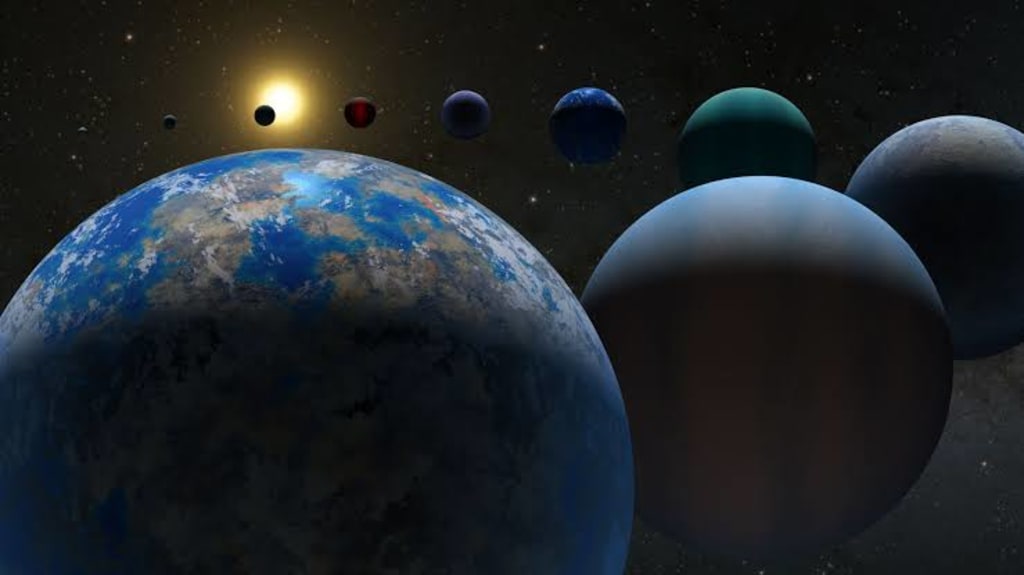
Earth may be wonderful, but researchers have found a few planets that may be even more favorable for life. Take a look at koi 5715.01. Koi 575.01 would seem to meet the most fundamental prerequisite for hosting life because it is located in the star's Goldilocks zone, where temperatures are just right for liquid water to exist on its surface. But it would also fulfill numerous requirements to be deemed extremely livable. The planet might almost satisfy the size criteria if the planetary system it belongs to is five and a half billion years old, making it roughly one billion years older than our own solar system.
When searching for extremely habitable planets, scientists look for ones that are up to 1.5 times as massive as Earth and are about 10% larger as well. This size difference would help the planet retain heat, and if its average temperature was about 5 degrees Celsius higher than Earth's, well this planet could have even richer biodiversity now being almost twice as large as Earth, koi 571 5.01 might overshoot this condition.
Furthermore, research suggests that this planet is really colder than Earth. Nevertheless, there is still optimism that the proper atmospheric makeup and a potent greenhouse effect will be able to elevate temperatures to the desired level.
Another better planet is Kepler 69c. Kepler 69c is a super Earth that is thought to be around 7 billion years old and is located around 2 700 light years distant. This places it exactly in the anticipated age range of five to eight billion years for super habitable planets. this range is based on the fact that it took three and a half billion years for sophisticated life to emerge on Earth.
The planet that has the best chance of hosting life may be a little older than Earth, but it may be a little too large to be extremely habitable. A rocky planet this size could have a single enormous continent, which would have vast deserts in its center, but the coastline may be more habitable. The right place for you to relocate might be Washed by Kepler's Ocean.
Kepler 1126b, the name of the planet that would be our next Super Earth, is a similar name, but it is two and a half times closer to its star than Earth is to the Sun. This planet is about 2073 light years away and is part of a system that is seven and a half billion years old. It also orbits a yellow dwarf star similar to our own. However, since the star Kepler 1126b orbits is cooler than ours, the habitable zone would be much closer to it. If you don't feel comfortable being so close to a scorching hot star, there is another Super Earth on our list that is located a respectable distance from Earth. It is called speculos 2c.
Even though speculos 2C is only 106 light years away, it would still take more than 200 000 years to travel there at the speed of NASA's Parker Solar Probe, which is the fastest spacecraft ever launched. Speculos 2C does appear promising, though it is about 40% larger than Earth and there is also the possibility that it is habitable. Speculos 2C is a rocky planet like ours that orbits a red dwarf star that is only about 15% the size of our sun. Despite the fact that it is in a habitable zone, Speculos 2C is tidally locked to its star because of the planet's close orbit. This super Earth completes both a full revolution on its axis and an orbit around its star in eight and a half days.
However, considering how far away all of these candidates are, wouldn't it be lovely if the planets in our own solar system were a little more habitable? But that's a topic for another day.
About the Creator
Keep reading
More stories from writers in Earth and other communities.
Hamptons Real Estate Prices Hit Record High as 2026 Summer Rentals in High Demand
The Hamptons, long synonymous with luxury, exclusivity, and summer getaways, has seen its real estate market soar to new heights in recent years. As we approach the summer of 2026, the area’s real estate prices are breaking records, and demand for vacation rentals has never been greater. While this trend is partly attributed to broader economic factors and changing work habits, it also signals an evolving landscape in the Hamptons real estate market that is shaping up to be one of the most competitive seasons in recent history.
By Ayesha Lashariabout 16 hours ago in Earth
When True Love Never Questions Your Soul
“And she’s going to learn that this life will hit you, hard, in the face, wait for you to get back up, just so it can kick you in the stomach but getting the wind knocked out of you is the only way to remind your lungs how much they like the taste of air.” — Sarah Kay’s Poem — If I Should Have a Daughter
By Chantal Christie Weiss2 days ago in Humans
Book Review: Atmosphere by Taylor Jenkins Reid
I flipped the book over in my hands in the centre of the small airport book shop. Although I had heard promising reviews of Atmosphere by Taylor Jenkins Reid, I hesitated. The synopsis didn’t compel me - I wasn’t much of a space girly. In high school it made me cringe when my peers would talk about the stars.
By sleepy drafts7 days ago in BookClub



Comments
There are no comments for this story
Be the first to respond and start the conversation.