
B2C vs. B2B: Navigating the Right Business Model for Your Startup's Success
B2C vs. B2B
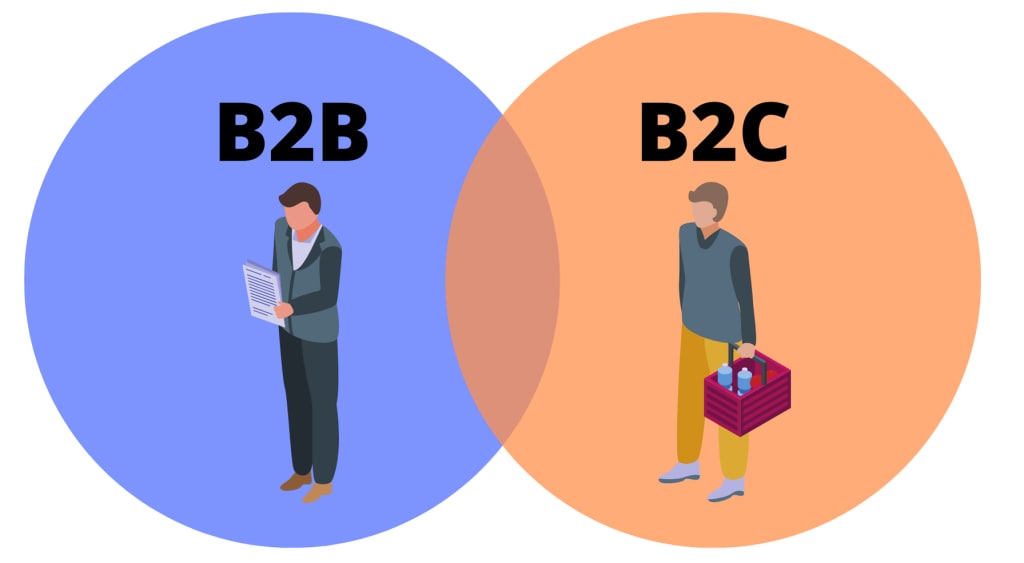
When launching a startup, one of the most crucial decisions is choosing between a B2C (Business-to-Consumer) or B2B (Business-to-Business) model. Both models have distinct advantages and challenges, and the best choice depends on your product, target market, and long-term goals.
B2C (Business-to-Consumer) Model
The B2C model involves selling products or services directly to individual consumers. This model is commonly associated with retail, e-commerce, consumer goods, and services like entertainment or health and wellness.
Advantages of B2C
Larger Market Potential:
Broad Audience Reach: B2C businesses can target a wide range of consumers across various demographics and geographies. The potential market size is vast, encompassing millions or even billions of people.
Global Opportunities: Thanks to the internet and social media, B2C companies can reach a global audience more easily than ever before.
Brand Building and Recognition:
Direct Interaction with Consumers: B2C companies have the opportunity to build strong relationships with their customers. Through direct engagement on social media, personalized marketing, and customer service, brands can create a loyal customer base.
Emotional Branding: Consumers often make purchasing decisions based on emotions, values, and brand affinity. B2C businesses can leverage this to create powerful emotional connections with their audience.
Shorter Sales Cycle:
Quick Decision-Making: Unlike businesses, individual consumers often make quick purchasing decisions, especially for low-cost items. This means a faster sales cycle, which can lead to quicker revenue generation.
Impulse Purchases: B2C models benefit from impulse buying, where consumers make spontaneous purchases based on emotions or immediate needs.
Scalability:
Digital Platforms: E-commerce platforms, social media, and digital marketing tools allow B2C startups to scale quickly and efficiently. Viral marketing and word-of-mouth can lead to exponential growth.
Low Barrier to Entry: It's relatively easy to start a B2C business, especially in the digital space. E-commerce platforms like Shopify or marketplaces like Amazon allow for quick setup and access to large customer bases.
Challenges of B2C
High Competition:
Crowded Market: The consumer market is highly competitive, with countless brands vying for attention. Differentiating your product or service can be challenging.
Marketing Saturation: Consumers are bombarded with advertisements, making it harder to capture and maintain their attention.
High Customer Acquisition Costs:
Expensive Marketing: Attracting individual customers can be costly, especially with the rising prices of digital advertising. B2C companies often need to invest heavily in marketing to build brand awareness.
Retention Costs: Keeping customers engaged and loyal requires ongoing investment in customer service, loyalty programs, and regular communication.
Price Sensitivity:
Consumer Behavior: B2C consumers tend to be more price-sensitive, especially for non-essential products. A slight increase in price can lead to a significant drop in sales.
Discounting Pressure: To stay competitive, B2C businesses often feel compelled to offer discounts, which can squeeze profit margins.
Customer Retention:
High Churn Rate: Consumers have many options, and switching between brands is easy. B2C businesses need to work hard to retain customers and reduce churn.
Constant Innovation: To keep consumers engaged, B2C companies must continuously innovate and refresh their offerings.
B2B (Business-to-Business) Model
The B2B model involves selling products or services to other businesses. This model is common in industries like software (SaaS), manufacturing, consulting, and professional services.
Advantages of B2B
Higher Value Contracts:
Larger Transactions: B2B sales typically involve higher-value contracts compared to B2C. A single deal can represent a significant portion of revenue.
Recurring Revenue: Many B2B models, especially in software (SaaS), are built on subscription-based or long-term contracts, ensuring a steady and predictable revenue stream.
Long-term Relationships:
Customer Loyalty: Businesses often prefer to establish long-term relationships with reliable suppliers and service providers, reducing the need for constant customer acquisition.
Customer Dependence: Once integrated into their operations, businesses may become dependent on your product or service, leading to high customer retention and lower churn rates.
Targeted Market Approach:
Niche Market Expertise: B2B startups can focus on a specific industry or business need, allowing for a more targeted and specialized approach. This often leads to less direct competition.
Efficient Marketing: B2B marketing is often more cost-effective than B2C, as it targets a smaller, more defined audience. Content marketing, thought leadership, and networking can be highly effective.
Lower Price Sensitivity:
Value over Price: Businesses are typically more concerned with the return on investment (ROI) and the overall value provided by a product or service, rather than just the price.
Willingness to Invest: Businesses are often willing to pay a premium for products or services that can significantly improve their operations, productivity, or profitability.
Challenges of B2B
Longer Sales Cycle:
Complex Decision-Making: B2B sales involve multiple stakeholders and decision-makers, often leading to a longer and more complex sales process.
Time-Consuming Negotiations: B2B deals often require extensive negotiations and customization, further extending the sales cycle.
Complex Sales Process:
Consultative Selling: B2B sales often require a deep understanding of the client's business, industry, and specific needs. The sales process is consultative, requiring strong expertise and relationship-building skills.
Customized Solutions: Many B2B clients require tailored solutions, which can complicate the sales process and increase the cost of delivery.
Limited Market Size:
Smaller Target Audience: B2B markets are typically more niche and focused, with a smaller number of potential customers compared to B2C. This requires precise targeting and a deep understanding of the market.
Industry Cycles: B2B businesses can be heavily impacted by industry cycles and economic downturns, which can affect purchasing decisions and contract renewals.
Dependence on Sales Teams:
Relationship-Driven Sales: B2B sales often rely on strong relationships between sales teams and clients. Building and maintaining these relationships requires skilled sales professionals.
High Sales Costs: The cost of acquiring B2B clients can be high due to the need for a specialized sales force, customized proposals, and long negotiation periods.
Factors to Consider When Choosing Between B2C and B2B
Product or Service Nature:
Mass Appeal vs. Niche: If your product has broad appeal and is easily understood by the general public, B2C might be more appropriate. If it's specialized or complex, requiring industry knowledge or specific use cases, B2B could be a better fit.
Market Research:
Understanding Demand: Conduct thorough market research to understand the demand in both the B2C and B2B spaces. Assess the market size, potential growth, and competitive landscape.
Customer Pain Points: Identify the pain points and needs of your target audience in both models. Determine where your product or service can offer the most value.
Sales and Marketing Strategy:
Marketing Channels: B2C often relies on digital marketing, social media, and direct-to-consumer advertising. B2B marketing typically involves content marketing, thought leadership, networking, and direct sales efforts.
Sales Approach: B2C sales are often transactional and automated, while B2B sales are relationship-driven and require a consultative approach.
Revenue Goals and Scalability:
Revenue Model: Consider how your startup will generate revenue. B2C models may scale quickly with a large customer base but often require high volume at lower margins. B2B models may grow more slowly but can achieve higher margins per customer.
Scaling Potential: Determine how scalable your business is in each model. B2C companies can scale quickly with digital tools, while B2B companies may need to expand their sales and support teams as they grow.
Company Vision and Goals:
Long-Term Vision: Align your business model with your long-term vision. If you aim for rapid growth and a wide market presence, B2C might be the way to go. If you prioritize stability, long-term contracts, and deep industry expertise, B2B could be more suitable.
Choosing between a B2C and B2B model is a critical decision that will shape your startup's future. Both models offer unique advantages and challenges. B2C provides access to a large market, faster sales cycles, and the potential for rapid growth, but it also comes with high competition, marketing costs, and customer retention challenges. B2B offers higher value contracts, long-term relationships, and specialized markets, but it requires a longer, more complex sales process and a highly skilled sales team.
Ultimately, the best choice depends on your product, market, and strategic goals. Carefully assess the nature of your product or service, the needs of your target market, and your business objectives. By aligning your model with your strengths and market opportunities, you can position your startup for success in the competitive business landscape.
About the Creator
Suresh Devendran
Tech writer exploring AI's impact on startups and innovation. Dive into stories of transformation and success in the tech world.
Keep reading
More stories from Suresh Devendran and writers in Earth and other communities.
AI Beyond Earth: Exploring the Role of Artificial Intelligence in Space Exploration and Colonization
As humanity sets its sights on the stars, Artificial Intelligence (AI) is poised to play a crucial role in our journey beyond Earth. From deep space exploration to the potential colonization of other planets, AI will be instrumental in overcoming the challenges of space travel and ensuring the success of missions that push the boundaries of human knowledge and capability. This write-up explores how AI is transforming space exploration and what the future might hold as we venture further into the cosmos.
By Suresh Devendranabout a year ago in Earth
Australia Urea Market Size and Forecast 2025–2033
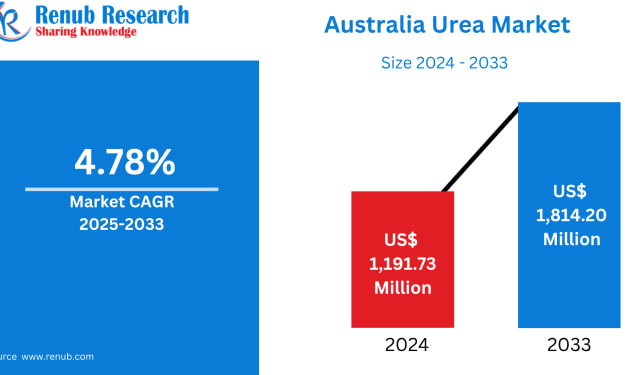
Australia Urea Market Overview The Australian Urea Market is anticipated to reach US$ 1,814.20 million in 2033, up from US$ 1,191.73 million in 2024, growing at a CAGR of 4.78% during 2025–2033, according to Renub Research. This growth is being driven by increasing demand from the agricultural sector for high-nitrogen fertilizers, expanding grain and crop cultivation, and rising government incentives for sustainable farming practices. Import substitution policies and growing interest in domestic production capabilities are also shaping market dynamics.
By Marthan Sir4 days ago in Earth
Miss Persephone's Manual to a Seemingly Ordinary Life
Miss Persephone was found at the dining table, her blue eyes swollen, her tears arriving and retreating like the tides of the ocean. Earlier that day, her family had visited her in the retirement home where she had lived for eight years. It was her eightieth birthday.
By Imola Tóth4 days ago in Fiction



Comments
There are no comments for this story
Be the first to respond and start the conversation.