
Australia HVAC Market Set to Quadruple by 2033 on Smart, Energy-Efficient Growth Wave
From USD 7.07 billion in 2024 to a projected USD 27.32 billion by 2033, Australia’s HVAC sector is riding strong demand for advanced and sustainable climate control solutions.


The Australia HVAC market reached a total valuation of USD 7,072.73 million in 2024 and is expected to grow robustly to USD 27,317.57 million by 2033, reflecting a compound annual growth rate (CAGR) of 16.20% between 2025 and 2033, according to IMARC Group. This rapid expansion underscores how climate control technologies are becoming essential across residential, commercial, and infrastructure segments in Australia, supported by evolving consumer preferences, regulatory drivers, and innovation.
Over the historical period from 2019 to 2024, HVAC demand steadily expanded as urban development, rising comfort expectations, and efficiency improvements shaped installation patterns across the country. Looking ahead, the next decade is poised to amplify this growth, driven not only by traditional heating and cooling needs but also by smart building integration, sustainability mandates, and health-focused ventilation improvements.
The market’s segmentation — spanning direct expansion systems, central air conditioning systems, and residential and commercial end users — reveals broad-based demand across multiple applications and regions, from New South Wales to Western Australia. As Australia grapples with climate variability and increasing construction investments, HVAC systems are rapidly transitioning from comfort add-ons to indispensable infrastructure.
Given the scale of forecasted growth and underlying dynamics, stakeholders ranging from equipment manufacturers to real estate developers and sustainability advocates are paying close attention to HVAC market trends and innovations.
Request a Sample Report with Latest 2026 Data & Forecasts:
Why the Market Is Growing So Rapidly
A central reason behind the Australia HVAC market’s strong trajectory is climate variability and regional weather demands. Australia’s vast geography produces diverse climatic conditions — tropical in the north and temperate to cool in the south — creating high and fluctuating needs for both cooling and heating systems. As temperatures swing seasonally and heatwaves become more frequent, reliable HVAC systems are increasingly viewed as essential in both residential and commercial settings.
Urban infrastructure expansion and real estate activity are also major growth catalysts. Rapid urbanization, population increases in major cities such as Sydney and Melbourne, and new developments in office space, retail, healthcare, and education facilities are driving demand for modern HVAC installations. Developers now prioritize climate control integration early in design, propelled by sustainability certifications and tenant expectations for comfort and indoor air quality.
The adoption of smart and connected HVAC technologies is reshaping the market by enabling real-time control, energy management integration, and predictive maintenance. HVAC systems that integrate with mobile apps, building management systems (BMS), and automated controls are resonating with both homeowners and commercial facility managers seeking energy savings and convenience.
Another pivotal factor is workplace and indoor air quality concerns — significantly heightened by the COVID-19 pandemic. Employers and building owners are upgrading ventilation, filtration, and humidity control systems to meet new health standards, fostering long-term demand for advanced HVAC solutions that support healthier indoor environments.
Finally, regulatory and energy efficiency pressures — from building codes to emission reduction goals — are prompting adoption of high-efficiency HVAC systems. Buyers across sectors increasingly seek units with advanced inverter technology and better energy ratings, not only to satisfy compliance but also to reduce operating costs amidst rising energy tariffs.
What the Opportunities Are
1. Smart, Connected HVAC Technologies
Integrating HVAC systems with IoT platforms and smart controls offers significant opportunities. These technologies improve energy efficiency and user experience, especially in commercial buildings and smart homes.
2. Retrofit and Upgrade Projects
As sustainability standards tighten, retrofits of older buildings with modern, energy-efficient HVAC systems will become a priority, creating demand for solutions that can be customized to legacy structures.
3. Regional and Climate-Specific Solutions
Tailored HVAC solutions for diverse climatic zones — from tropical Queensland to temperate Victoria — present niche growth avenues for specialized products and services.
4. Indoor Air Quality and Health-Driven Systems
Demand for advanced filtration and ventilation technologies that enhance indoor air quality will grow, particularly in healthcare, education, and public transportation infrastructure.
5. Energy Efficiency Upgrades
Systems with high energy ratings and advanced thermal performance are becoming standard, driven by both cost and environmental goals. This trend supports premium product adoption and long-term operational savings.
6. Residential Market Expansion
Rising homeownership and increased awareness of comfort and health benefits are expanding HVAC adoption in residential segments, particularly for smart, zoned, and efficient systems.
7. Commercial and Mixed-Use Developments
Large commercial projects, including mixed-use developments and public facilities, require reliable HVAC systems as part of core infrastructure, driving consistent demand.
Recent News & Developments in Australia HVAC Market
• March 2025: Government incentives for energy-efficient building technologies were broadened to include rebates for high-efficiency HVAC installations in public facilities. This policy action aims to reduce energy consumption and aligns with Australia’s net-zero commitments, encouraging faster uptake of smart HVAC solutions in schools, hospitals, and government buildings.
• June 2025: Leading multinational HVAC manufacturer announced expansion of its Australian R&D center focused on smart climate control systems. The investment includes pilot programs with digital twin technologies and advanced predictive maintenance tools designed to optimize HVAC performance in commercial and industrial applications.
• September 2025: Industry data revealed that demand for smart HVAC systems equipped with advanced indoor air quality sensors increased by nearly 28% year-over-year, reflecting heightened emphasis on health-focused building solutions. Adoption of connected HVAC controls also spiked among new residential developments, signaling strong market momentum.
Why Should You Know About the Australia HVAC Market?
The Australia HVAC market is not only booming in size but also evolving in sophistication as it reinvents how comfort, efficiency, and health are balanced in modern buildings. With a projected quadrupling of market value through 2033 and technology driving new use cases, this sector offers compelling prospects for equipment manufacturers, smart technology innovators, developers, and policymakers alike. Investments in HVAC today have ripple effects — from lowering energy costs and carbon footprints to enhancing occupant well-being and supporting regulatory targets. For stakeholders aiming to lead in sustainable, climate-responsive infrastructure, the Australia HVAC market represents a ripe landscape of growth, innovation, and strategic impact.
About the Creator
Rashi Sharma
I am a market researcher.
Keep reading
More stories from Rashi Sharma and writers in Earth and other communities.
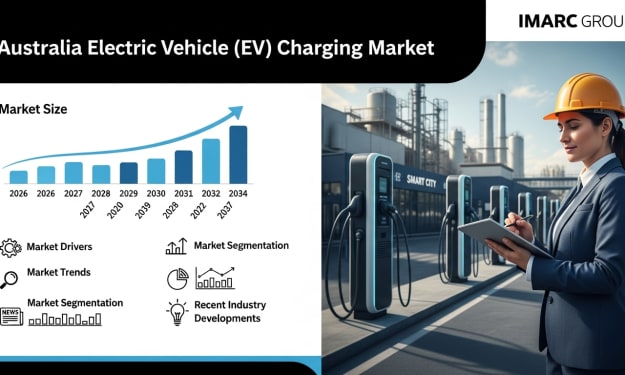
Australia Electric Vehicle (EV) Charging Market Set to Surge to USD 1.69 Billion as Infrastructure Expands Nationwide
The Australia electric vehicle (EV) charging market reached a valuation of USD 304.4 million in 2025 and is projected to expand significantly to USD 1,692.2 million by 2034, recording a robust compound annual growth rate (CAGR) of 21.0% between 2026 and 2034 according to IMARC Group data. This reflects a fundamental shift in Australia’s transportation and energy landscape as both public and private stakeholders invest in charging infrastructure to support rapidly rising electric vehicle adoption.
By Rashi Sharma14 days ago in Earth
United States Water Purifier Market Size & Forecast 2025–2033
United States Water Purifier Market Overview The United States Water Purifier Market is witnessing sustained growth as water safety concerns, health consciousness, and technological innovation converge to reshape household and commercial water consumption habits. According to Renub Research, the market is projected to expand from US$ 17.30 Billion in 2024 to US$ 29.73 Billion by 2033, registering a healthy CAGR of 6.20% from 2025 to 2033.
By Janine Root 4 days ago in Earth
FPS: The Last Flame Challenge Winners
Welcome to our first Winners Announcement of the year and to the final challenge in the Fall Poetry Series. The Last Flame invited writers to sit with endings, using fire as a central image to consider what remains when something burns out: ash, warmth, memory, silence, or the faint promise of what comes next. The strongest pieces treated endings as gradual rather than sudden, allowing them to flicker, dim, and linger.
By Vocal Curation Team4 days ago in Resources



Comments
There are no comments for this story
Be the first to respond and start the conversation.