

Astronomy is the scientific study of celestial objects such as planets, stars, galaxies, and the universe as a whole. Here are some important terms in astronomy:
Universe: The universe refers to all of space and everything within it, including galaxies, stars, planets, and other celestial objects.
Galaxy - A galaxy is a collection of stars, gas, and dust held together by gravity. The Milky Way is the galaxy in which our solar system is located.
Star - A star is a massive, luminous sphere of plasma held together by its own gravity. The Sun is an example of a star.
Planet - A planet is a celestial body that orbits a star and is not a star itself. Planets are typically composed of rock or gas.
Moon - A moon is a natural satellite that orbits a planet.
Comet - A comet is a small, icy body that orbits the Sun and has a coma (a fuzzy atmosphere) and/or a tail when it is near the Sun.
Asteroid - An asteroid is a small, rocky body that orbits the Sun.
Meteoroid - A meteoroid is a small rock or particle in space.
Meteor - A meteor is a bright streak of light that appears in the sky when a meteoroid enters Earth's atmosphere.
Meteorite - A meteorite is a meteoroid that survives its passage through Earth's atmosphere and strikes the ground.
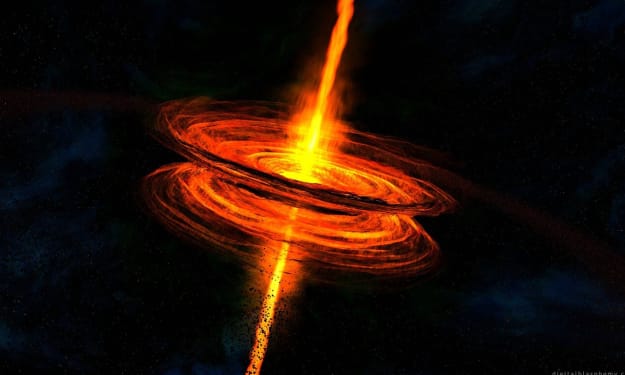
Black hole - A black hole is a region of spacetime where gravity is so strong that nothing, not even light, can escape.
Nebula - A nebula is a cloud of gas and dust in space.
Supernova - A supernova is a powerful and luminous explosion that occurs when a star runs out of fuel and collapses.
Dark matter - Dark matter is a hypothetical form of matter that does not interact with light or other forms of electromagnetic radiation.
Dark energy - Dark energy is a hypothetical form of energy that is believed to be responsible for the accelerating expansion of the universe.
Big Bang - The Big Bang is the most widely accepted scientific theory for the origin of the universe. It posits that the universe began as a singularity and has been expanding ever since.
Redshift - Redshift is a phenomenon that occurs when light from an object in space is stretched out, causing it to appear redder and indicating that the object is moving away from Earth.
Cosmic microwave background radiation - Cosmic microwave background radiation is a faint glow of electromagnetic radiation that is believed to be leftover radiation from the Big Bang.
Hubble's Law - Hubble's Law is a principle that states that the farther away a galaxy is from us, the faster it is moving away from us.
Electromagnetic spectrum - The electromagnetic spectrum is the range of all types of electromagnetic radiation, from radio waves to gamma rays.
Planetary system - A planetary system is a collection of planets and other celestial bodies that orbit a star.
Terrestrial planet - A terrestrial planet is a planet that is primarily composed of rock or metal.
Gas giant - A gas giant is a planet that is primarily composed of hydrogen, helium, and other gases.
Habitable zone - The habitable zone is the region around a star where conditions are favorable for the existence of liquid water and, potentially, life.
Kepler mission - The Kepler mission was a space telescope mission that searched for planets outside our solar system.
These are just a few of the many important terms in astronomy. As scientists continue to explore the cosmos, we are sure to discover even more fascinating phenomena and concepts.
About the Creator
krishnan c
I am a story creater and reader.
Keep reading
More stories from krishnan c and writers in Earth and other communities.
MILKY WAY GALAXY
The Magical story of Milky Way Galaxy Interesting Facts The Milky Way Galaxy: is a spiral galaxy that is estimated to be between 10 and 13 billion years old. It is the galaxy that contains our Solar System, and it is one of the largest and most prominent galaxies in the Local Group. The Milky Way is approximately 100,000 light-years in diameter and contains an estimated 100 billion stars, along with countless planets, asteroids, and other celestial bodies.
By krishnan c3 years ago in Earth
Franklin County Snow Emergency
Winter weather in Ohio can change quickly, and when heavy snow or ice hits, local governments rely on snow emergency levels to keep residents safe. One of the most searched winter questions each year is: what level is Franklin County snow emergency right now? Understanding how these emergency levels work—and how they compare with nearby counties like Delaware County—can help drivers, workers, and families make safer decisions during severe weather. This article breaks down everything you need to know about the Franklin County snow emergency, including how levels are determined, where to find updates, and what each level means for daily life. What Is a Snow Emergency in Franklin County? A snow emergency is declared when weather conditions make travel dangerous due to snow, ice, or freezing rain. In Franklin County, Ohio, officials monitor road conditions, weather forecasts, and accident reports before announcing a snow emergency level. The Franklin County snow level system is designed to limit unnecessary travel and reduce accidents. Each level comes with specific guidelines for residents and employers. Local media outlets, especially 10TV Weather, play a major role in communicating these updates to the public in real time. Snow Emergency Levels Explained To understand what level snow emergency is Franklin County Ohio, it helps to know what each level represents. Level 1 Snow Emergency A Level 1 advisory means roads are slippery, especially bridges and secondary roads. Drivers should use caution, reduce speed, and allow extra stopping distance. Travel is permitted No legal restrictions Increased risk on untreated roads At this stage, daily activities usually continue as normal, though delays are common. Level 2 Snow Emergency When conditions worsen, officials may declare a Level 2 snow emergency. This signals that roads are hazardous and travel should be limited to essential trips only. Driving is discouraged Only necessary travel is advised Accidents become more frequent During a Level 2, many schools, businesses, and government offices may close or operate on delays. This is often the level that sparks widespread concern across Franklin County. Level 3 Snow Emergency Level 3 is the most serious designation. Roads are extremely dangerous or impassable, and travel is legally restricted. Only emergency personnel should be on the roads Driving can result in citations or arrest Conditions pose serious safety risks A Level 3 snow emergency is rare but critical. When declared, residents are urged to stay indoors until conditions improve. How Franklin County Determines Snow Emergency Levels Officials rely on multiple factors before announcing a snow emergency: Snowfall totals and accumulation rates Ice formation and road treatment effectiveness Traffic accidents and emergency response delays Weather forecasts from meteorologists Agencies coordinate closely with weather services and local law enforcement. Reports from 10TV Weather often provide early insight into whether conditions may escalate. Comparing Franklin County and Delaware County Snow Emergencies Many Ohio residents commute between counties, which makes comparing alerts important. A Delaware County snow emergency may not always match Franklin County’s status. For example: Franklin County could be under a Level 2 while Delaware County remains at Level 1 Snow bands may impact northern counties more severely Timing of road treatment can differ Drivers should always check both counties before traveling. Conditions can change rapidly, especially during overnight storms. Where to Find Reliable Updates Staying informed is essential during winter storms. The most reliable sources for Franklin County snow emergency updates include: Franklin County Sheriff’s Office announcements Official county websites and social media pages Local news stations, especially 10TV Weather Emergency alert systems and local radio Searching phrases like what level is Franklin County or what level snow emergency is Franklin County Ohio during storms is common, but always rely on official sources for confirmation. How Snow Emergencies Affect Schools and Workplaces Snow emergency levels often influence closures and delays: Schools typically close at Level 2 or Level 3 Government offices may shut down during Level 2 Many employers follow county advisories However, private businesses may set their own policies, so employees should check with supervisors directly. Preparing for a Franklin County Snow Emergency Preparation can make a major difference during winter weather. Residents are encouraged to: Keep vehicles fueled and stocked with emergency supplies Monitor forecasts before storms arrive Avoid unnecessary travel during Level 2 or Level 3 emergencies Check on elderly neighbors when conditions worsen Simple planning can reduce stress and improve safety during severe winter events. Why Snow Emergency Levels Matter Snow emergencies are not just warnings—they are safety tools. Each Franklin County snow level helps emergency crews prioritize resources, reduce accidents, and protect lives. Ignoring advisories can put drivers and first responders at risk. Understanding the system allows residents to make informed, responsible decisions. Final Thoughts Winter in Ohio is unpredictable, but information makes it manageable. Knowing how the Franklin County snow emergency system works—and staying updated through trusted sources like 10TV Weather—can help you stay safe when conditions deteriorate. Whether you’re checking what level is Franklin County, comparing alerts with a Delaware County snow emergency, or planning your commute, awareness is your best defense against winter hazards.
By Saboor Brohi about 20 hours ago in Earth



Comments
There are no comments for this story
Be the first to respond and start the conversation.