
Artificial Intelligence (AI) and Its Impact
Exploring the Transformative Power, Opportunities, and Challenges of Artificial Intelligence in the Modern World

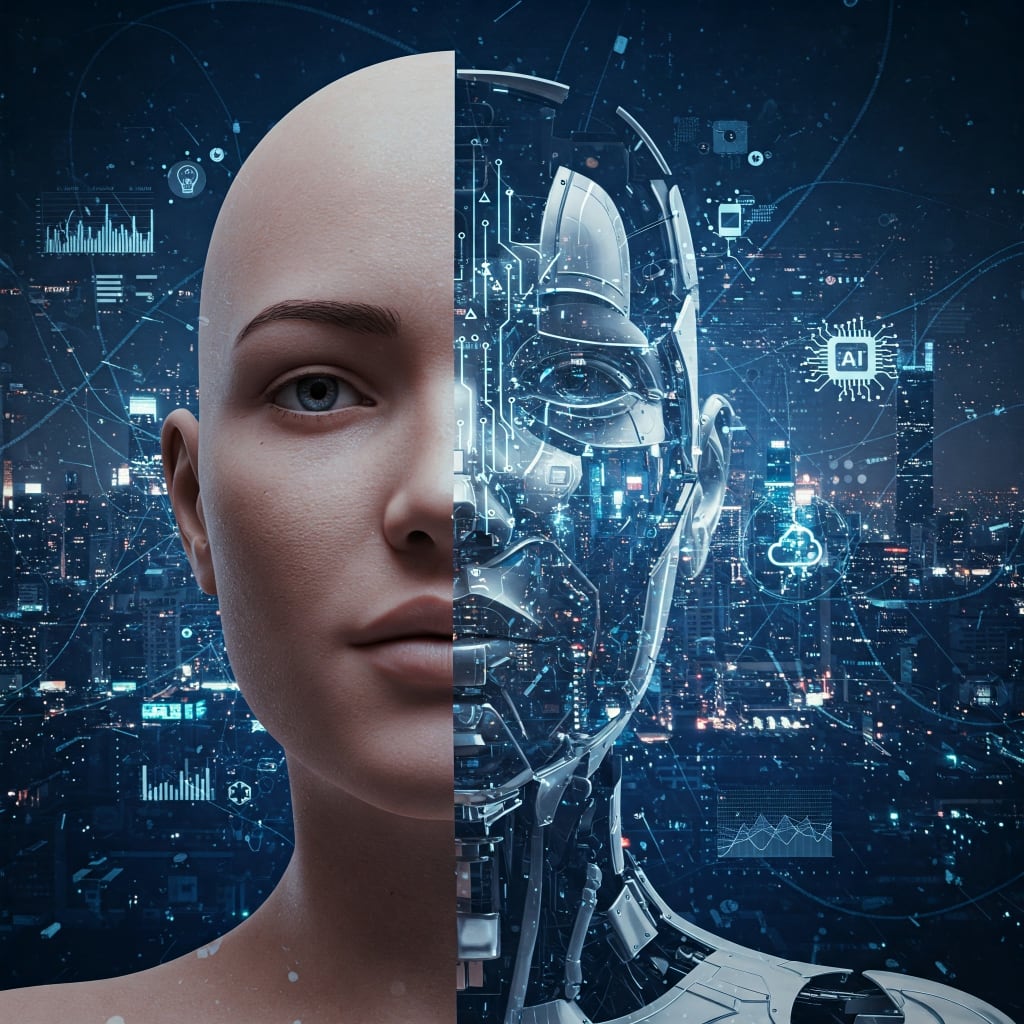
Artificial Intelligence (AI) has transitioned from a futuristic concept to a vital component of our daily lives. From recommending what to watch next on Netflix to revolutionizing healthcare, education, and business, AI has woven itself into the fabric of modern society. As its capabilities expand, so too does its impact—both positive and negative—on various aspects of human life and civilization. Understanding the depth and breadth of this impact is essential as we navigate an increasingly AI-driven world.
Understanding AI
Artificial Intelligence refers to the simulation of human intelligence in machines that are programmed to think, learn, and make decisions. These systems can perform tasks that typically require human cognition, such as visual perception, speech recognition, decision-making, and language translation. AI can be broadly categorized into two types: narrow AI, which is designed for specific tasks (like voice assistants or recommendation algorithms), and general AI, which aims to replicate human intelligence in a broader and more flexible way—though this remains largely theoretical as of now.
Transforming Industries
One of the most notable impacts of AI is its transformative influence on various industries. In healthcare, AI-powered tools help diagnose diseases more accurately and at earlier stages than ever before. Algorithms can analyze medical images, detect anomalies, and assist doctors in developing personalized treatment plans. Chatbots and virtual assistants are also being used to improve patient communication and streamline administrative tasks.
In the finance sector, AI is being used for fraud detection, risk assessment, and algorithmic trading. Machine learning models can analyze vast datasets to identify suspicious activities or predict market trends more effectively than human analysts.
Manufacturing has also been revolutionized through AI, with smart factories using robots and predictive maintenance systems to optimize production and minimize downtime. Supply chains are becoming more efficient thanks to AI-driven logistics and inventory management.
In education, personalized learning platforms use AI to adapt to each student's pace and learning style. Virtual tutors and AI-driven assessments provide real-time feedback, making education more accessible and effective.
Enhancing Daily Life
AI is not confined to industrial applications—it has a significant impact on everyday life. Virtual assistants like Siri, Alexa, and Google Assistant have become household staples, helping users with everything from setting reminders to controlling smart home devices. AI is also at the core of recommendation systems used by platforms like YouTube, Amazon, and Spotify, which personalize content to individual preferences.
In transportation, AI is powering the development of autonomous vehicles, improving traffic management systems, and enabling predictive maintenance in public transportation networks. These innovations promise to make travel safer, more efficient, and less environmentally damaging.
Economic Implications
While AI offers economic growth opportunities, it also raises concerns about job displacement. Automation of routine tasks in sectors like manufacturing, customer service, and even professional services (e.g., legal and accounting) could render certain jobs obsolete. However, it's important to note that AI is also creating new job opportunities—particularly in tech development, data science, and AI system maintenance.
Governments and organizations are increasingly focusing on reskilling and upskilling the workforce to prepare for this shift. As AI continues to evolve, the demand for human skills in areas like creativity, emotional intelligence, and complex problem-solving is expected to grow, offering a counterbalance to automation-related job losses.
Ethical and Social Considerations
The rise of AI also brings with it a host of ethical and societal concerns. One of the most pressing is the issue of bias in AI algorithms. Because these systems learn from historical data, they can inadvertently perpetuate existing inequalities. For example, AI used in hiring processes or criminal justice systems has been found to reflect and amplify racial and gender biases.
Privacy is another significant concern. AI systems often rely on massive amounts of personal data to function effectively, raising questions about how that data is collected, stored, and used. As surveillance technologies become more advanced, the line between safety and intrusion becomes increasingly blurred.
Moreover, there is the risk of autonomous weapons and AI being used in warfare, which could have devastating consequences if not regulated. Ensuring the ethical development and deployment of AI is crucial to prevent misuse and maintain public trust.
The Future of AI
Looking ahead, the potential of AI is both exciting and daunting. Emerging trends like explainable AI, edge AI, and general artificial intelligence are pushing the boundaries of what machines can do. Explainable AI aims to make algorithmic decisions more transparent and understandable, addressing one of the major criticisms of current AI systems. Edge AI allows data processing to occur closer to where it is generated, improving speed and privacy.
Meanwhile, researchers continue to explore the theoretical realm of Artificial General Intelligence (AGI)—machines with the ability to understand, learn, and apply intelligence across a wide range of tasks, much like a human. If achieved, AGI could fundamentally reshape human existence, for better or worse.
Conclusion
Artificial Intelligence is a double-edged sword. It offers unprecedented opportunities for innovation, efficiency, and convenience, but also presents challenges that require careful management. The key to harnessing AI’s potential lies in responsible development, robust regulations, and inclusive policies that ensure benefits are broadly shared while mitigating risks. As AI continues to evolve, society must adapt—ethically, economically, and culturally—to thrive in a future increasingly shaped by intelligent machines.
About the Creator
Saim Bill
I’m a passionate article writer who loves sharing ideas, stories, and insights with the world.
“Make America Go Away”: Spoof MAGA Caps Soar in Popularity Amid the Greenland Crisis
Political slogans have always been powerful, but in today’s hyper-connected world, they often take on a life of their own. In recent weeks, a new phrase has been popping up across social media, protests, and online marketplaces: “Make America Go Away.” Printed boldly on red caps that closely resemble the iconic MAGA hats, the slogan is a pointed parody—and it’s rapidly gaining popularity amid renewed tensions surrounding Greenland and U.S. foreign policy rhetoric.
By Aarif Lashariabout 14 hours ago in Earth
Center Stage with Paul Stewart
*** I'm keen to republish the interviews I did for my series with Vocal creators. It's been a few years and I thought it might be nice to revisit these wonderful conversations. I'll be releasing them one at a time for a few weeks/months.
By Heather Hubler5 days ago in Interview




Comments
There are no comments for this story
Be the first to respond and start the conversation.