
ANOTHER PLANET THAT WE MIGHT BE ABLE TO LIVE ON !!
NASA FINDS
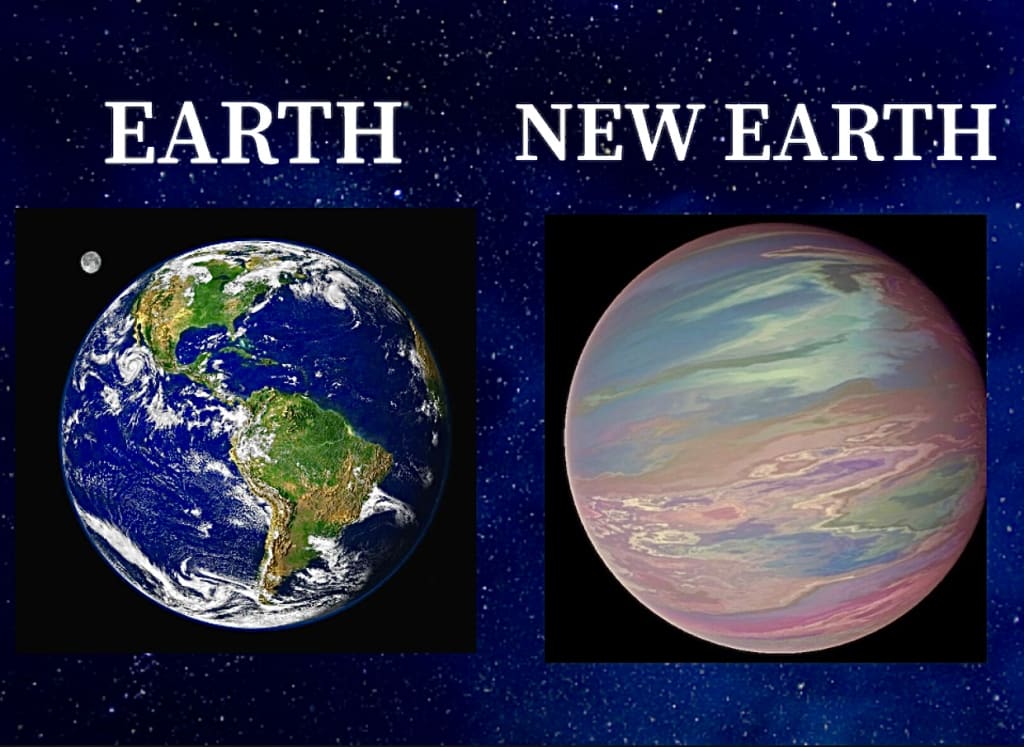
Maybe we've all stopped to think at one point about what it would be like to live on another planet, I know I've had days like that maybe even interact with other types of creatures that already live somewhere else in space.
These ideas sound more like something from a science fiction book in the future forever changing your address to another planet might turn out to be necessary. Think of the stars in our solar system as a battery billions of years from now its energy will be gone without its light and warmth life on Earth can exist, We have to hope that future humans will have found some other place to live by then hopefully there's good news.
Recently scientists at Nasa have announced that they have found a new planet that might be able to support life, they call it toi 700e e its roughly the same size as Earth and it's located in a region of space where scientists think water could exist in its liquid form which is crucial for the development of life, this planet is not the only one though close to it there's another promising planet which they call toi 700d but this one is further away from its star because of the distance from the main source of light planet D lies in a special area called the conservative habitable zone, in simple terms scientists aren't sure whether life might exist on this one but they don't exclude such a possibility.
Planet e is in the optimistic zone which means that it's possible that it has water and even an atmosphere, The two planets are in the solar system that's only a hundred light years away from Earth which is considered pretty close in space terms. NASA found these planets by watching the light from the Star and measuring how it moves when a planet passes in front of the star, this is the first time that NASA has found a solar system with multiple planets that could have life, so far scientists have found over 5,000 exoplanets and they think there could be at least 10,000 more.
Specialists at Nasa are looking into the ways to figure out if any of these planets could Harbor life but they also say we might find forms of life we don't expect to see and that we should be open to other possibilities that's because we only know about what life can be by looking at our own planet. Sientists have been researching for decades how people can stay in space and thrive for long periods of time and history tells us it's no easy project. Back in 1962 John Glenn became the first american to orbit our planet to circle earth a mere three times, he had to go through months of technical and physical preparations. These days advanced technologies help us to investigate Mars better and scientists have figured out that there is water and materials on the red planet that may be useful to people.
It has sparked the idea of sending people to Mars to live there, the first manned Mars mission is scheduled for the late 2030s or early 2040s if everything goes well the plan is for this to be a round trip but even if NASA manages to plan everything well the round-trip Journey will still take about 500 Days it all depends on Mars and Earth's positions in their orbits around the Sun. One of the biggest problems with living on Mars is gravity for starters the astronauts will arrive at the red planet after months of living in microgravity, it means it could take them a lot of time to physically get in shape before they could start exploring that's because living in microgravity conditions heavily affects the human body, it might mean loss of bone and muscle mass as well as a shift in the normal movement of body fluids which tend to go upward this can lead to pressure on the eyes and even problems with people's eyesight.With that being said i wish them best of luck .
About the Creator
Keep reading
More stories from writers in Earth and other communities.
Enoch Burke Case: Disciplinary Panel Members Resign in Major Blow to Efforts to Resolve Row Over Teacher’s Dismissal
The long-running dispute surrounding Irish teacher Enoch Burke has taken another dramatic turn after members of a disciplinary panel resigned, dealing a significant setback to efforts aimed at resolving the controversy over his dismissal. The case, which has attracted widespread public attention, continues to raise complex questions about employment rights, institutional authority, and the handling of disputes involving personal beliefs in professional settings.
By Aarif Lashariabout 3 hours ago in Earth
Dead and Wearing Green
She was wearing that green dress when I first saw her, five years ago to the day. Flowing meadow fabric draped over long legs, thick auburn hair flowing down her back. That smile. Of course, she is still beautiful now. But now she is no longer alive.
By Karen Cave7 days ago in Fiction


Comments
There are no comments for this story
Be the first to respond and start the conversation.