
Always said to deplete the oil in the end how long can use? Experts: it is difficult to run out!
Hard to run out of oil

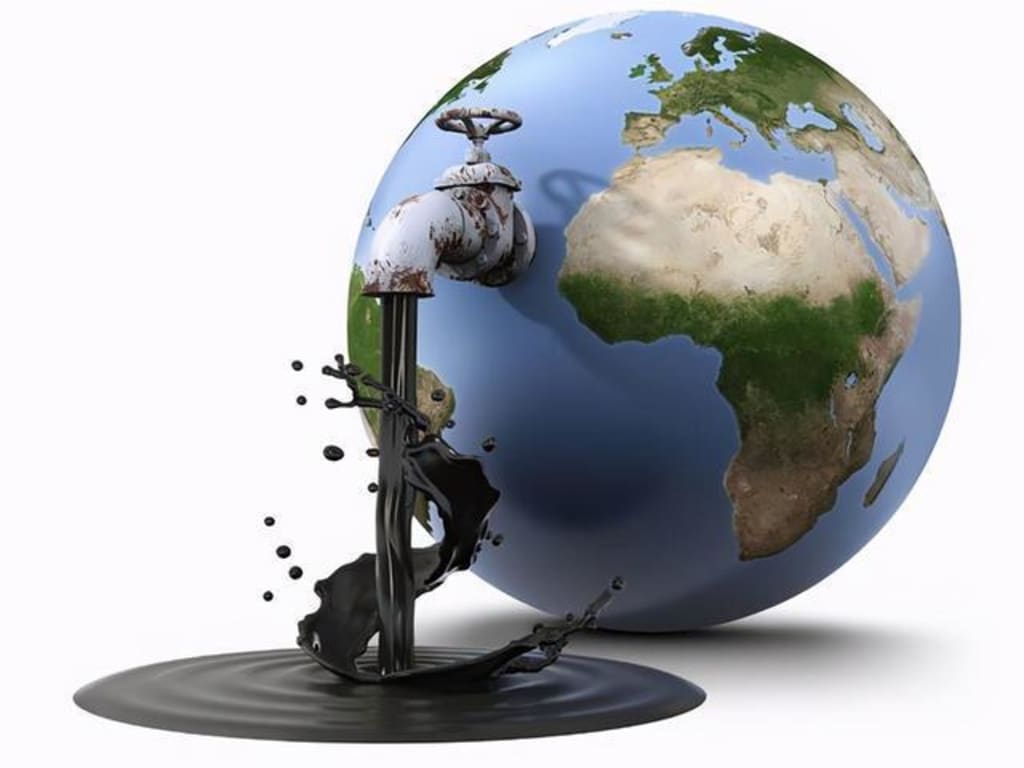
Many people should have heard rumors that oil was about to run out in 20 years, yet, 20 years later, the oil is still being extracted. But such rumors have not gone away, and have even been renewed for another few decades.
This claim has been made at a very early stage, last century, the United States has repeatedly predicted that the oil will be exhausted in 10 years. There was also an expert in the field who proposed the peak oil theory, predicting that oil production would peak in 1966-1972, and then would gradually decrease until it was depleted, and the price of oil would continue to rise. However, many years have passed, and the amount of oil extracted each year is still increasing, and the amount of detected oil reserves is also rising. Instead, the price of oil was once negative because of a global epidemic, only to quickly return to the right track. Although oil is not depleted, how long oil can still be used is a matter of great concern.
Where does oil come from?
It is now widely accepted that oil, a non-renewable resource, is produced by a complex reaction of dead plants and animals from ancient times in a closed underground environment over hundreds of millions of years, similar to the process of coal generation. However, some scientists have proposed the inorganic theory of petroleum, such as Mendeleev, the inventor of the periodic table of chemical elements, because the earth's crust contains a large number of iron carbides, he speculated that these iron carbides react with water under high temperature and pressure in the earth to produce petroleum, and it has also been proved in the laboratory that inorganic substances can produce hydrocarbons.
Both the properties of the oil itself and the biological fossils in the oil prove that it was formed organically, and there is still not a single 500 million-year-old oil and gas field found, 500 million years is the Cambrian Earth biological explosion years, before that, the Earth only existed simple single-celled organisms. This is also great evidence for the organic theory of oil.
Although all the evidence proves that oil is generated by organic deposition, inorganic generation also has its reason, however, for today's mankind, how generated may no longer matter, even if the oil is regenerated, deep in the earth, how do humans extract it? What about the cost of extraction? In other words, even if the oil will not be depleted, the oil resources available to mankind will continue to decrease.
How important is oil
No matter how oil is formed, nowadays human beings have long been inseparable from oil, and it can be said that our lives are closely related to oil. Some data show that the average human lifetime eats 500 kg of oil because the fertilizer comes from oil, artificial food flavors, and colors, and some drugs in benzene, are from oil. Wear off 290 kg of oil, because the textile fiber, 90% of the chemical fibers from oil, and clothing materials used in chemical fibers occupy three quarters. There are also kitchen and bathroom products in life, wire sheathing, and food packaging from the output of the oil industry. There are 90% of cosmetics contain mineral oil also from oil. Today's transportation is inseparable from oil, in addition to gasoline and diesel used in cars, kerosene used in airplanes, as well as lubricants, and even paving asphalt, all from oil. According to statistics, a person's life almost uses 3.8 tons of oil.
With the development of society, the consumption of oil and fossil fuels is also increasing, and the excessive consumption of oil by human beings has brought more pollution problems to the environment, and nowadays, the increase in carbon dioxide emissions is the first cause of the greenhouse effect.
Will we run out of oil?
Today, the global proven reserves of oil are about 2.1 trillion barrels, almost 300 billion tons, and today the world consumes about 2.7 million barrels of oil per year, which is gradually increasing every year, but 5 billion barrels of new proven oil are added every year and decreasing every year. If we calculate according to such an increase and decrease, it may be less than a century. However, the previous rumors of oil depletion were also calculated in this way, but with technological breakthroughs and breakthroughs in extraction technology and the discovery of some great reserves of oil and gas fields.
On the other hand, countries around the world have begun to vigorously promote the development and use of new energy, wind, water, tidal energy, solar energy, nuclear energy, bioenergy, and other vigorous development, and the use of various energy sources have reduced the consumption of traditional fossil fuels, including oil, and with the development of these energy sources, oil and fossil fuel use will become smaller and smaller. There are also many countries whose fuel car ban has also been on the agenda, and battery charging and storage are also developing. Of course, the most anticipated should be controlled fusion energy, mastering this clean and unlimited energy, human beings will be able to completely free from the shackles of energy when the artificial sun began to provide a constant source of energy, perhaps the new beginning of human civilization.
The founder of the Organization of Petroleum Exporting Countries once said, "The end of the Stone Age, the reason is not a lack of stone, and the oil age will end, again not because of a lack of oil."
I agree with his words, even if there will not be a shortage of oil resources, mankind is bound to use cleaner and more efficient energy sources to replace it, and the oil era, too, will eventually end. Will oil be used up? Maybe hundreds of years, maybe a thousand years, and as people's demand for oil becomes smaller and smaller before it is exhausted, it may have been completely replaced by other resources.
About the Creator
De pepper
Share a little science every day
Japan Furniture Market Size and Forecast 2025–2033
Introduction Japan’s furniture industry stands at a unique intersection of tradition and innovation. Renowned worldwide for its craftsmanship, minimalist design, and functional aesthetics, Japanese furniture reflects the nation’s cultural emphasis on harmony, efficiency, and simplicity. Today, as Japan’s population becomes increasingly urban, digitally connected, and environmentally conscious, the furniture market is undergoing a quiet but significant transformation.
By Janine Root 4 days ago in Earth
Malted Wheat Flour Market Size and Forecast 2025
Malted Wheat Flour Market Overview Malted wheat flour is produced by germinating wheat grains, drying them, and grinding them into flour. This natural malting process activates enzymes—particularly amylase—that convert starch into fermentable sugars during baking. The result is improved dough fermentation, enhanced texture, increased loaf volume, and a richer, more consistent flavor profile in baked goods.
By Aaina Oberoi3 days ago in Earth
Wild Card Weekend Recap: What Happens Now?
I think I figured out why I love Wild Card Weekend so much. It's because it's the first playoff anything of the calendar year. The NFL season starts in the fall, and once upon a time, the champion was crowned either on or slightly before New Year's. The evolution of the NFL schedule has resulted in the playoffs starting just into the New Year, and currently, the final week of the season falls on the first weekend of the New Year, with Wild Card Weekend coming a week after that. So yes, chronologically, the NFL's Wild Card Weekend serves as the first playoff anything of the calendar year.
By Clyde E. Dawkins6 days ago in Unbalanced



Comments
There are no comments for this story
Be the first to respond and start the conversation.