
World’s Biggest Non-Nuclear Explosion Ever
The Beirut Explosion: How Negligence Triggered the Largest Non-Nuclear Blast in History

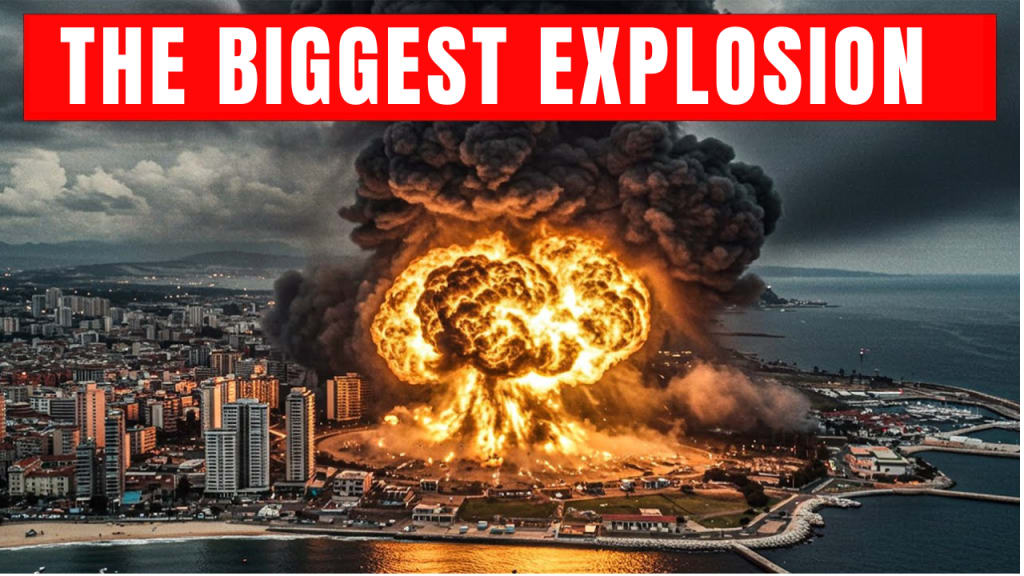
On July 31, 2020, a satellite image of Beirut Port in Lebanon looked ordinary. But just four days later, the same port would transform into a war zone—leveled hangars, shattered buildings, and a giant crater the size of two Boeing 747s. What happened on August 4, 2020, would become one of the largest non-nuclear explosions in human history.
A City Wedding Interrupted by Disaster
That day, a video went viral across the internet. A bride named Isra Seblani was posing for a wedding photoshoot in Beirut’s Saifi Square when suddenly, a massive shockwave forced her and others to run for their lives. Moments before, at 5:45 PM, welders at Hangar 12 near the port were sealing a crack in the warehouse wall. Sparks from the welding ignited a fire inside the hangar.
Within ten minutes, at 5:55 PM, nine firefighters and a paramedic team arrived to assess the situation. Over radio, they reported something felt off—the fire was growing uncontrollably, and strange popping noises were coming from inside. Just 12 minutes later, at 6:07 PM, a massive explosion rocked the port.
The First and Second Blasts
The first explosion triggered a wave of fireworks flashes and thick white smoke. Hangar 12 had stored a shipment of fireworks—these likely ignited during the fire. The blast registered the explosive force of 1,500 kilograms of TNT.
But this was just the beginning.
Thirty seconds later, a second, catastrophic explosion ripped through Beirut. Captured on multiple cameras by people who had been filming the first blast, the footage showed a towering fireball and a shockwave faster than the speed of sound. A white dome—actually vaporized water from the intense pressure wave—enveloped large parts of the city, followed by a thick red cloud.
Experts later confirmed: the red smoke was a clear sign of ammonium nitrate—a highly explosive chemical stored in Hangar 12.
A Shockwave Felt Around the World
The power of the second explosion was staggering. It shattered windows 8 km away at Beirut’s airport, and the U.S. Geological Survey recorded it as a 3.3 magnitude earthquake. In Cyprus, 200 km away, terrified residents fled their homes thinking it was a natural disaster.
According to scientists at the University of Sheffield, the explosion was equal to 1.5 kilotons of TNT—1,000 times more powerful than the first blast and nearly 10% the strength of the Hiroshima nuclear bomb.
The explosion left a 135-meter-wide crater, immediately filled by seawater. Massive ships nearby were destroyed, and one luxury cruise ship, 390 feet long, was thrown into the air and capsized.
A City in Ruins
Beirut was plunged into chaos. The shockwave destroyed homes, crushed buildings, uprooted trees, flipped cars, and bent steel beams like paper. Power outages across the city stalled emergency response efforts. Military bulldozers had to clear roads so rescue workers could reach victims.
The human toll was devastating:
- 218 people lost their lives
- Over 7,000 were injured
- 12% of Beirut’s population became homeless overnight
Hospitals were overwhelmed—some destroyed, others resorting to treating patients in parking lots and on sidewalks. St. George Hospital, located just meters from the blast site, was completely destroyed, yet doctors continued working outside amidst the rubble.
The Deadly Cause: A Time Bomb in Storage
What caused this apocalyptic event?
It began in 2013, when a Russian cargo ship named Rhosus en route from Georgia to Mozambique was forced to dock in Beirut due to technical issues. The ship was carrying 2,750 tons of ammonium nitrate, a chemical used in fertilizers and explosives. Because of unpaid port fees and debts, the ship was confiscated—and its cargo transferred to Hangar 12.
There it sat for seven years, in flimsy plastic bags, without proper safety measures. Over time, port authorities sent multiple warning letters to government officials, stating the material was highly dangerous and improperly stored next to kerosene, hydrochloric acid, oil drums, and 15 tons of fireworks. Despite the warnings—nothing was done.
Emails Ignored, Disaster Ensued
In 2014, the Director of Lebanese Customs sent an urgent email to a judge warning about the ammonium nitrate. Other reports advised selling the material to Lebanese explosives companies or exporting it. In 2019, another warning was issued stating that the climate conditions inside the hangar were unsuitable.
Still, the government ignored every letter—even when a hole in the hangar’s wall increased the security risk. Ironically, it was during repair work on that very hole that sparks ignited the deadly fire.
Political Interference Stalls Justice
As of 2025, five years after the disaster, no one has been held accountable. Investigations have been repeatedly delayed due to political interference, ministerial immunity, and conflicts within the judiciary. Judge Fadi Sawan, who initially charged top ministers, was removed. Judge Tariq Bitar took over, but groups like Hezbollah opposed him and filed legal challenges.
From 2022 to 2024, the investigation remained frozen. After Nawaf Salam became Prime Minister in January 2025 and the Israel-Hezbollah conflict flared, the case was reopened. Reports say Judge Bitar will finally issue his verdict on August 4, 2025—the fifth anniversary of the explosion.
A Memorial Frozen in Time
Today, Beirut still bears the scars. At the blast site stands an 8-foot-tall statue made from twisted steel, broken glass, and rubble. Shaped like a woman holding a sword, it honors the 218 lives lost that day. At her feet lies a clock—frozen at 6:08 PM, the exact time the city changed forever.
About the Creator
Keep reading
More stories from Jehanzeb Khan and writers in Confessions and other communities.
Scariest Invention By Nikola Tesla, Hidden from us!
Today, the world knows Nikola Tesla as the man behind the invention of electricity generation systems. But there’s a darker and lesser-known side to his legacy—his terrifying inventions that many still find hard to believe were real.
By Jehanzeb Khan8 months ago in Humans
The Hollywood Dream That Didn’t Go as Planned
For years, the world has been fascinated by the lives of Prince Harry and his wife, Meghan Markle. Their departure from the royal family once felt like the beginning of a powerful new chapter—one filled with freedom, creativity, and global influence. But in the unpredictable world of entertainment and media, even the most promising partnerships can face unexpected setbacks.
By CelebCast Central2 days ago in Confessions
Bomb Scare
It was 2027, and the world never thought it would happen. A missle hit the United States, but it wasn't where they had anticipated. A little town in the northeast was hit by a missile strike, they didn't know why, and they didn't know exactly where it hit, but they did know it was a coastal community, somewhere between Maine and Delaware.
By Gregory Payton6 days ago in Fiction




Comments
There are no comments for this story
Be the first to respond and start the conversation.