
USA, Israel, and Iran-What’s Really Happening
A clear, up-to-date look at recent high-level talks, missile concerns, and the risk of wider conflict

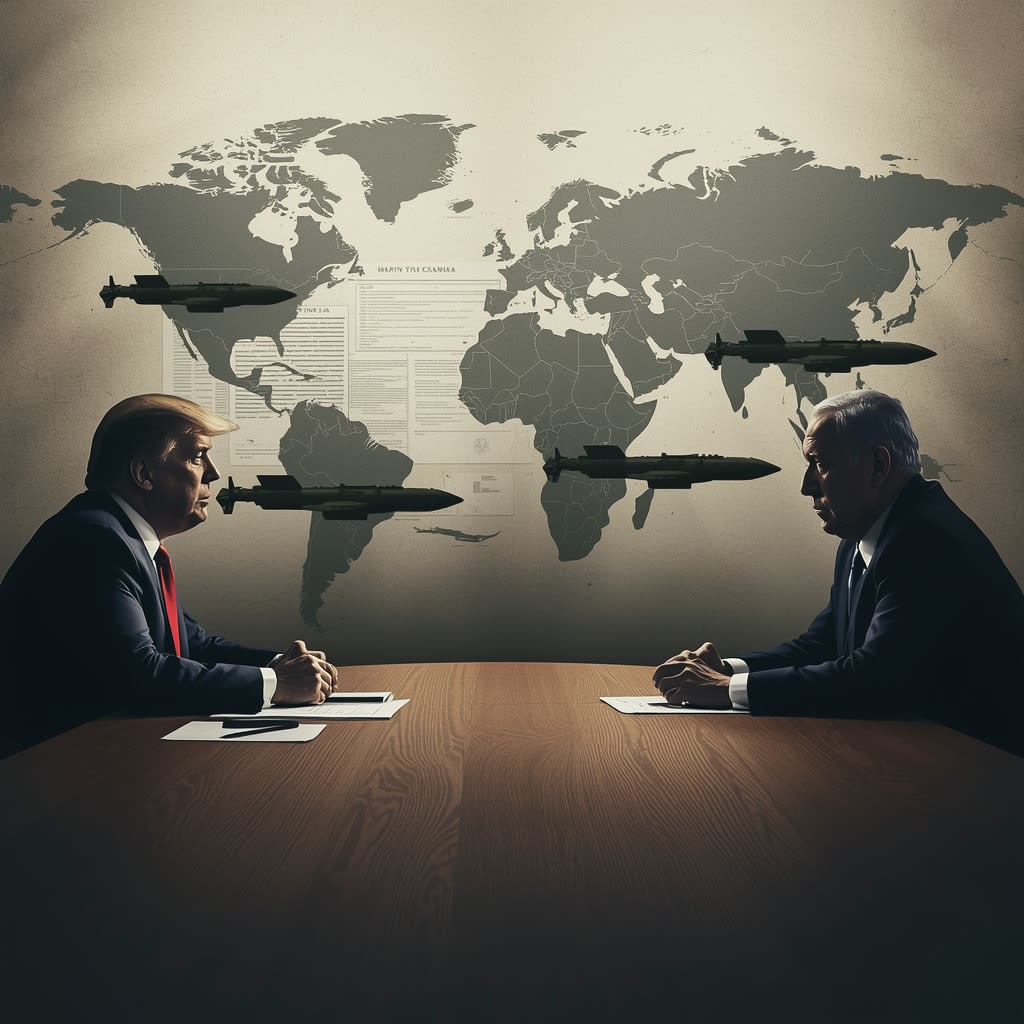
Tensions in the Middle East: USA, Israel, and Iran — What’s Really Happening
In the past few days, international attention has focused on a high-profile meeting between Israeli Prime Minister Benjamin Netanyahu and former U.S. President Donald Trump at Trump’s private estate in Florida. The talks were not about routine diplomacy — they centered on growing concerns over Iran’s ballistic missile and nuclear programs and how the United States and Israel might respond.
The world has watched with concern, partly because recent headlines have included strong language from leaders on all sides. But it’s important to separate what is verified fact from speculation or fear-based rumors. As of now, there is no official declaration of a new war involving Israel, the United States, and Iran. What exists instead is heightened diplomatic tension, military warnings, and international pressure.
During the meeting, Trump publicly warned Iran that if Tehran continued to advance its ballistic missile capabilities and nuclear program, the U.S. would support possible military action by Israel. Trump said the United States was prepared to back an Israeli strike if Tehran did not halt these programs.
This warning is significant because ballistic missiles and nuclear development are among the most serious security issues in international diplomacy. For decades, many nations have worked through agreements and inspections to prevent the spread of nuclear weapons. When leaders speak about possible military action, it raises fears because weapons of this scale have massive destructive potential.
Iran, for its part, has repeated warnings about retaliation if it perceives a threat to its national security. State-linked media and military statements have underlined that Iran remains on alert and prepared to respond if attacked.
These recent developments come against a backdrop of long-standing tension in the Middle East. For many years, Israel has voiced concerns that Iran’s missile and nuclear programs could give Tehran the capability to strike Israeli cities or destabilize the region. Iran denies that its nuclear program is designed for weapons, insisting it is for civilian energy production. This disagreement has been a central issue in global diplomacy.
It’s also important to note that discussions about military action do not necessarily mean war has begun. World powers often use diplomacy, economic sanctions, and public warnings as tools to influence a nation’s decisions. In fact, recent U.S. policy has combined sanctions on Iranian individuals and firms involved in missile and drone trade with diplomatic pressure to curb Tehran’s weapons programs.
The context of the Netanyahu–Trump meeting also includes efforts to balance different issues in the Middle East. While both leaders discussed Iran’s programs, they also spoke about progress toward peace deals in other areas, and Trump emphasized the need for groups like Hamas to disarm.
International actors beyond the U.S. and Iran have been weighing in. For example, Russia has called for restraint and continued dialogue rather than escalation, highlighting the fears of broader conflict and the importance of negotiation.
So what does all this mean for the world?
First, it shows that global security issues are highly interconnected. Decisions about missiles, nuclear programs, and alliances affect not just the Middle East, but international relations everywhere. Nations are watching how major powers interact because any major conflict could influence energy prices, refugee movements, and global markets.
Second, the presence of strong rhetoric does not automatically equate to full-scale war. Leaders often use firm language to pressure opposing nations into negotiation or to show unity with allies. Yet diplomacy and sanctions remain the primary tools being used and discussed publicly at this time.
Finally, the situation underscores the importance of dialogue. While one side may present military options, others may call for renewed negotiations or restraint. This balance is a key part of preventing unintended escalation.
In conclusion, the recent talks between Netanyahu and Trump highlight genuine geopolitical tensions but do not signal a confirmed declaration of war. Instead, these events reflect a complex and fragile moment in international relations, where diplomacy, economic tools, military preparedness, and international pressure all play a role. Understanding the facts, rather than alarmist claims, allows us to stay informed without spreading misinformation.
About the Creator
Wings of Time
I'm Wings of Time—a storyteller from Swat, Pakistan. I write immersive, researched tales of war, aviation, and history that bring the past roaring back to life
Keep reading
More stories from Wings of Time and writers in Confessions and other communities.
World War 3: Why the Fear Is Growing, Why the Future Is Not Decided
World War 3: Why the Fear Is Growing—and Why the Future Is Not Decided In recent years, the phrase “World War 3” has moved from history books into daily conversation. It appears in news headlines, political speeches, social media debates, and comment sections across the internet. For many people, it represents a growing fear that the world is drifting toward another global catastrophe. But fear alone does not explain why this idea has become so powerful—or why it demands careful discussion rather than panic.
By Wings of Time 3 months ago in Confessions
Word of the Day: 火病
It is kind of funny, because I was going on about having fire sickness myself without realizing this was an actual thing. It actually sounds accurate to what I was experiencing, but luckily I don't live in a culture/area that is overtly suppressive to where it would aggravate this sort of condition.
By Kayla McIntosh5 days ago in Confessions



Comments
There are no comments for this story
Be the first to respond and start the conversation.