
The Weight of Invisible Expectations
How Silent Pressures Shape the Lives We Live
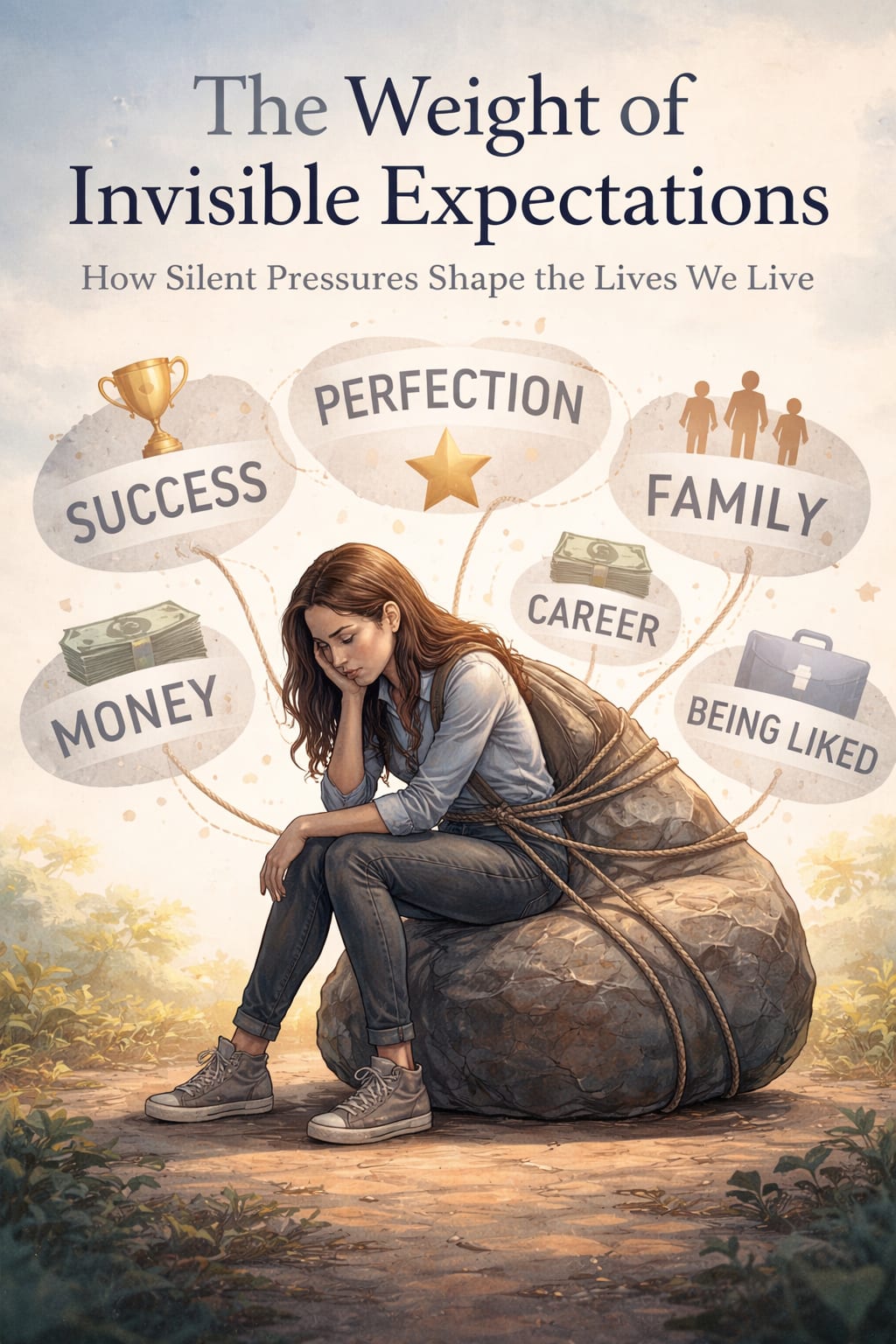
Every person walks through life carrying expectations. Some are spoken clearly by parents, teachers, or society, but many of the most powerful expectations are never said aloud. They exist quietly in the background of our lives, shaping our decisions, influencing our confidence, and guiding the paths we choose. These silent pressures—what we might call invisible expectations—can shape the way people think, work, love, and measure success.
Unlike obvious demands, invisible expectations rarely announce themselves. They hide in cultural traditions, family habits, workplace norms, and social media comparisons. Because they are rarely questioned, people often accept them as normal parts of life. Yet these expectations can carry significant weight, influencing emotions and choices in ways many people do not fully understand.
The Origins of Invisible Expectations
Invisible expectations usually begin early in life. Children grow up observing how adults behave and what society rewards or criticizes. Without anyone explicitly explaining the rules, young minds quickly learn what is expected.
For example, a child may notice that academic success receives praise while creative interests are treated as hobbies rather than serious pursuits. Over time, the child might internalize the idea that achievement in certain fields matters more than others. Even if no one directly says it, the message becomes clear.
Family dynamics also play a powerful role. In some families, there may be an unspoken belief that the eldest child must be responsible or that younger siblings must follow certain career paths. These expectations are rarely discussed openly, yet they influence how individuals see themselves and their future.
Cultural traditions add another layer. Different societies have strong ideas about success, relationships, and social status. People absorb these expectations naturally through observation. Eventually, they may feel obligated to meet standards that were never clearly defined.
The Role of Society and Social Comparison
Modern society amplifies invisible expectations through constant comparison. Social media platforms display carefully curated versions of people’s lives—highlighting achievements, celebrations, and milestones. While these platforms can inspire connection, they also create subtle pressure.
When individuals see others achieving certain goals—buying homes, advancing careers, traveling widely—they may begin to feel they are falling behind. The expectation to reach similar milestones becomes internalized, even if those goals do not match their personal desires.
The problem with comparison is that it rarely reflects the full reality. Behind every public success story are struggles, failures, and uncertainties that remain hidden. Yet the visible portion often sets unrealistic standards for others.
Over time, people may feel that they must keep up with invisible timelines—achieving success by a certain age, building a specific lifestyle, or meeting particular social standards. These silent expectations can create anxiety and dissatisfaction, even in otherwise fulfilling lives.
Career Pressure and the Definition of Success
One of the most powerful invisible expectations relates to career success. Many societies promote a narrow definition of achievement, often centered on high income, prestigious job titles, or public recognition.
Young professionals frequently feel pressure to pursue careers that appear impressive rather than meaningful. Even when individuals have interests in creative or unconventional fields, they may hesitate to pursue them if those paths do not align with societal expectations.
This pressure can lead to internal conflict. People might spend years working toward goals that do not truly reflect their values. The desire to meet external standards can overshadow personal fulfillment.
Ironically, success achieved through invisible expectations often feels hollow. When individuals reach milestones that were chosen for them rather than by them, they may discover that the satisfaction they expected never fully arrives.
Family Expectations and Personal Identity
Family expectations often carry emotional weight because they are connected to love, loyalty, and belonging. Many individuals want to make their families proud, and this desire can influence major life decisions.
Parents may hope their children will follow certain career paths, marry at a particular age, or maintain specific cultural traditions. Even when these expectations are not stated directly, they can shape how children view their responsibilities.
Balancing personal identity with family expectations can be challenging. Individuals may feel torn between honoring family values and pursuing their own dreams. This tension can lead to guilt, confusion, and hesitation.
However, personal growth often requires navigating this balance thoughtfully. Respecting family traditions does not always mean sacrificing individuality. Finding ways to integrate both perspectives can lead to a more authentic life.
The Emotional Impact of Silent Pressure
Invisible expectations can have a significant emotional impact. Because these pressures are rarely discussed openly, people may feel alone in their struggles.
Common emotional responses include:
Anxiety: Feeling constant pressure to meet unclear standards.
Self-doubt: Questioning personal abilities when expectations seem difficult to reach.
Guilt: Feeling that personal choices may disappoint others.
Exhaustion: Continually striving to meet goals that may not align with personal values.
These feelings can accumulate over time, creating mental and emotional strain. When individuals constantly measure themselves against invisible expectations, they may lose sight of their own priorities and strengths.
Recognizing the Hidden Influence
The first step toward managing invisible expectations is recognizing their presence. Many people operate under assumptions they have never examined. By questioning these assumptions, individuals can gain greater clarity.
Simple questions can help uncover hidden pressures:
Why do I believe this goal is important?
Who originally defined this standard?
Does this expectation reflect my own values or someone else’s?
Reflection allows individuals to separate genuine aspirations from inherited pressures. Once this distinction becomes clear, people can make more intentional choices.
Redefining Success on Personal Terms
A healthier approach to life involves redefining success based on personal values rather than external expectations. Success may look very different for different individuals.
For some, it might mean professional achievement and leadership roles. For others, it may involve creative expression, meaningful relationships, or community service. There is no universal formula.
When individuals define success for themselves, their goals become more meaningful and motivating. Effort feels purposeful rather than forced. Progress becomes a reflection of personal growth rather than social comparison.
This shift in perspective can reduce the emotional weight of invisible expectations and create a stronger sense of fulfillment.
Building Confidence in Personal Choices
Letting go of invisible expectations does not happen instantly. It requires confidence in personal choices and a willingness to accept that others may not always understand those decisions.
Confidence grows through experience. Each time individuals make choices aligned with their values, they strengthen their sense of identity. Over time, external pressure loses some of its influence.
Supportive relationships can also help. Friends, mentors, or communities that respect individuality provide encouragement during moments of doubt. When people feel accepted for who they truly are, it becomes easier to resist unrealistic expectations.
Creating a Balanced Perspective
Invisible expectations are not always negative. In some cases, they can encourage discipline, ambition, and responsibility. The challenge lies in maintaining balance.
Healthy expectations should inspire growth without creating overwhelming pressure. They should guide rather than control personal choices.
Developing awareness allows individuals to evaluate expectations thoughtfully. Some may be worth keeping, while others may need to be adjusted or released.
Life becomes more sustainable when people pursue goals that align with their authentic values rather than simply meeting silent standards.
Moving Forward with Awareness
The weight of invisible expectations affects nearly everyone at some point in life. These silent pressures shape career paths, personal relationships, and self-perception. Because they are rarely discussed openly, they often remain unnoticed.
However, awareness offers an opportunity for change. By examining the expectations that influence their lives, individuals can make more conscious choices. They can pursue goals that reflect their true interests and values rather than simply fulfilling inherited standards.
Living authentically does not mean rejecting all expectations. Instead, it means choosing which ones deserve a place in our lives. When individuals take ownership of their goals and definitions of success, the weight of invisible expectations becomes lighter.
In the end, the most meaningful achievements are not those that satisfy silent pressures but those that reflect who we truly are and what we genuinely value.
About the Creator
Keep reading
More stories from Aiman Shahid and writers in Confessions and other communities.
The Silence Between Decisions
In a world filled with constant noise, notifications, and endless streams of information, silence has become a rare experience. Yet some of the most powerful moments in life do not happen during action, conversation, or celebration. They happen in the quiet spaces between decisions.
By Aiman Shahid2 days ago in Confessions
The Royal Rift I Couldn’t Stop Thinking About
Sometimes the most fascinating stories about famous families are not about power or wealth. They are about relationships. Recently I found myself reflecting on the complicated dynamic between Prince William and his younger brother Prince Harry. Like many people who follow royal news, I often wonder whether the distance between them is permanent or simply a difficult chapter in a long family story.
By CelebCast Centrala day ago in Confessions
Why Didn't Anyone Tell Us
Men, move along. This is not for you. This is for the women. I was forty-five when I began menopause. It is pretty young for that to be going on in a woman’s life, but I had undiagnosed PCOS, my entire life. Thank you to all the gynecologists I had seen my entire life. That in itself should encourage women to keep seeking second opinions, especially when you are not getting correct answers or any at all.
By Alexandra Grant5 days ago in Humans




Comments
There are no comments for this story
Be the first to respond and start the conversation.