
The Time I Said ‘I’m Fine’ and Everything Fell Apart
emotional suppression consequences

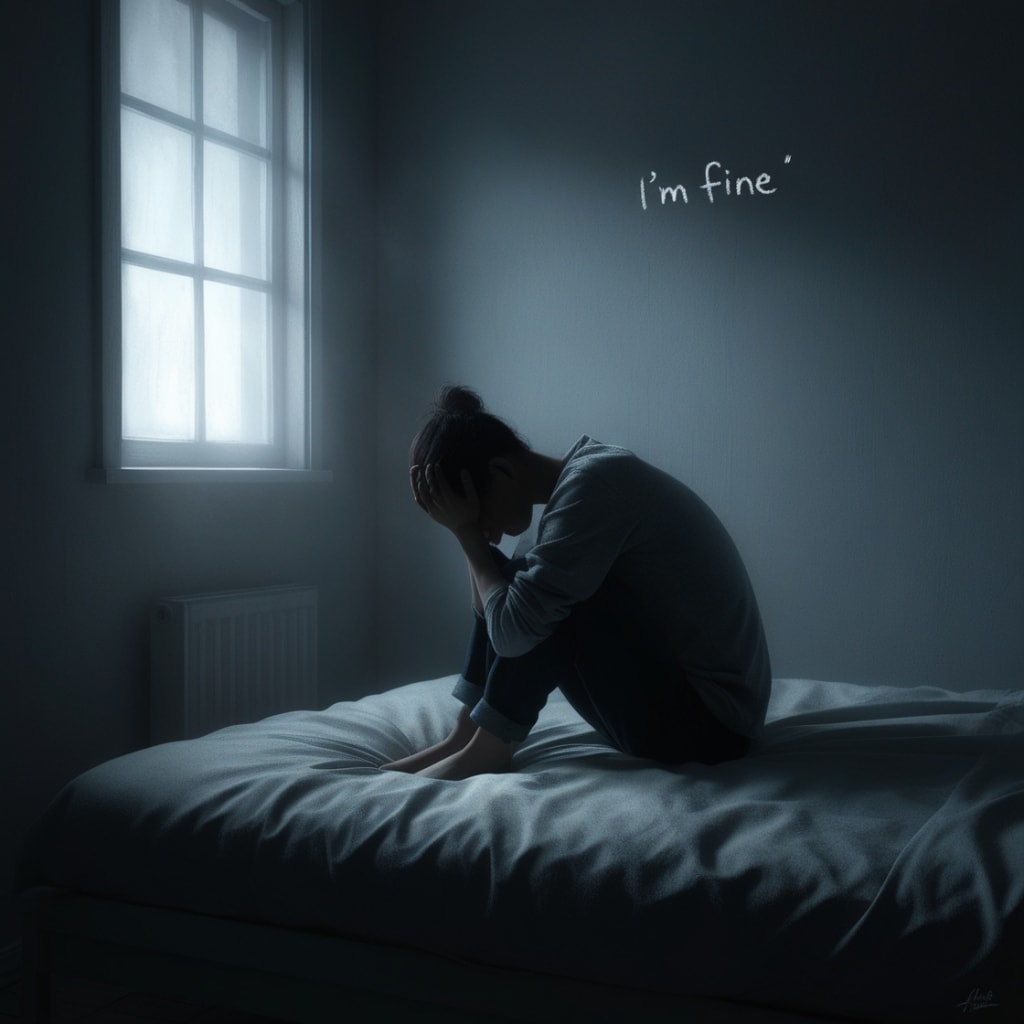
I remember the moment as clearly as if it were yesterday. I was sitting on the couch, phone in hand, exhausted after a long day filled with obligations, stress, and the silent weight of things I couldn’t name. Someone asked, “How are you doing?” and without hesitation, I said, “I’m fine.” Those two words — short, sharp, simple — felt like a shield. But beneath them, I was anything but okay. That moment marked the quiet beginning of everything unraveling in my life.
Saying “I’m fine” is something we all do. It's one of the most common lies in human interaction. It's a response that serves as a shortcut, a way of avoiding uncomfortable conversations or sidestepping emotional vulnerability. For me, it was easier to say I was fine than to explain the tangle of anxiety, sadness, and exhaustion inside me. I thought if I admitted how overwhelmed I felt, people would think I was weak or dramatic. So I swallowed the truth, smiled when I didn’t mean it, and convinced myself that strength meant silence.
But silence is heavy. The longer I kept pretending, the more I felt detached from myself. I started waking up tired even after a full night’s sleep. I avoided phone calls, missed deadlines, and lost interest in the things I used to love. Social gatherings became unbearable, not because I didn’t care about the people, but because pretending to be okay became exhausting. Every “I’m fine” was another brick in the wall I was building around myself, cutting me off from the very support I needed most.
Eventually, the emotional suppression took its toll in ways I couldn’t ignore. My body started sending distress signals — headaches, tension in my shoulders, sudden bursts of irritability. I remember snapping at a friend for something minor, and the look on their face made me realize how far I’d drifted from who I was. My relationships began to suffer. Friends noticed I was distant, my partner felt I was shutting them out, and I couldn’t find the words to explain myself. The problem was never that I didn’t have people who cared — the problem was that I didn’t let them in.
One night, after a particularly rough day, I sat in bed staring at the ceiling. The noise in my mind — the regrets, the worries, the unspoken emotions — was too loud to ignore. That was the night I finally admitted the truth, at least to myself: I wasn’t fine. I hadn’t been for a long time. And pretending otherwise had made everything worse. It wasn’t a dramatic breakdown or a Hollywood-style moment of revelation. It was quiet, a soft cracking open of the walls I had spent months building. I cried. Not for a specific reason, but because I had been holding in too much for too long.
The next day, I reached out to a close friend and told them what I’d been going through. I was nervous — my voice trembled, and my hands felt cold. But their response wasn’t judgment or disappointment. It was kindness. They listened. They didn’t try to fix everything or dismiss my feelings. They simply said, “Thank you for telling me.” And in that moment, I felt a weight lift that I hadn’t realized I was carrying.
That conversation marked the beginning of a slow healing process. I started being more honest — not just with others, but with myself. I began therapy, where I learned that emotional suppression doesn’t make problems go away. It buries them deep, where they fester and grow. I learned that saying “I’m not okay” doesn’t mean I’m broken — it means I’m human. I also realized that vulnerability is not weakness; it’s one of the bravest things a person can offer.
It’s still not easy. There are days when I feel tempted to go back to the comfort of silence, to slap on a smile and pretend again. But I remind myself of what happened the last time I said “I’m fine” when I wasn’t. I remember how everything fell apart — not because I was weak, but because I refused to let anyone see my pain. Now, I choose honesty, even when it’s uncomfortable. I say things like, “I’m having a tough time” or “I need some support.” And while that vulnerability can feel scary, it has brought me closer to the people who truly care.
Everyone has their own version of “I’m fine.” It can be a mask we wear at work, with family, or even in the mirror. But the longer we hide behind it, the more we isolate ourselves from the connections that could heal us. If you’re reading this and nodding along, maybe it’s time to ask yourself if you’re really okay. And if you’re not, that’s perfectly valid. Your emotions are real, your struggles matter, and you don’t have to carry them alone.
Saying “I’m not fine” was one of the most difficult things I’ve ever done — but it was also the most important. It didn’t fix everything overnight, but it opened a door. It reminded me that healing begins when we stop pretending and start speaking. So, the next time someone asks how you’re doing, and you feel the urge to say “I’m fine,” pause. Take a breath. Maybe choose honesty instead. It could be the first step in holding your life together before it quietly falls apart.
About the Creator
Muhammad Asim
Welcome to my space. I share engaging stories across topics like lifestyle, science, tech, and motivation—content that informs, inspires, and connects people from around the world. Let’s explore together!
Keep reading
More stories from Muhammad Asim and writers in Confessions and other communities.
I Cheated on a Test and Became the Teacher’s Favorite
I never thought one mistake would lead to admiration. When I cheated on a test in high school, I expected guilt, maybe shame, and definitely the risk of being caught. What I didn’t expect was to be praised, encouraged, and eventually seen as the teacher’s favorite. It sounds like something out of a fictional confession blog, but this is a true student cheating story—one I still think about today with a mix of discomfort, irony, and self-discovery.
By Muhammad Asim9 months ago in Confessions
The Hollywood Promise That Didn’t Last: A Lesson I Learned Watching Meghan Markle
There is something fascinating about the way celebrity relationships work in Hollywood. From the outside, it often looks like a world filled with glamour, loyalty, and endless opportunity. But the more closely you observe it, the more you realize that many of these relationships are built on influence rather than genuine connection.
By CelebCast Centrala day ago in Confessions




Comments
There are no comments for this story
Be the first to respond and start the conversation.