
The Things We Never Said
How silence between people can carry more weight than words.
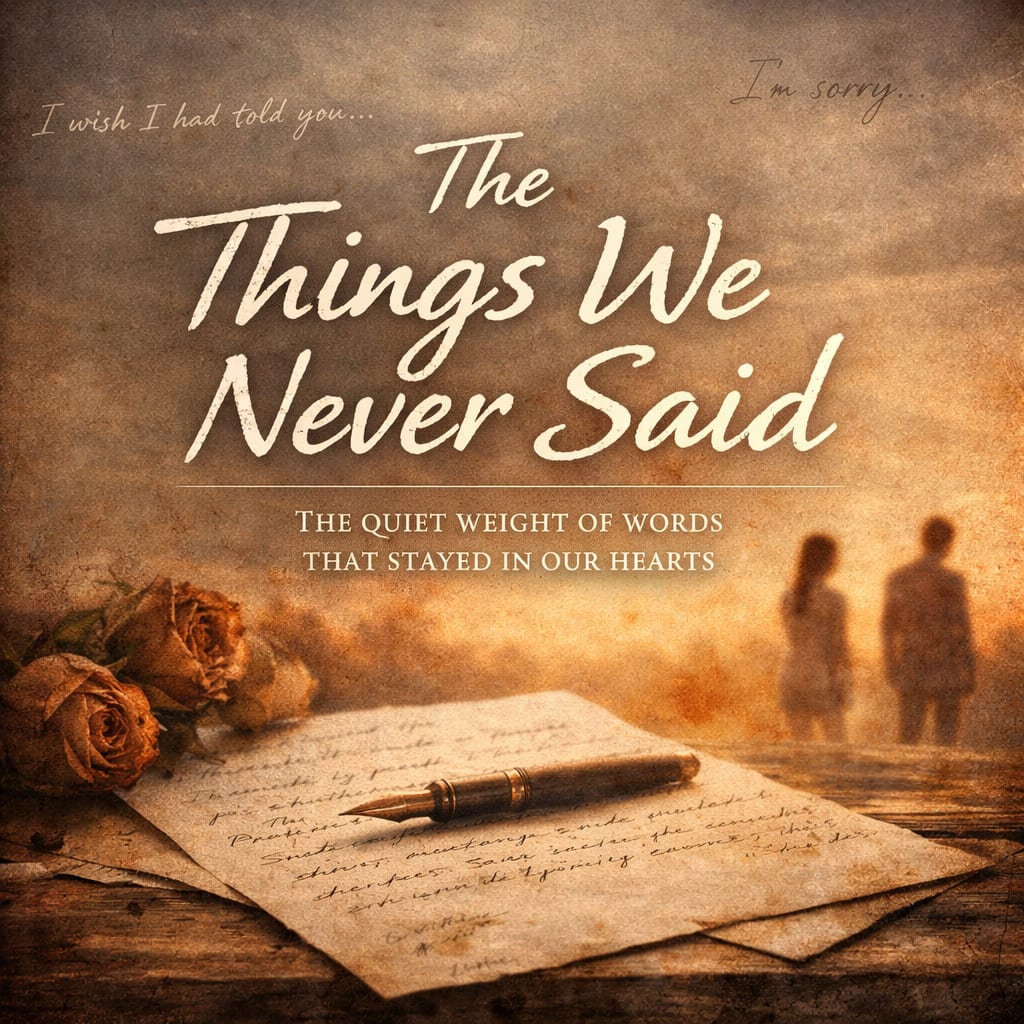
There are conversations we have every day—casual greetings, quick messages, polite exchanges that fill the spaces between our busy lives. But beneath all those spoken words lies another world of silence. It’s a world filled with things we never said.
These are the words that lived on the edge of our lips but never crossed them. The apologies we rehearsed but never delivered. The confessions we buried because we were afraid of what might happen if they became real. The gratitude we felt deeply but somehow forgot to express.
In many ways, the things we never said become some of the most powerful parts of our lives.
The Weight of Unspoken Feelings
Silence can be comforting, but it can also be heavy. When we hold back words that matter, they don’t disappear. Instead, they settle quietly inside us.
Think about the last time you wanted to tell someone how much they meant to you but didn’t. Maybe it felt awkward. Maybe you thought there would be another chance. Maybe you assumed they already knew.
But sometimes, they didn’t know.
We often assume people understand our feelings without us saying them. We believe love, appreciation, or regret can be sensed without explanation. Sometimes that’s true. But more often than we realize, people are walking through life unsure of how they truly matter to others.
A simple sentence can change that.
“I’m proud of you.”
“I appreciate you.”
“I’m sorry.”
Yet these small sentences are often the ones we struggle to say the most.
Fear: The Silent Gatekeeper
One of the biggest reasons we don’t say what we feel is fear.
Fear of rejection.
Fear of vulnerability.
Fear of changing something that currently feels safe.
When we care deeply about someone, the risk of being honest can feel enormous. What if they don’t feel the same way? What if our words make things awkward? What if we lose the relationship entirely?
So we choose silence instead.
But silence has its own consequences.
The irony is that while silence protects us from immediate discomfort, it often creates long-term regret. We move forward in life wondering what might have happened if we had been brave enough to speak.
The Conversations We Replay
Most people have memories that return late at night—moments when they wish they had said something different.
Maybe it was a goodbye that came too quickly.
Maybe it was an argument where anger spoke louder than truth.
Maybe it was a chance to express love that felt too vulnerable at the time.
These moments replay in our minds because unfinished conversations leave emotional echoes.
Human beings crave closure. When words remain unspoken, our minds try to complete the conversation on their own. We imagine how the other person might have responded. We rewrite the moment over and over again.
But imagined conversations rarely bring the peace that real ones can.
Love That Stayed Hidden
Some of the most common unspoken words are words of love.
Throughout life, many people experience feelings they never confess. Sometimes it’s a quiet admiration for a friend. Sometimes it’s a deep affection that grows slowly but never finds the courage to reveal itself.
Movies and novels often romanticize dramatic love confessions, but in reality, love often hides in silence.
A lingering glance.
A message typed and deleted.
A moment when the heart says everything but the voice says nothing.
And then time moves on.
People change cities, careers, and relationships. The moment passes, and the confession that once felt urgent becomes part of a memory.
But even years later, many people remember the love they never expressed.
Apologies We Never Gave
Just as powerful as unspoken love are the apologies we never made.
Everyone makes mistakes. Words are said in anger, patience runs out, misunderstandings grow. In the heat of the moment, pride often takes control.
Later, when emotions calm down, we may realize we were wrong. We might even feel genuine regret.
But reaching out can feel difficult.
Maybe too much time has passed.
Maybe the relationship already ended.
Maybe we convince ourselves that bringing it up will only reopen old wounds.
So we stay quiet.
Yet unspoken apologies have a strange way of lingering. They sit in the back of our minds, reminding us of the importance of humility and forgiveness.
Sometimes the hardest words to say are also the most healing.
Gratitude Left Unexpressed
Another category of unspoken words is gratitude.
Many people shape our lives in meaningful ways—parents who sacrificed quietly, teachers who believed in us, friends who stood beside us during difficult times.
But appreciation is often delayed.
We assume we’ll thank them later. We think there will always be another opportunity to express how much they mattered.
Unfortunately, life doesn’t always guarantee those chances.
People move away. Relationships drift apart. Time passes faster than expected.
And suddenly, the moment we thought would always be there is gone.
This is why gratitude is most powerful when it is spoken in the present.
A few sincere words can leave a lasting impact on someone’s life.
The Courage to Speak
Despite the risks, speaking honestly is one of the most courageous acts a person can take.
It requires vulnerability—the willingness to be seen fully by another person. It means accepting that we cannot control how others will respond.
But honesty also creates possibility.
When we speak openly, relationships can deepen. Misunderstandings can be resolved. Emotions that once felt heavy can finally breathe.
Even if the outcome isn’t perfect, clarity often brings relief.
Silence keeps us wondering. Words allow us to move forward.
When Silence Is the Right Choice
Of course, not every thought needs to be spoken. Silence can sometimes be wise.
There are moments when holding back words prevents unnecessary harm. There are situations where time and reflection are more valuable than immediate reactions.
The key difference lies in intention.
Healthy silence comes from thoughtfulness and compassion. Painful silence often comes from fear.
Understanding that difference can help us choose when to speak and when to pause.
Learning From the Words We Withheld
The things we never said often become quiet teachers in our lives.
They remind us how fragile time can be.
They show us the importance of honesty.
They reveal how deeply we value connection.
As people grow older, many begin to prioritize authenticity over hesitation. They become more willing to express love, appreciation, and truth because they understand how easily opportunities can disappear.
Life becomes less about protecting pride and more about protecting relationships.
A Different Kind of Regret
Regret is a powerful emotion, but not all regrets are equal.
Regretting something we said may cause temporary embarrassment or conflict. But regretting something we never said can last much longer.
Unspoken words leave permanent question marks in our stories.
What if I had told them how I felt?
What if I had apologized sooner?
What if they needed to hear those words?
These questions may never have answers.
But they can guide the way we live moving forward.
Choosing Words Over Silence
The truth is that life rarely offers perfect timing. There will always be reasons to wait, to hesitate, or to keep emotions hidden.
Yet the most meaningful moments often come from choosing courage instead.
Telling someone you love them.
Admitting when you were wrong.
Thanking someone who made a difference.
These words may feel small, but their impact can last a lifetime.
The conversations we choose to have today can prevent the regrets we might otherwise carry tomorrow.
The Words That Still Matter
If there is someone in your life you appreciate, tell them.
If there is someone you love, let them know.
If there is someone you hurt, consider reaching out.
Not every conversation will go exactly as planned. Some may be uncomfortable. Some may not lead to reconciliation.
But speaking honestly gives our emotions the chance to exist outside of silence.
And sometimes, that alone is enough to lighten the heart.
Because in the end, life is not only shaped by the words we say—but also by the words we choose not to say.
The challenge, and the opportunity, is deciding which ones deserve to finally be spoken.
About the Creator
Keep reading
More stories from Aiman Shahid and writers in Confessions and other communities.
The Epstein Files: Secrets That Shook the Powerful
In recent years, few scandals have captured global attention as intensely as the revelations surrounding the Epstein files. These documents, testimonies, and legal records connected to financier Jeffrey Epstein have shaken public trust, raised difficult questions about elite power, and exposed how influence can shape justice. What began as allegations against a wealthy individual evolved into a worldwide conversation about accountability, secrecy, and the dangers of unchecked power.
By Aiman Shahid2 days ago in Confessions
The Piggy Project
I’ve had so many names in this life I lose track of which ones were ever really mine and which ones I wore because someone needed me to. Some were handed to me before I had words to refuse them, before I knew what they meant, before I knew I could say no. Most weren’t meant to hurt. That doesn’t mean they didn’t leave marks. Marks that told me who I belong to, who I am by way of who claims me, recognizes me in the good and bad, who walks beside me.
By Fatal Serendipity3 days ago in Confessions
My Voice Is Back
There was a strange silence in my account for a while. Not the peaceful kind. The heavy kind. It was the kind of silence that lingers in the background, even when everything else looks normal. The stories were still there. The platform was still moving. People were still writing, sharing, reacting. But for me, something essential had paused. A part of my participation had been quietly switched off.
By Aarsh Malik5 days ago in Confessions



Comments
There are no comments for this story
Be the first to respond and start the conversation.