
The Silent Weight of Strength
What No One Sees When You’re the One Who Holds Everyone Together

People always said I was strong.
“You’ve got it all together.”
“I don’t know how you do it.”
“You’re the glue that keeps everyone from falling apart.”
I smiled every time. Gave the obligatory laugh. “Just doing what I can,” I’d say.
But no one ever asked what it cost me to be the glue. No one ever wondered what happened when I started to crack.
Being the strong one means you’re always “fine,” even when you’re not. It means picking up the pieces for others while hiding the ones that broke off from you. It means giving advice you wish someone would offer you, and holding space for others when you have no space left inside yourself.
I learned to be strong early. Childhood doesn’t leave much room for softness when you grow up in a house full of storms. My mother battled depression. My father was a shadow—sometimes present, mostly absent. I became the one who made sure dinner was ready, the one who remembered parent-teacher conferences, who comforted my little brother when the shouting got too loud.
No one asked if I was okay. I didn’t expect them to. I learned my role. I played it well.
And the world applauded.
In school, I was the dependable friend. The one everyone came to with their secrets and messes. In college, I was the calm voice during breakups, meltdowns, panic attacks. After graduation, it only escalated—friends navigating divorces, miscarriages, addiction. I was their lifeline.
And I never dropped the rope.
But what happens when the lifeline starts to fray?
I remember the moment I realized something wasn’t right. It was a Tuesday afternoon, and I was helping my best friend navigate yet another crisis. Her boyfriend had left, her job was on the rocks, and she needed me—again.
I listened. I gave her all the right words. I talked her off the ledge, told her she’d be okay, that she was strong, that she’d get through it.
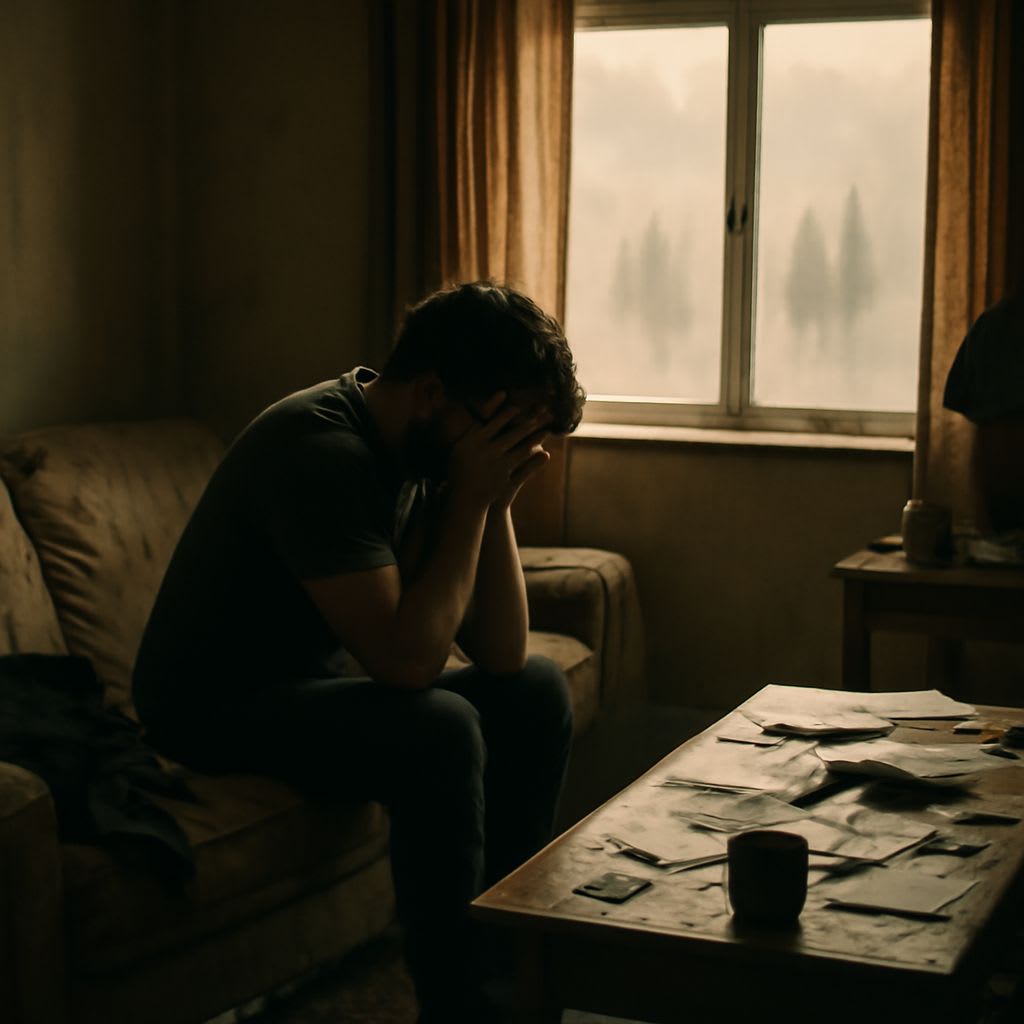
Then I hung up, and sat alone on the kitchen floor. My body felt heavy, like someone had filled my bones with sand. I stared at the fridge for almost an hour, unable to move. Not crying. Not thinking. Just… gone.
That was the first time I noticed it—the emptiness.
It wasn’t sadness, not exactly. It was more like an absence. Like I’d given so much of myself away, there was nothing left.
No one had checked on me in weeks. No one had asked how I was coping with my own breakup. Or the job I quietly lost. Or the fact that I hadn’t eaten a proper meal in days.
I didn’t tell anyone, of course. I didn’t want to worry them. They had enough going on.
Instead, I got up, made a cup of tea, and replied to a few more “Hey, can I vent for a sec?” texts.
Because that’s what strong people do.
Here’s the truth no one wants to say out loud: being “strong” is often just a mask for being overlooked.
People assume you’re okay, so they don’t ask. They lean on you, and you let them, because what’s the alternative? Letting someone fall when you could’ve caught them?
So you keep showing up. Even when your own hands are shaking. Even when you're running on empty.
But strength without support is a slow, silent kind of suffering.
It doesn’t explode. It erodes. Quietly. Patiently. Until one day, you wake up and realize you don’t recognize your own life. You don’t remember the last time someone hugged you without needing something from you. The last time you felt rested. Heard. Held.
You’re surrounded by people—and yet, completely alone.
Eventually, I broke.
Not dramatically. No ambulance. No public meltdown.
Just a quiet “no” to a friend who asked for something small. And when I said it, my chest clenched in panic.
What if they stopped talking to me? What if they got angry? What if I wasn’t useful anymore?
That fear told me everything I needed to know: I hadn’t been building relationships. I’d been building dependencies.
And worse—I’d let them.
So I started small. Setting boundaries. Saying, “I’m not available right now.” Telling the truth when I wasn’t okay.
At first, people were confused. Some drifted away. A few even got angry—like I’d broken an unspoken contract.
But some stayed. The real ones. The ones who didn’t just love what I gave them, but who loved me.
And for the first time in years, I began to feel lighter.
Being strong isn’t the problem.
The problem is thinking strength means never needing help. That it’s noble to suffer in silence. That being invulnerable makes you valuable.
It doesn’t.
Real strength is saying, “I need a break.”
Real strength is crying in front of someone you trust.
Real strength is learning to receive, not just give.
I’m still learning.
Some days, I slip back into old habits. I catch myself reaching for the armor. But then I remember: I don’t need to carry everyone anymore.
I deserve to be carried, too.
If you’ve always been the strong one, I see you.
You’re not weak for being tired.
You’re not selfish for needing space.
And you’re not alone—even when it feels like it.
The silent weight of strength is real. But you don’t have to bear it alone anymore.
Let someone in.
Let the mask fall.
Let yourself rest.
You’re human. And that’s more than enough.
About the Creator
Nadeem Shah
Storyteller of real emotions. I write about love, heartbreak, healing, and everything in between. My words come from lived moments and quiet reflections. Welcome to the world behind my smile — where every line holds a truth.
— Nadeem Shah
Keep reading
More stories from Nadeem Shah and writers in Confessions and other communities.
I Carried Everyone Until I Couldn’t Anymore
They came to me when they fell apart. Friends, family, coworkers—even strangers who barely knew me beyond surface-level pleasantries. Somehow, I’d become a magnet for other people’s pain, the go-to person when things got messy. I never asked for the role, but I never rejected it either. Saying “yes” to others felt like proof that I mattered. It gave me purpose. And besides, strong people didn’t need help, right?
By Nadeem Shah 7 months ago in Confessions
Problem-Solving Techniques For Couples Experiencing Intimacy Issues
The problem of intimacy in relationships hardly comes without any grounds. Unresolved conflicts, stress, communication breakdowns, or unmet expectations are some of the reasons why couples are affected and may either have emotional or physical distance. In the long run, these difficulties may cause restrictions so that the partners do not feel close or safe to one another. It is also important to understand that intimacy issues are not inherently negative and in order to solve the problem, couples need to be curious about the issue rather than blaming each other. Rather than thinking that the relationship is falling, the partners can see the problem as a chance to learn more about the needs and emotional experience of each other.
By Robert Smith4 days ago in Confessions
Guard Your Battery
Why are some people so attractive just by standing there? It’s not because they are "likable," but because they don’t need everyone to like them. I realized later that truly charismatic people allow themselves to be criticized, but they never criticize themselves. They never try to please the world; instead, the world stops to watch them.
By Emily Chan - Life and love sharing5 days ago in Poets



Comments
There are no comments for this story
Be the first to respond and start the conversation.