

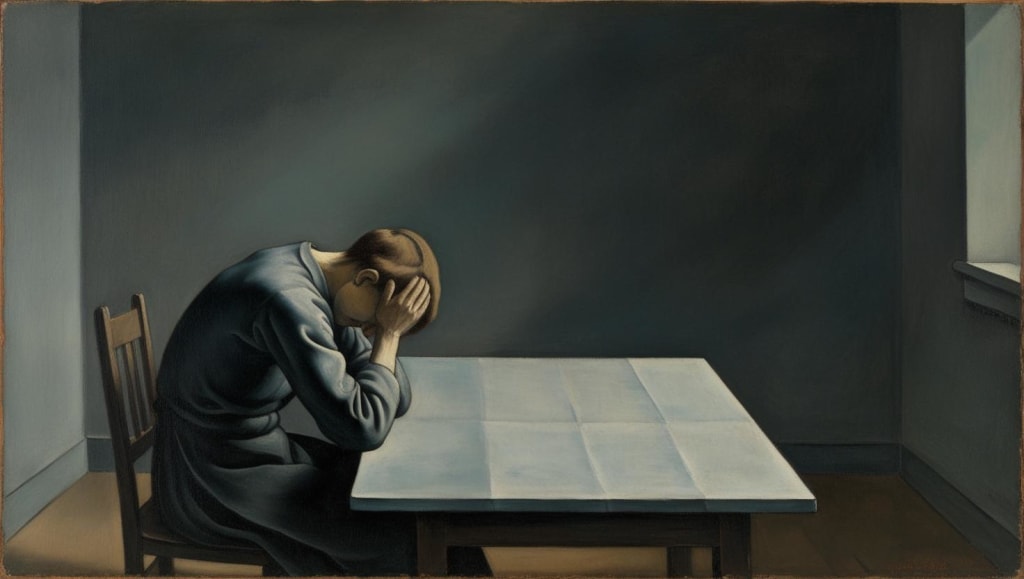
The Silent Struggle: A Story of Emotional Abuse
Sarah had always been the optimistic one in her group of friends. She had a smile that could light up a room and a heart that was open to everyone. Her life, full of laughter and love, was something she cherished deeply. But everything changed when she met Jake. At first, he seemed perfect—charming, caring, and attentive. He complimented her, made her feel special, and told her how lucky he was to have found someone like her. His words made Sarah feel like she was the most important person in the world, and she couldn't help but be drawn to him.
But over time, something began to shift. At first, it was subtle. Jake would make small comments about her appearance, about how she looked “better” when she wore certain clothes, or how her friends always seemed to dress better than she did. Sarah thought it was just him being protective, maybe even a little jealous. She brushed it off, believing he had her best interests at heart. But as time went on, the comments started to get sharper, more cutting.
“You know, you really should stop being so emotional. People don’t take you seriously when you cry.”
“What’s wrong with you today? You’re just being dramatic again.”
These words stung, but they weren’t the worst of it. Sarah began to notice that whenever she spoke her mind, Jake would brush it off as trivial or unimportant. Her opinions, once valued and respected by others, seemed to carry no weight in his eyes. This left Sarah feeling like she wasn’t enough, that maybe she was being too sensitive or asking for too much.
At first, Sarah tried to ignore the growing discomfort. She tried to convince herself that Jake’s behavior was just a phase, something that would pass. But the criticisms grew more frequent. He began to call her "too needy" or "too clingy" whenever she asked for reassurance or support. Whenever she pointed out how his words or actions hurt her, he would accuse her of being overly sensitive, saying things like, "I was just joking, why can’t you take a joke?" or "You're always making everything about you."
The gaslighting started slowly. Sarah would recall conversations and moments in the relationship, but Jake would insist that she had misunderstood him. "That's not how I said it," he'd argue, or "You're just imagining things." He would twist her words, making her feel like she was the one who was crazy.
As time went on, Sarah began to doubt herself. Was she really being too emotional? Maybe she was imagining things. The person she once was—the girl who smiled and laughed with her friends—seemed to disappear. Instead, she became withdrawn, constantly questioning herself. She didn’t feel like she could trust her own thoughts or feelings anymore.
One day, while Sarah was scrolling through social media, she saw a post about emotional abuse. It described subtle manipulations—how gaslighting, control, and belittlement could tear someone down without leaving a physical mark. As she read through the list of behaviors, Sarah’s heart sank. She recognized everything Jake had done to her. The constant criticism, the belittling comments, the control over her life, and the isolation from her friends and family. It all fit into place like pieces of a puzzle she had been trying to solve for months.
The isolation came next. At first, it was gentle—Jake would suggest that they spend more time together, that she should focus on their relationship. He made it seem like it was for their benefit, but soon, it became more controlling. He’d say things like, “Your friends don’t care about you as much as I do. I’m the only one who really understands you.” He would subtly make her feel like the people in her life were less important than him, and that only he had her best interests at heart. Slowly, Sarah found herself cutting off her relationships with her friends and family, convincing herself that they didn’t understand her as well as Jake did.
As the isolation deepened, Sarah’s world shrank. She found herself walking on eggshells, constantly second-guessing her actions and words. She didn’t want to upset Jake, so she tried to meet his expectations—hoping that if she did everything perfectly, he would finally be happy with her. But it was never enough. She couldn’t get it right. She began to feel like she was failing, like she was a disappointment. The man who once made her feel special now made her feel small and insignificant.
One evening, after another argument where Jake blamed her for everything that went wrong, Sarah sat in her room, tears welling up in her eyes. The emotional toll was exhausting. She felt like she couldn’t breathe. Her heart was heavy with confusion, fear, and loneliness. It felt like she was trapped in a dark tunnel, and there was no way out. She couldn’t remember the last time she had felt truly happy.
But as the tears fell, something inside her shifted. She realized that this wasn’t love. This wasn’t a healthy relationship. The constant manipulation, the gaslighting, the emotional cruelty—this was not what she deserved. And she didn’t deserve to lose herself in this toxic situation.
It wasn’t her fault. She wasn’t crazy. Jake’s behavior was the problem. She wasn’t responsible for fixing him or making things right. But taking that first step toward freedom was terrifying. What if she lost him? What if she couldn’t make it on her own? What if she wasn’t strong enough to leave?
The next morning, Sarah decided to take the first step. She reached out to her closest friend, Emma, who had always been there for her, even when Sarah had started pulling away. Emma had noticed the changes in Sarah—the way she seemed quieter, more withdrawn. She hadn’t pushed, but she had always offered her support when Sarah was ready to reach out.
Emma listened patiently as Sarah poured out her heart. She shared everything—the hurtful comments, the isolation, the doubt, and the overwhelming fear that had gripped her for so long. For the first time in months, Sarah felt understood. Emma didn’t judge her. She didn’t tell her to "just get over it" or "move on." She simply said, "You don’t deserve to be treated this way. You are worth so much more than this, and I’m here for you, no matter what."
That conversation became the turning point. Sarah realized she didn’t have to go through this alone. She wasn’t the only one fighting this battle, and there were people who loved her and wanted her to be happy. She started seeking therapy to understand what had been happening in her relationship. She learned about emotional abuse and how it could leave invisible scars. Slowly, she began to rebuild her sense of self-worth and her confidence.
It wasn’t easy. There were days when Sarah felt overwhelmed, unsure of herself, and uncertain of the future. But with each step, she grew stronger. She reconnected with old friends, started rebuilding her support network, and took small steps toward healing. She stopped blaming herself for the way Jake had treated her. Slowly, Sarah came to understand that healing didn’t mean forgetting or excusing the past—it meant finding peace, reclaiming her power, and moving forward.
The road to recovery was long, but Sarah knew that she had made the right choice. She had taken control of her life again. She had broken free from the manipulation and the emotional chains that had held her back for so long. She had rediscovered the strong, confident woman she once was—and she was determined never to lose herself again.
Emotional abuse doesn’t always show up with bruises or broken bones. It’s the harsh words, the gaslighting, and the isolation that leave invisible marks. But just because it’s silent doesn’t mean it’s not real. Sarah’s story is one of many, and if you or someone you know is going through something similar, remember that there is always help. You don’t have to walk that path alone. There is always a way out, and there is always hope for healing.
About the Creator
Gabriela Tone
I’ve always had a strong interest in psychology. I’m fascinated by how the mind works, why we feel the way we do, and how our past shapes us. I enjoy reading about human behavior, emotional health, and personal growth.
Keep reading
More stories from Gabriela Tone and writers in Confessions and other communities.
The Rhythm of Little Stars
The Rhythm of Little Stars A Journey to Finding the Perfect Baby Schedule When Emma first brought baby Oliver home from the hospital, she thought she was ready. She had read the books, joined the forums, listened to every piece of advice from mothers, grandmothers, neighbors, and strangers in grocery store lines. "Sleep when the baby sleeps," they said. "Feed on demand." "Let them cry it out." "Never let them cry it out."
By Gabriela ToneExclusive • 10 months ago
The Piggy Project
I’ve had so many names in this life I lose track of which ones were ever really mine and which ones I wore because someone needed me to. Some were handed to me before I had words to refuse them, before I knew what they meant, before I knew I could say no. Most weren’t meant to hurt. That doesn’t mean they didn’t leave marks. Marks that told me who I belong to, who I am by way of who claims me, recognizes me in the good and bad, who walks beside me.
By Fatal Serendipity2 days ago in Confessions


Comments
There are no comments for this story
Be the first to respond and start the conversation.