
The Shoe-Throwing Incident
"A Dubya Dodge in Baghdad: Reflecting on the Shoe-Throwing Incident and its Lasting Impact"
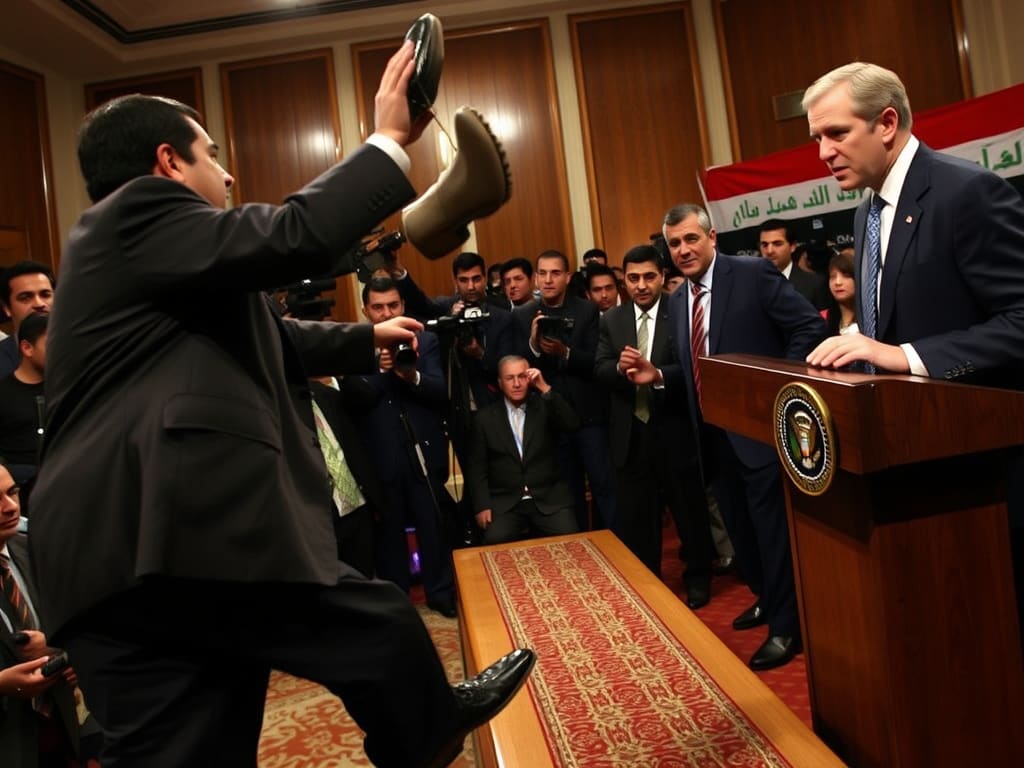
"A Dubya Dodge in Baghdad: Reflecting on the Shoe-Throwing Incident and its Lasting Impact"
Introduction:
In December 2008, during a press conference in Baghdad, Iraq, then-U.S. President George W. Bush found himself the target of an unexpected and globally televised act of protest. Iraqi journalist Muntadhar al-Zaidi hurled his shoes at Bush, shouting accusations related to the Iraq War. The incident, captured in countless photographs and video clips, became a viral sensation, sparking debate, outrage, and even admiration across the world. Years later, the "shoeing of Bush" remains a potent symbol of anti-war sentiment and a reminder of the complexities of the Iraq War and its aftermath.
The Scene: A Press Conference Interrupted
On December 14, 2008, President Bush was making a farewell visit to Iraq, a country still reeling from the effects of the U.S.-led invasion in 2003. During a joint press conference with Iraqi Prime Minister Nouri al-Maliki, Muntadhar al-Zaidi, a correspondent for the Iraqi television channel Al-Baghdadia, stood up and threw both of his shoes at the President.
As he threw the first shoe, al-Zaidi shouted in Arabic, "This is a goodbye kiss from the Iraqi people, you dog!" As he threw the second shoe, he yelled, "This is for the widows and orphans and all those killed in Iraq!"
Bush deftly ducked both projectiles. The shoes landed near him, but did not strike him. Security personnel quickly apprehended al-Zaidi and escorted him out of the room.
Immediate Reactions: Shock, Outrage, and Admiration
The shoe-throwing incident sparked a wide range of reactions around the world.
In the United States: Many Americans expressed outrage at al-Zaidi's actions, viewing them as disrespectful to the President and the United States. Some called for al-Zaidi to be severely punished.
In Iraq and the Arab World: Al-Zaidi was hailed as a hero by many Iraqis and Arabs who opposed the Iraq War. Some saw his actions as a courageous act of defiance against a leader they held responsible for the suffering in their country.
Global Media: The incident dominated news headlines around the world, prompting widespread debate about the Iraq War, freedom of speech, and the role of the media.
Al-Zaidi's Motives: A Voice for the Voiceless
Muntadhar al-Zaidi later explained that his actions were motivated by his deep anger over the Iraq War and the suffering it had caused. He felt that the war had been based on false pretenses and had led to the deaths of hundreds of thousands of Iraqis. He saw the shoe-throwing incident as a way to give voice to the voiceless and to express the frustration and anger of the Iraqi people.
The Aftermath: Imprisonment, Release, and Lasting Legacy
Following the incident, al-Zaidi was arrested and charged with assaulting a foreign head of state. He was initially sentenced to three years in prison, but his sentence was later reduced to one year.
Al-Zaidi was released from prison in September 2009, after serving nine months. He became a symbol of resistance and anti-war sentiment, receiving offers of support and recognition from around the world.
Since his release, al-Zaidi has remained a vocal critic of the Iraq War and has continued to advocate for human rights and social justice. He has also worked as a journalist and has written a book about his experiences.
Symbolism and Cultural Significance
The shoe-throwing incident quickly transcended its immediate context and became a powerful symbol with broader cultural significance.
Disrespect: In many Arab cultures, throwing a shoe at someone is considered a grave insult, a sign of utter disrespect.
Anti-War Sentiment: The incident became a symbol of opposition to the Iraq War and U.S. foreign policy in the Middle East.
Freedom of Speech: Some viewed al-Zaidi's actions as an exercise of free speech, a right to protest and express dissent, even in unconventional ways.
Viral Phenomenon: The incident's rapid spread through the internet and global media cemented its place in the cultural lexicon, demonstrating the power of visual images to shape public opinion.
Lasting Impact: A Stain on the Bush Presidency or a Cry for Justice?
The shoe-throwing incident continues to be debated and interpreted in different ways.
For some, it remains a stain on the Bush presidency, a symbol of the failures and controversies of the Iraq War. For others, it's a reminder of the human cost of war and the importance of holding leaders accountable for their actions. For still others, it represents the courage of one individual to stand up to power, even in the face of overwhelming odds.
Regardless of one's interpretation, the "shoeing of Bush" remains a potent and unforgettable moment in history, a reminder of the complexities of the Iraq War and its enduring legacy.
About the Creator
Keep reading
More stories from Million and writers in Confessions and other communities.
Is He Fun to Be Around, or Am I Fun and He’s Just Around?
We often mistake silence for peace and presence for connection. We spend months, sometimes years, decorating a relationship with our own laughter, our own energy, and our own vibrant spirit, only to wake up one morning and realize we’ve been throwing a party for two where only one person brought the music. The question isn't just a clever play on words; it is a mirror held up to the tired soul: Is he actually fun to be around, or am I the fun, and he is simply standing in the glow of my light?
By Alex Sterling 4 days ago in Confessions



Comments (1)
I remember this! Proud of him for throwing a shoe! Good Gazoogabloga! Good work!