
The Science Behind Love: Exploring How Our Brains and Hormones Work Together
Unraveling the Mystery of the Hormone That Makes You Fall Head Over Heels

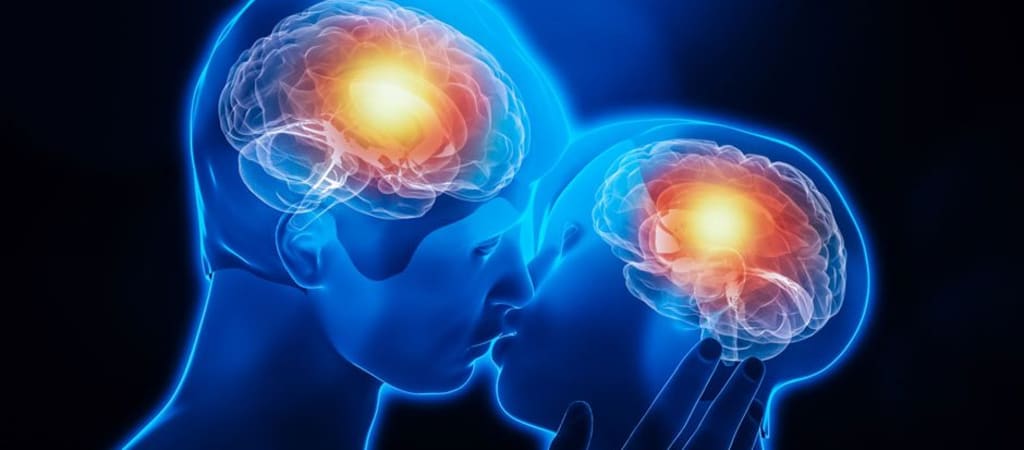
Love is one of the most powerful emotions that humans experience. But did you know that it's not just the heart that's involved in this feeling – it's also the brain? This article delves into the science behind falling in love, exploring the hormones and brain systems that come into play when starting a new relationship.
The initial stages of a new relationship are all about infatuation or passionate love. When you're deeply in love with someone, your brain activity in the ventral tegmental area increases like crazy. That is the reward processing and motivation section of your brain that activates when you do something rewarding like eat something delicious. In turn, happiness hormones like dopamine are released, which teach your brain to repeat the behavior with the expectation of receiving the same reward.
This surge of dopamine is not only responsible for making you feel energetic and happy but also for making it hard to keep away from your partner. Interestingly, high levels of dopamine can also cause insomnia and decreased appetite, just like in those romance novels where the characters are so in love that they can't eat or sleep.
As the relationship progresses, the brain enters the era of attachment or compassionate love, where the pair-bonding hormones vasopressin and oxytocin come into play. They indicate feelings of attachment, social support, and trust. These hormones help bond families and friendships, but they also help create a deeper connection with your partner.
However, the downside is that the rose-colored glasses come off, and the problems in the relationship may become more evident. Nevertheless, tackling these issues and creating an even stronger bond is possible.
Unfortunately, not all relationships end happily. The process of heartbreak activates the insular cortex, which processes all kinds of pain from physical to social. Science shows that even after a breakup, the motivation and reward center that was initially responsible for the desire to be with your partner is still at work. In other words, your urge to contact your ex may feel overwhelming like an extreme hunger or thirst.
Exercising, spending time with friends, or watching your favorite movies can help ease the pain of heartbreak. Time and support from loved ones heal everything, as the brain's higher cortical regions in charge of reasoning and impulse control eventually pump the brakes on all the distress and yearning.
But what about love at first sight? Psychologist Arthur Aaron came up with 36 questions to deepen the intimacy between you and your partner, leading to a quicker fall into love.
Additionally, love is not just a feeling; it's a complex process involving hormones and different brain regions. Understanding the biology of love can help us navigate our relationships better and appreciate the different stages of the process.
Let's consider the story of John and Sarah. They met at a coffee shop, and John immediately felt a connection with Sarah. As they talked and got to know each other, John felt a rush of euphoria and excitement, and he couldn't stop thinking about Sarah.
This feeling is the result of the hormone dopamine flooding John's brain. Dopamine is a neurotransmitter associated with motivation and reward, and it plays a critical role in the early stages of falling in love. When John was talking to Sarah, his brain's reward centers lit up, releasing dopamine and making him feel euphoric and excited.
As John and Sarah continued to date and develop a relationship, the hormone oxytocin began to kick in. This hormone is commonly referred to as the "cuddle hormone" because it's released during physical contact like hugging and kissing. Oxytocin is also associated with attachment and social bonding, and it begins to cultivate deeper feelings of intimacy between couples.
The combination of dopamine and oxytocin creates a powerful cocktail of emotions that makes falling in love such an intense experience. As John and Sarah spent more time together and shared more experiences, their brains were flooded with these hormones, creating an ever-deepening emotional connection.
However, as their relationship progressed, John began to see Sarah's flaws and quirks. He realized that she wasn't perfect and started to question whether he was as in love with her as he initially thought. This disillusionment is a normal part of the attachment stage of falling in love. As the brain begins to process long-term commitment, it's natural to start to see your partner more realistically.
Eventually, after several months of dating, John and Sarah broke up. The heartbreak that John felt was the result of his brain's reward centers still firing even though he and Sarah were no longer together. Whenever he thought about her or saw a picture of her, his brain released dopamine like it did when they were together. This surge of dopamine was what made John feel the intense urge to reach out to her and try to win her back.
In the aftermath of their breakup, John felt restless, anxious, and depressed. These feelings are the result of the stress response that is triggered when we experience emotional pain. When our brain perceives a threat, our body releases cortisol and other stress hormones that increase our heart rate, blood pressure, and respiration, preparing us to fight or flee.
Therefore, the process of falling in love is complex and involves a complex interplay of hormones and brain systems. The heady rush of dopamine and the warm embrace of oxytocin create a powerful sensation that can make us feel euphoric and invincible. But as the relationship progresses, our brains begin to process long-term commitment, and we start to see our partners more realistically. Ultimately, whether we stay together or break up, the influx of dopamine that we experience in the early stages of a relationship can cause heartache and distress long after the relationship ends.
About the Creator
Keep reading
More stories from Jona Marie A Milana and writers in Confessions and other communities.
Exploring the Ancient Perceptions of Outer Space: How Early Civilizations Imagined the Cosmos
It was a spring day in 1900 when a group of Greek sponge divers discovered a shipwreck off the coast of Greece. Among the treasures they found was a complex cosmological calculator – one of the world's first analog computers – made by the ancient Greeks between the 3rd and 1st centuries BCE. But as fascinating as the Greeks' knowledge of the universe was, their beliefs were based on those of an earlier civilization: the ancient Babylonians, who were the first astronomers and predicted eclipses and the length of a year.
By Jona Marie A Milana2 years ago in Education
Word of the Day: ホチキス
I don't know the word for Staples. I remember I used to think that Hochikisu was an Onomatopoeia for a stapler rather than a brand name. I am pretty sure I already have this title as a theme, which is making me feel many sort of ways as Vocal is harassing me about payments currently.
By Kayla McIntosh23 days ago in Confessions
Love makes yourself blind not your friends
Sunday, 16 March 2025- Camille's House Sometimes during your lifetime, you are going to meet many people, meet many souls, I can tell, but one day you are going to meet someone that your heart beats for, someone who puts you in a trance, someone whose smile gives you not just energy but motivation to be a better person. I am a better person with him. I know he never would hurt me. Since I met him, I am glowing, I am feeling protected, feeling alive.
By Janissa Andrade4 days ago in Confessions
Miss Persephone's Manual to a Seemingly Ordinary Life
Miss Persephone was found at the dining table, her blue eyes swollen, her tears arriving and retreating like the tides of the ocean. Earlier that day, her family had visited her in the retirement home where she had lived for eight years. It was her eightieth birthday.
By Imola Tóth4 days ago in Fiction


Comments
There are no comments for this story
Be the first to respond and start the conversation.