
The Power of Saying “No” Out Loud
Boundaries, Self-Respect, and Inner Strength
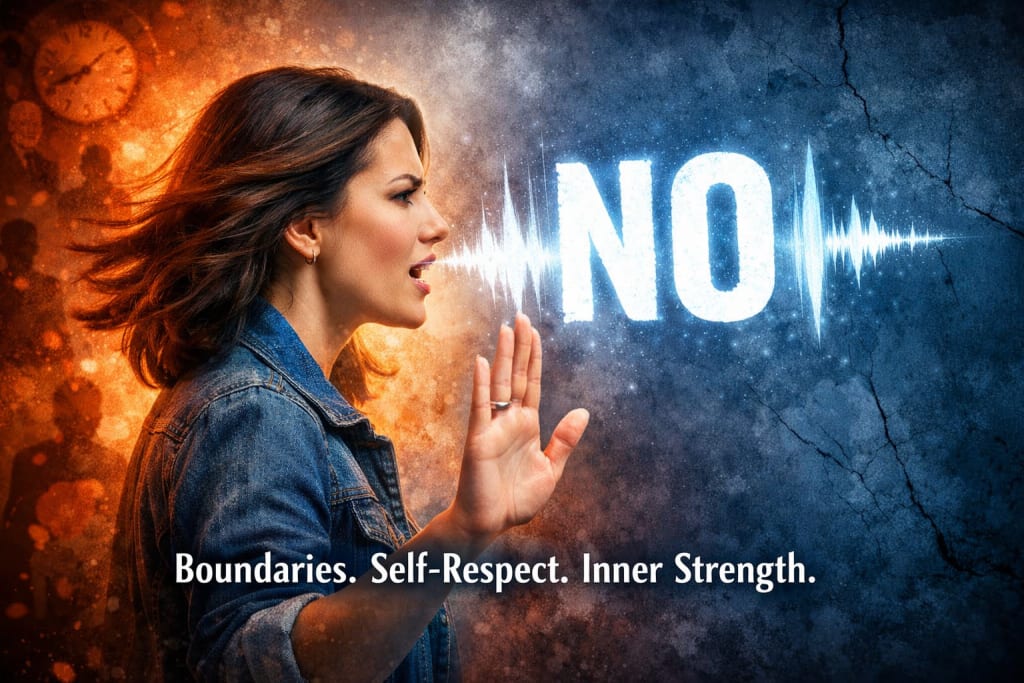
There is a strange guilt attached to the word no.
It’s short, simple, and clear—yet for many of us, it feels heavier than a long explanation or a quiet compromise. Saying “no” out loud can feel like an act of rebellion, selfishness, or even cruelty. So instead, we soften it. We delay it. We replace it with excuses, half-agreements, or silence.
But every time we swallow a “no,” something inside us learns that our needs come last.
Learning to say “no” out loud isn’t about being difficult. It’s about being honest. And honesty—especially with ourselves—is one of the most powerful tools we have.
Why Saying No Feels So Hard
From a young age, many of us are taught that being agreeable is a virtue. We’re praised for being helpful, flexible, and understanding. Saying “yes” makes us likable. Saying “no” risks conflict, disappointment, or rejection.
Over time, we internalize a dangerous belief:
Our worth is tied to how much we give.
So when someone asks for our time, energy, or emotional labor, we hesitate. We worry about how we’ll be perceived. We fear being labeled rude, cold, or ungrateful. For some, especially those who grew up in environments where love felt conditional, saying “no” feels like risking connection itself.
But what we often fail to realize is this:
Every forced “yes” is a quiet betrayal of ourselves.
The Cost of Always Saying Yes
At first, over-commitment looks harmless. You help a little extra. You stay late. You agree even when you’re exhausted. You prioritize others because it feels easier than asserting your needs.
But slowly, the cost becomes visible.
You feel drained all the time.
Resentment builds beneath your kindness.
Your enthusiasm fades into obligation.
Your boundaries blur until you no longer recognize them.
Worst of all, you begin to lose touch with your own voice. You stop asking yourself what you want because the answer no longer seems to matter.
When we constantly say yes to others, we often end up saying no to ourselves—our rest, our goals, our peace.
No Is a Complete Sentence
One of the most freeing truths is this:
“No” does not require justification.
You don’t owe everyone an explanation. You don’t have to present evidence of exhaustion or prove that your reasons are valid. Your limits are valid simply because they are yours.
Yet many of us feel compelled to add disclaimers:
“I’m sorry, but…”
“I wish I could, but…”
“Maybe another time…”
While kindness is important, constantly softening your boundaries can weaken them. When you say “no” clearly and respectfully, you communicate self-respect. And self-respect teaches others how to treat you.
Saying No Is an Act of Self-Respect
Saying “no” out loud is not about rejecting others—it’s about choosing yourself.
It means acknowledging that your time is finite. Your energy is valuable. Your mental health matters. It’s recognizing that you cannot pour from an empty cup, no matter how good your intentions are.
Self-respect doesn’t always look loud or aggressive. Sometimes, it looks like a calm refusal. A steady voice. A boundary that doesn’t bend under pressure.
When you say “no” from a place of clarity rather than guilt, something shifts. You begin to trust yourself more. You start honoring your instincts. You become more present in the things you do say yes to.
The Fear of Disappointing Others
One of the biggest obstacles to saying no is the fear of disappointing people. We imagine their reaction before we even speak. We rehearse worst-case scenarios in our heads. We tell ourselves it’s easier to say yes than to deal with discomfort.
But disappointment is a natural part of human relationships. You cannot live a full, honest life without occasionally letting someone down.
What matters is not avoiding disappointment—it’s choosing integrity over approval.
The people who respect you will understand your boundaries. Those who don’t may benefit from learning that you have them.
Boundaries Strengthen Relationships
Contrary to popular belief, boundaries don’t push people away—they clarify relationships.
When you say “no” honestly, you remove confusion. You prevent resentment. You create space for healthier dynamics. People know where you stand, and you stop over-promising what you can’t sustain.
Relationships built on constant self-sacrifice eventually crack. But relationships grounded in mutual respect have room to grow.
Saying no protects not just you, but the connection itself.
Learning to Say No Without Guilt
Guilt often shows up even after we’ve done the right thing. It whispers that we should have tried harder, given more, or been nicer.
But guilt doesn’t mean you’re wrong—it often means you’re breaking an old pattern.
Here are a few gentle reminders:
You are allowed to prioritize your well-being.
Rest is not laziness.
Boundaries are not punishments.
Choosing yourself is not selfish.
The discomfort fades with practice. Each time you say “no” and survive it, your confidence grows.
When No Becomes Empowering
There’s a quiet power that comes from honoring your limits. It shows up in the way you walk away from situations that drain you. In how you protect your time. In how you stop explaining yourself to people who refuse to listen.
Saying “no” creates space—for growth, creativity, healing, and joy. It allows you to say “yes” to things that truly align with who you are.
Over time, your “no” becomes less defensive and more intentional. Less fearful and more grounded.
Finding Your Voice Through No
Your voice isn’t just about speaking loudly. It’s about speaking truthfully.
Every time you say “no” out loud, you reinforce the belief that your voice matters. That your needs deserve acknowledgment. That you are allowed to take up space without apology.
This is how you reclaim yourself—not through grand gestures, but through small, consistent acts of honesty.
Final Thoughts
Saying “no” out loud is not easy. It challenges old habits, expectations, and fears. But it is one of the most powerful forms of self-expression you can practice.
It teaches you to listen to yourself.
It protects your energy.
It strengthens your relationships.
And most importantly, it brings you back to who you are.
The next time your instinct says no—pause. Breathe. Trust it.
Because every honest “no” brings you one step closer to a life that feels like your own.
About the Creator
Keep reading
More stories from Aiman Shahid and writers in Confessions and other communities.
Finding Your Voice in a World That Talks Too Much
We live in a world that never stops talking. Notifications buzz, opinions flood timelines, podcasts play in the background, and everyone seems to have something to say about everything. Noise has become the soundtrack of modern life. Yet, in the middle of all this constant chatter, many of us struggle with a quiet, unsettling question: Where is my voice in all of this?
By Aiman Shahid3 months ago in Confessions
The Comeback They’re Hoping For
Sometimes the hardest part of public life is learning that attention can disappear just as quickly as it arrives. I found myself thinking about this while following the continuing discussions surrounding Prince Harry and Meghan Markle, widely known as the Duke and Duchess of Sussex.
By khanabout 11 hours ago in Confessions




Comments
There are no comments for this story
Be the first to respond and start the conversation.