
The Letter Under Her Pillow
A forgotten note. A shattered memory. A journey back to forgiveness.

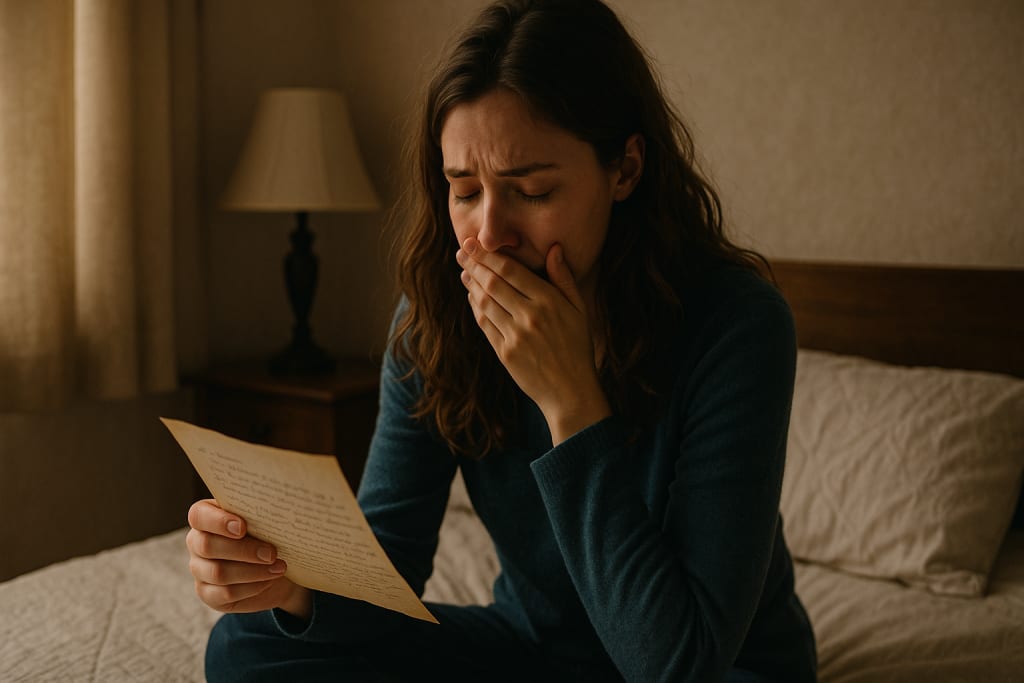
Elena hadn't been home in seven years. The town she left behind was the kind that held onto gossip tighter than it did people. Her absence was both her rebellion and her sanctuary. But now, standing in her mother’s dimly lit bedroom, suitcase still in hand, it felt like the past hadn’t moved an inch.
The funeral had been quiet—no hymns, no speeches, just silence and the sound of wind sweeping through tall cemetery grass. Her mother never liked ceremonies. She never liked a lot of things. But she had loved Elena, in the only way she knew how—quietly, sternly, and from a distance.
Elena sat on the edge of the bed, her fingers brushing the quilt her mother used to stitch every winter. The house smelled like lavender and time. Dust floated lazily through the golden afternoon light, and all around were echoes of words never spoken.
Something poked her from beneath the pillow.
She hesitated, then pulled it up. A letter. Yellowed, creased, and addressed in her mother’s strong handwriting:
"For Elena. To be opened only when you're ready."
Her throat tightened.
Hands trembling, she unfolded the letter:
> My dearest Elena,
If you are reading this, I am no longer here. And maybe, just maybe, you’ve come home because something in your heart whispered that it’s time.
I want to say what I never could. I was afraid. Afraid of being too soft in a world that demanded women be made of steel. I carried my pain like armor, and in doing so, I passed it to you.
I watched you grow wings, but I clipped them every time I didn’t understand your dreams. That night we fought—I remember every word. I wanted to stop you, but my pride, my silence... they were louder than my love.
I never stopped loving you. Never. I just didn’t know how to show it.
Please forgive me.
Love always,
Mom.
Elena couldn’t stop the tears now. They fell fast and hot, carving through years of resentment and aching loss. The letter shook in her hands like a confession finally heard.
That night, she wandered into the kitchen—the same cracked tiles, the same faded clock ticking above the stove. The silence here was deeper than any city noise. She poured tea the way her mother used to and sat by the window, letting the moon spill its light across the floor.
She didn’t sleep. Memories came like waves—some gentle, some jagged. Her mother brushing her hair as a child, the scent of cinnamon in winter, the sharp words during her graduation, the door slamming behind her the day she left.
She had built her life on anger and distance. She had run from a home full of ghosts. But now, one of them had spoken—lovingly, finally—and everything inside her cracked open.
In the morning, she packed a small bag and drove to the nursing home where Mrs. Jensen, her mother’s best friend, still lived.
When the old woman saw her, her eyes sparkled. “You came.”
“I found the letter,” Elena whispered.
Mrs. Jensen reached out and took her hand. “She wrote that letter every year, in case you came back. She believed you would.”
Elena stared. “Every year?”
“She forgave herself long before she asked you to forgive her. But she never stopped hoping.”
It was then that Elena realized—this wasn’t just about the past. It was about what she did now. The story didn’t end with a funeral or a letter under a pillow. It began again—with healing.
That evening, she stood outside the old library and posted a message on her blog: “A Letter from My Mother: Learning to Forgive the Silence.”
The post went viral.
Readers poured in with their own stories—of lost parents, unsaid words, letters found in drawers, forgiveness that came too late or just in time. Elena responded to every one, sometimes with tears, sometimes with just a heart emoji.
Two weeks later, a publishing offer landed in her inbox.
A memoir.
Elena smiled at the sky through her kitchen window.
Maybe the story she had always wanted to write wasn’t in the city she had escaped to. Maybe it had been under a pillow, waiting, all along.
About the Creator
Keep reading
More stories from Ayan khan and writers in Confessions and other communities.
My 15 Top Stories
Writing is more than just placing words on a page — it’s a reflection of emotion, thought, struggle, and sometimes, even hope. When I began sharing my stories on Vocal Media, I never imagined the kind of connection and response I would receive from readers around the world. Over time, 15 of my stories rose above the rest, not just in terms of views or reads, but in the depth of conversation and feeling they stirred.
By Ayan khan6 months ago in Confessions
Speaking Up in a World That Tries to Quiet You
In a world that often rewards conformity and quiet obedience, speaking up can feel like an act of rebellion. From classrooms to boardrooms, from family gatherings to online spaces, many of us learn early on that staying silent is safer than expressing our true thoughts. We are told not to “rock the boat,” not to offend, not to question authority. Over time, this conditioning teaches us to shrink our voices, doubt our opinions, and silence our inner truth.
By Aiman Shahid5 days ago in Confessions



Comments
There are no comments for this story
Be the first to respond and start the conversation.