
The Letter in His Pocket
A forgotten soldier, a lost message, and the war that stole everything.

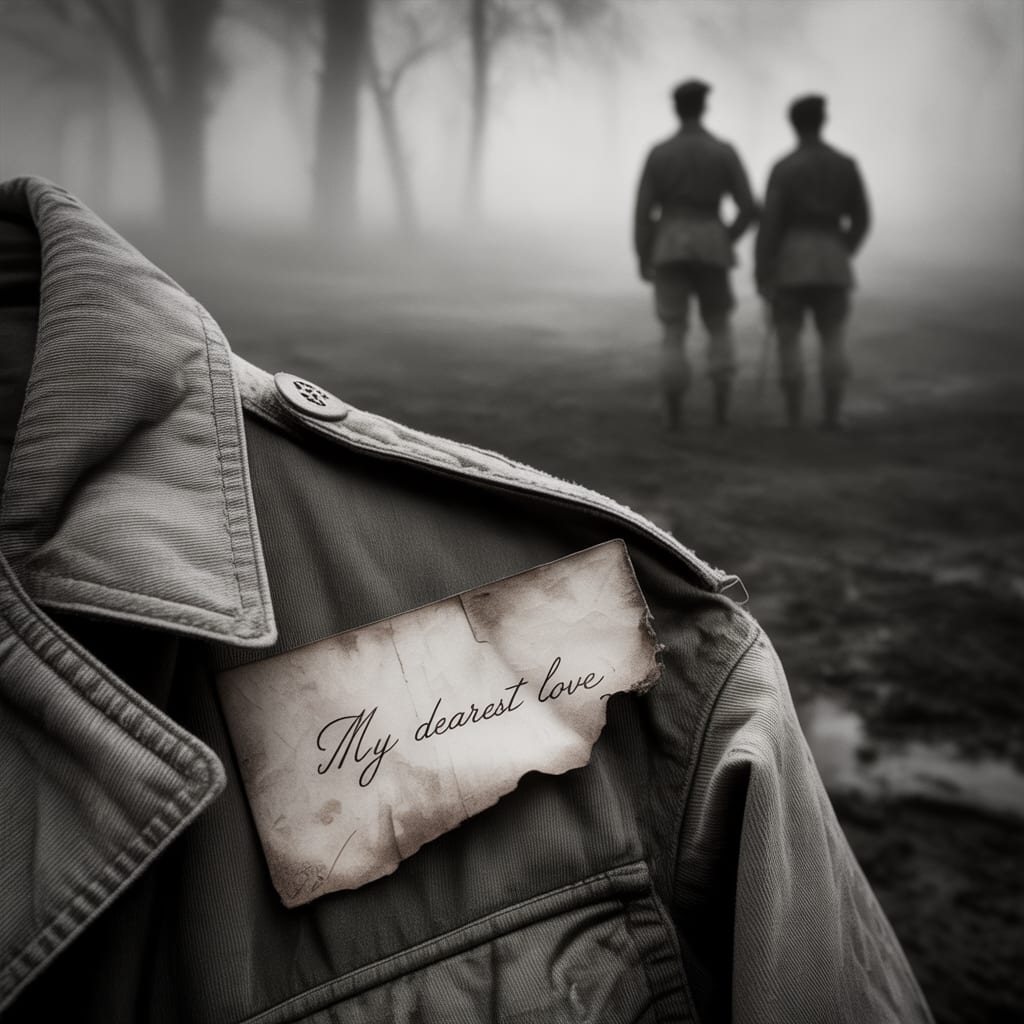
It was the summer of 1944, and the sky over Normandy was burning.
Private Elias Turner had just turned nineteen when his boots first touched French soil. He was one of the youngest soldiers in the 101st Airborne Division, and though he looked like a boy, war would turn him into something else entirely.
He kept a letter in the pocket of his uniform jacket — the kind written hastily, on wrinkled paper, stained with tear marks. It was from his sister, Anna. She had written it the night before he boarded the ship from England.
> “Come back to us,” she wrote. “The garden misses you. So do I.”
---
Elias hadn’t seen home in over a year. His father had died in a mining accident in Virginia. His mother was gone long before that. Anna was all he had — a year older, tougher, smarter. She worked in a factory now, making parts for planes. They’d promised each other that they’d meet again — after the war.
But war has a habit of breaking promises.
---
The beach was still soaked in blood and smoke when Elias and his unit advanced. The Germans had retreated inland, but left behind traps, snipers, and silence that screamed louder than bullets.
On the third day, they lost Sergeant Wilkes to a landmine.
By the fifth day, half of Elias’s platoon was gone.
On the sixth night, it rained so hard that the trenches filled with water, drowning their hope and soaking everything—including the letter in his pocket.
But Elias wouldn’t throw it away. It was the only thing that reminded him he was still someone’s brother. Still someone’s boy.
---
Then came Saint-Lô.
A small French town that no longer resembled anything living. Bombed into ruins by both sides. Civilians buried under rubble. Horses roamed without riders. It was the kind of place where even ghosts seemed too tired to haunt.
The mission was clear: hold the road at all costs.
Elias and what remained of his unit dug in near an abandoned farmhouse.
They didn’t sleep that night. Just waited.
At dawn, the German counterattack came like thunder — tanks, mortar shells, machine guns. One moment Elias was aiming through his rifle scope, the next he was face-down in the mud, deafened by the blast that took out the barn next to him.
He dragged himself behind a broken cart. His left leg was bleeding badly. His helmet was gone. His fingers trembled as he reached into his chest pocket.
The letter was still there — wet, ripped, unreadable.
That’s when he saw them.
Two German soldiers. Not much older than him. Scared. One had a pistol. The other had fear in his eyes.
They locked eyes.
No one moved.
No one breathed.
Then the soldier with the pistol looked down, saw Elias's wound, and… didn’t shoot.
He said something in German, nodded, and pulled his friend away.
Elias watched them vanish into the mist.
In that moment, he realized something.
War wasn’t made by men like them. It was made by men who never touched mud, who never watched friends die, who never carried blood in their boots.
---
By the time the backup arrived, Elias was unconscious. He woke up in a military hospital in London, his leg gone below the knee.
He didn’t cry.
The nurse handed him a bundle of belongings recovered from his uniform.
Inside was the letter — crumpled, torn, and unreadable.
But he didn’t need the words anymore.
He remembered them all.
---
Years passed.
Elias returned to Virginia with a wooden leg, a limp, and more nightmares than stories.
He never married. Said no woman should have to share a bed with war.
He opened a small grocery store. Lived in the same house where he and Anna had grown up.
Every Sunday, he visited her grave with flowers and silence.
She had died from pneumonia just weeks before he came home.
The letter he carried was the last thing she ever wrote.
---
In 1994, fifty years later, a young journalist named Robert visited Elias after reading a small piece in the local paper:
“Veteran Recalls Forgotten Battle.”
Robert expected an old man with faded memories.
But Elias, now 69, still remembered every detail.
Especially the German soldier who didn’t pull the trigger.
“I think he knew,” Elias said. “We were both just boys. Just wanted to live.”
Robert asked him, “Do you ever wonder what happened to him?”
Elias smiled faintly. “Every day.”
He paused.
“Maybe he’s somewhere in Germany, sitting by a window. Maybe he told someone about me. Maybe we saved each other without realizing it.”
---
Robert published the story under the headline:
“The Letter in His Pocket.”
It spread across Europe. Veterans’ groups shared it. Readers cried. Schools taught it.
And one day, a letter arrived from Hamburg, Germany.
It was from an old man named Klaus Bruckner.
He wrote:
> “I was that boy. I never forgot your eyes. I never told anyone — not even my wife — that I spared a soldier that day. I didn’t know if you lived. I’m glad you did.”
---
They exchanged letters for two years.
When Elias passed away in 1996, Klaus sent a single white rose to his funeral with a note:
> “For the man I did not kill. Who gave me a second chance at life.”
About the Creator
Muhammad Usama
Welcome 😊
Keep reading
More stories from Muhammad Usama and writers in Confessions and other communities.
The Hollywood Dream That Didn’t Go as Planned
For years, the world has been fascinated by the lives of Prince Harry and his wife, Meghan Markle. Their departure from the royal family once felt like the beginning of a powerful new chapter—one filled with freedom, creativity, and global influence. But in the unpredictable world of entertainment and media, even the most promising partnerships can face unexpected setbacks.
By CelebCast Central2 days ago in Confessions




Comments
There are no comments for this story
Be the first to respond and start the conversation.