

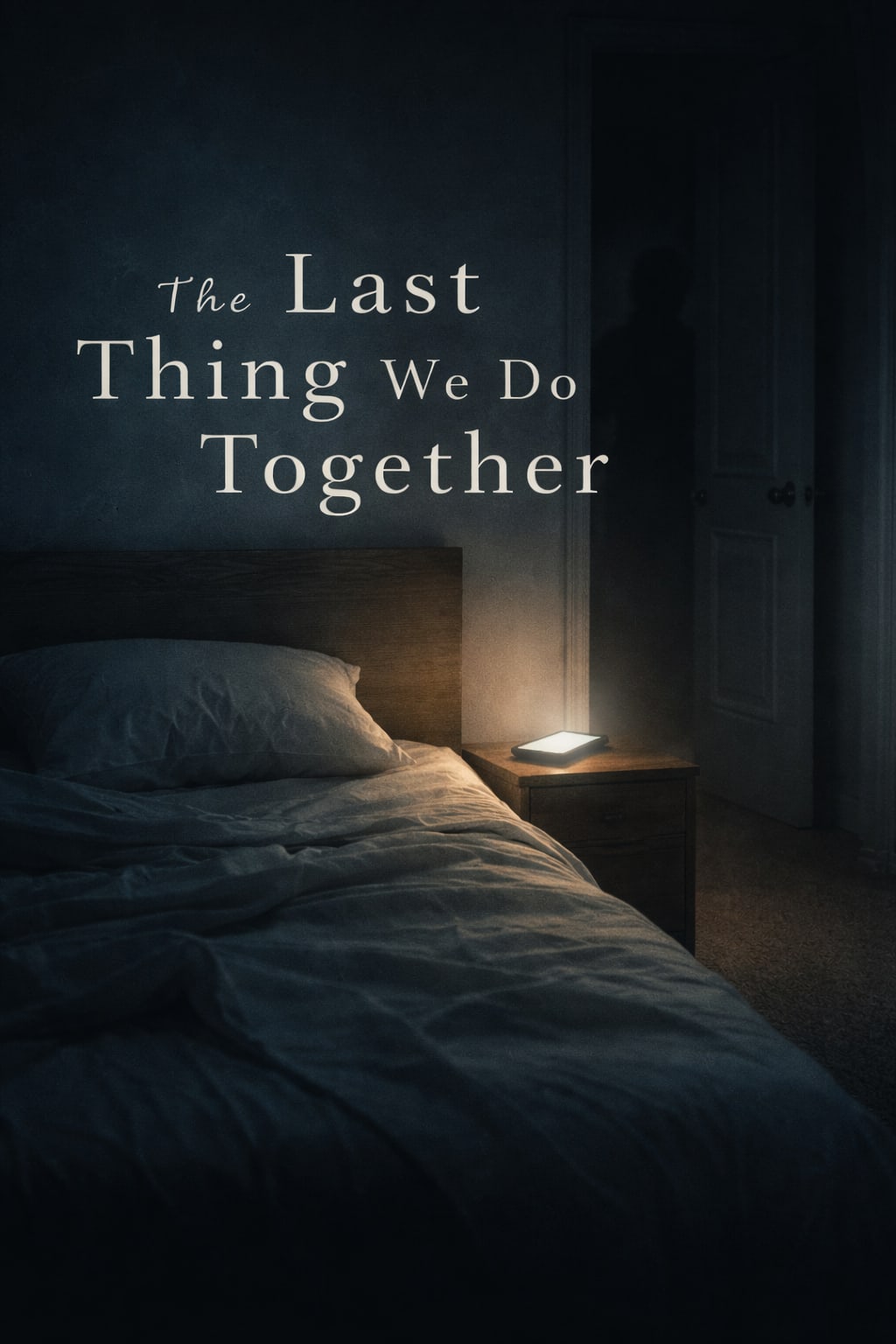
I leave the message at 11:43 every night because that’s when you used to come home.
I don’t remember deciding that. It isn’t written anywhere. No alarm goes off. My body just knows when it’s time, the way it knows when to swallow or flinch or stop reaching for your side of the bed.
“Hi,” I say, the same way I always do. “It’s me.”
The voicemail light blinks red. Thirty seconds. I never go over. You hated rambling. You said it felt dishonest, like stretching something thin to make it feel larger than it was.
Tonight, I tell you about the woman at the grocery store who asked if I was married. I tell you I said yes without thinking. I tell you I didn’t correct her.
I don’t say your name.
I never do.
When the beep comes, I hang up immediately. That part matters. I learned early on that listening back feels like standing too close to a mirror—too many details show up that don’t belong to you anymore.
I place the phone face down on the counter.
Then I wait.
The house shifts, just slightly, like it always does now. The heat clicks on even though the thermostat reads sixty-eight. The hallway light flickers once, the way it has for years, like a habit that forgot why it started.
It’s small. It’s nothing.
Still, I don’t move.
Because last night, I asked you not to open the bedroom door.
And this morning, it was already closed.
The ritual started three weeks after the funeral, when people stopped asking how I was and started telling me how strong I seemed.
Strong meant functional. Strong meant I remembered to eat and shower and answer emails. Strong meant I didn’t cry in public anymore. Strong meant the worst thing had already happened, so what else could possibly hurt?
You used to call me every night when you worked late. Sometimes you wouldn’t even talk. You’d leave the line open, breathing on the other end, like proximity was enough to keep the world from rearranging itself while we weren’t looking.
When the silence after you died became unbearable, I called your phone. Straight to voicemail. I hung up before the beep.
The second night, I didn’t.
I said your name then. I said it like I was checking if it still worked.
It did.
So I did it again the next night. And the next. Always thirty seconds or less. Always after 11:43. Always hanging up before the end could catch me off guard.
At first, it felt like pressing on a bruise just to prove it was still there.
I told myself it was temporary.
Everything feels temporary at first.
I don’t remember when I stopped listening for your footsteps.
There are parts of you I still catch myself expecting—the scrape of your keys on the hook, the way you exhaled before you spoke, like words were something you had to set down carefully.
But expectation fades. Habit doesn’t.
The voicemails stayed.
I stopped talking about the day-to-day things eventually. No more grocery lists or office gossip. Those belonged to a life that moved forward. This wasn’t that.
Instead, I talked about the past.
I told you about the first time we kissed, even though you were there. I told you about the stupid argument we had over paint colors, the one that ended with us laughing on the floor. I told you about the morning you slept through your alarm and blamed the cat.
I curated us.
I made us gentle.
That should have scared me more than it did.
The first change was the mug.
You had a favorite—white ceramic, chipped at the rim. I broke it months after you died, my hands shaking as I washed dishes I didn’t know how to stop washing.
One morning, I found it on the counter.
Clean. Dry. Chipped exactly the same way.
I stood there for a long time, telling myself stories. Memory. Stress. A replacement I forgot buying.
I didn’t mention it in the voicemail that night.
The house stayed quiet.
After that, I learned.
I learned that mentioning things invited response. That absence maintained balance.
I learned to be careful with my affection.
By the second month, the ritual had rules.
Thirty seconds.
Never listen back.
Never ask questions.
Never say your name.
I didn’t write them down. Writing makes things real. Writing is a promise.
Instead, I felt them settle into my bones.
Some nights I talked about the weather. Some nights I talked about dreams where you were just out of frame, like the world had cropped you out without permission.
Some nights I said nothing at all. Just breathed.
Those nights, the house breathed back.
The bedroom door became a problem in early fall.
I’d leave it open in the morning. Come home to find it closed. I tried wedging it with a chair once. The chair fell over while I slept.
I told myself houses make noise. Old wood warps. Air pressure changes. Grief rewires perception.
All of those explanations fit.
None of them stopped me from sleeping on the couch.
I changed the voicemail one night without meaning to.
It slipped out sideways, like a thought I hadn’t finished yet.
“I miss you,” I said.
The line went dead before I could stop myself.
I sat on the floor afterward, back against the cabinet, phone still warm in my hand.
Nothing happened.
The house didn’t shift. The lights stayed steady. The air didn’t thicken.
I laughed then, sharp and embarrassed, like I’d accused a stranger of something deeply personal.
I didn’t say it again..
Your birthday came and went quietly. I didn’t call. I didn’t want to make it special. Special creates expectations. Expectations invite disappointment.
But the next morning, I woke to the smell of coffee.
Not fresh. Not brewing.
Cooling.
The mug sat on the bedside table, close enough that I must have brushed it with my hand during the night.
I didn’t drink it.
I carried it to the sink and poured it out, watching the dark liquid swirl down the drain like something being erased on purpose.
That night, I talked about restraint.
“I’m trying to be good,” I said. “I don’t want too much.”
The hallway light flickered twice.
I took that as agreement.
People stopped calling.
I didn’t mind. The house felt full. Not crowded. Just… attended to.
I stopped locking the door.
I stopped opening windows.
I stopped checking behind me when I moved through rooms.
If I stayed predictable, nothing startled me.
The first time I woke up with an imprint on the other side of the bed, I changed the sheets immediately.
I washed them twice.
That night, I said nothing at all.
The mattress stayed smooth.
By winter, the ritual was the most stable thing I had.
Work changed. Friends drifted. The world outside kept rearranging itself in ways I no longer had the energy to catalog.
But at 11:43, the phone felt right in my hand. The words knew where to go.
Some nights I apologized.
Not for anything specific. Just… generally. The way you do when you want to keep something intact and don’t know which fault line matters most.
I told you about a man at work who asked me to dinner. I told you I said no. I told you I wasn’t ready.
I didn’t say for what.
The thermostat dropped three degrees.
I put on a sweater.
It would be easier if the changes were dramatic.
If doors slammed. If mirrors cracked. If you spoke.
But nothing like that happened.
Just adjustments.
Corrections.
The house learned me.
I tested it once.
I told you I was thinking about moving.
Nothing extravagant. Just a sentence. Casual.
The next day, a leak appeared in the ceiling above the door. Slow, persistent. Enough to stain the paint. Enough to require attention.
I cancelled the listing appointment.
The leak stopped.
After that, I stopped testing.
Curiosity is a kind of hunger. Hunger leads to asking. Asking leads to answers you can’t return.
I didn’t want answers.
I wanted continuity.
The voicemail count climbed. Hundreds of small devotions, stacked one on top of another. I never deleted them. Deleting feels like deciding something is finished.
This wasn’t finished.
This was maintenance.
One night, close to spring, I broke a rule without realizing which one.
“I love you,” I said.
The silence afterward felt… crowded.
The line stayed open a second longer than it should have.
I hung up shaking.
The house didn’t respond immediately. That scared me more than anything else had.
I slept in the bed that night, on my side, facing the wall.
In the morning, the other pillow was warm.
I started planning my days around the ritual.
I stopped staying out late. I stopped traveling. I stopped being unavailable.
Love, after all, is a practice.
I don’t remember deciding to stop leaving the bedroom door open.
It just felt wrong one morning, like leaving something uncontained.
I closed it gently.
Nothing happened.
That night, I said thank you.
Summer arrived quietly.
The house stayed cool even during heat waves. The lights never burned out. The floors stopped creaking.
Everything was smooth.
Efficient.
Alive in a way that didn’t ask for recognition.
The voicemail changed again, subtly.
I stopped talking about myself.
Instead, I narrated the house.
I told you about how the sun hit the living room floor. About the way the walls held sound. About the comfort of knowing where everything was.
“I’m happy here,” I said once.
The phone vibrated in my hand.
Just once.
The grocery store woman appeared again.
This time, she asked how long we’d been married.
I said, “A long time.”
That felt true.
The night I asked you not to open the bedroom door, my voice didn’t shake.
“I just need the space to stay the way it is,” I said. “Please.”
The line clicked off gently, like compliance.
I slept deeply.
In the morning, the door was closed.
Not locked. Not blocked.
Just… closed.
As if someone understood the difference.
I haven’t left the house since.
There’s no need.
Everything I need is already arranged.
The phone still works. The voicemail still records.
Tonight, I’ll leave another message.
I’ll keep it short.
I’ll tell you I’m still here.
I’ll hang up before the beep.
And the house will listen.
About the Creator
Dakota Denise
Every story I publish is real lived, witnessed, survived, or confessed into my hands. The fun part? I never say which. Think you can spot truth from fiction? Comment your guesses. Everything’s true. The lie is what you think I made up.
Keep reading
More stories from Dakota Denise and writers in Confessions and other communities.
Wild Card Weekend Recap: What Happens Now?
I think I figured out why I love Wild Card Weekend so much. It's because it's the first playoff anything of the calendar year. The NFL season starts in the fall, and once upon a time, the champion was crowned either on or slightly before New Year's. The evolution of the NFL schedule has resulted in the playoffs starting just into the New Year, and currently, the final week of the season falls on the first weekend of the New Year, with Wild Card Weekend coming a week after that. So yes, chronologically, the NFL's Wild Card Weekend serves as the first playoff anything of the calendar year.
By Clyde E. Dawkins3 days ago in Unbalanced



Comments
There are no comments for this story
Be the first to respond and start the conversation.