
The House I Grew Up In Doesn’t Remember Me
Returning home years later, I expected nostalgia—but all I found were echoes of a life that moved on without me.

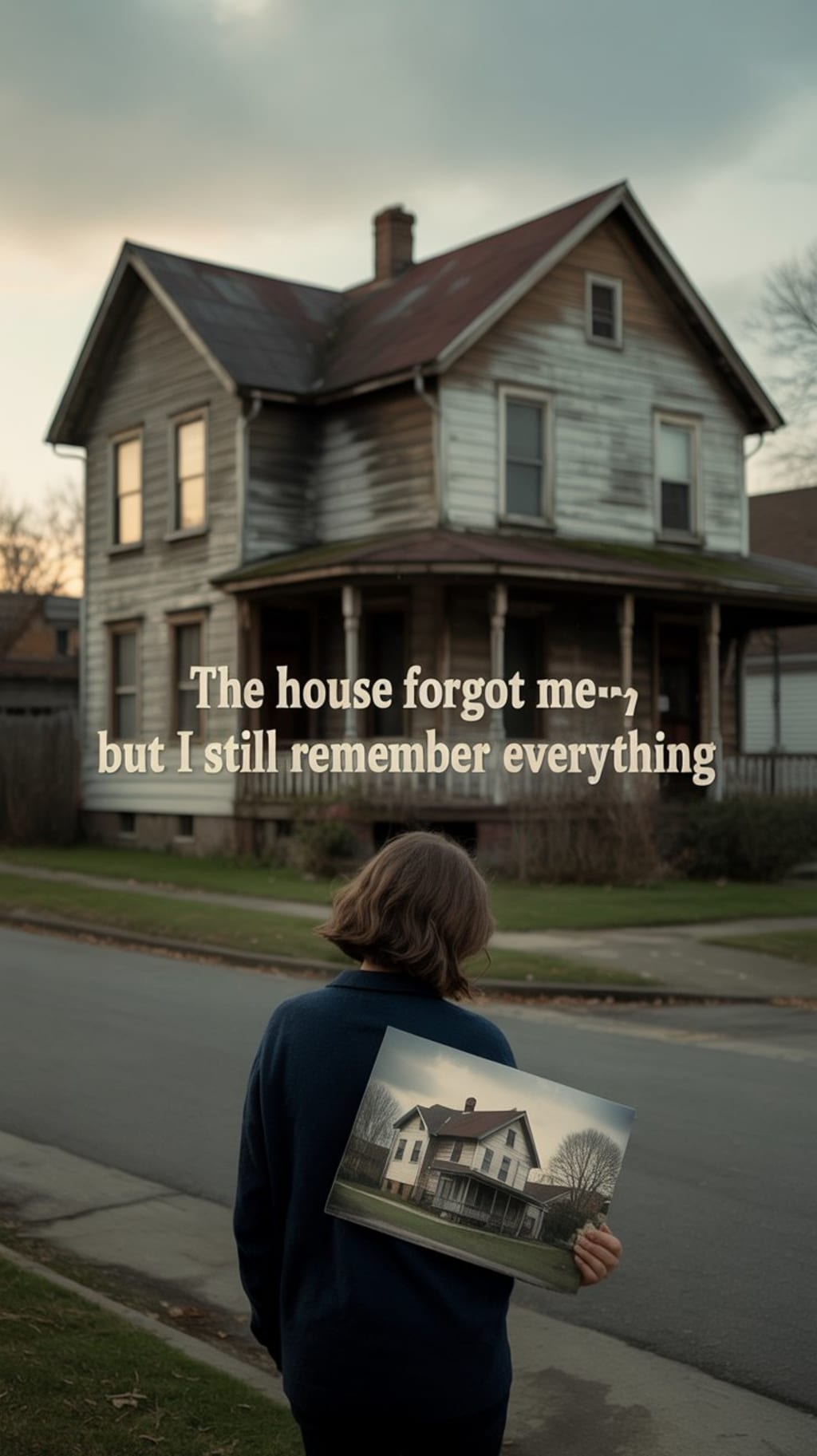
The porch steps creaked under my weight, though not out of familiarity. It was the kind of groan that old wood gives to strangers, not to long-lost children coming home. I hadn’t stood on this porch in over twelve years. And yet, every crack in the concrete walkway, every wind chime clinking in the dry summer air, every flake of peeling paint on the door had been preserved in my memory.
I knocked anyway. Out of habit, maybe. Or respect. Or just fear.
No one answered, of course. The house had been sold two years ago, shortly after my mother passed. I wasn’t able to come back for the funeral—work, distance, the messy nature of grief—but I told myself I’d visit soon. And now, finally, I had.
The woman who now owned the house wasn’t home, or at least hadn’t responded to the letter I mailed weeks ago asking if I could come by. So I just stood there, tracing my fingers along the faded grooves in the doorframe where I used to measure my height with a pencil. A hundred tiny lines—proof that I had once existed here. But the pencil marks were painted over now.
Gone.
The tree in the front yard was still there, though taller, casting a wider shadow. I remembered tying a rope to one of its limbs and swinging wildly as a kid, daring gravity to knock me off. The swing was gone. The rope too. But the ghost of my laughter felt caught in the wind.
I stepped back and looked at the house from the sidewalk.
From this angle, it looked like a stranger’s home. The color had changed—from sunflower yellow to a tasteful gray—and the windows wore modern blinds that made it feel colder, cleaner, emptier. The flower bed where my mother used to plant daisies had been replaced with gravel and mulch. More efficient, I suppose.
I didn’t cry. Not yet.
Instead, I walked to the side of the house and peered into the backyard. The wooden fence, once sagging and marked with cartoonish graffiti from my teenage years, had been replaced. The cracked patio was now a sleek wooden deck with clean railings and a barbecue grill that gleamed in the sun.
This wasn’t my backyard. This wasn’t my house.
I sat on the curb out front and watched the sunlight shift slowly across the face of the building. It was strange. I had spent seventeen years inside those walls, but now I couldn’t even remember the exact sound the kitchen floor made when someone walked across it at night. I used to know that sound intimately. I used to hear it in my dreams.
When I left home at seventeen—angry, idealistic, desperate to become someone else—I thought I’d never miss this place. I packed my bags and barely looked back. I told myself I’d been confined. That the town was too small, the house too loud, the people too controlling. I didn’t understand back then that you can’t really escape your past. You only delay the day you have to look it in the eye.
And now that day had come. And the house didn’t know me.
I think that’s what hurt the most. It had moved on. Just like I had.
A soft voice broke through my thoughts. “You okay?”
I turned. A teenage girl stood at the edge of the yard, holding a leash attached to a golden retriever. She must’ve lived nearby.
“Yeah,” I said, clearing my throat. “Just… remembering.”
She nodded, as if she understood, then added, “You used to live here?”
“Yeah. A long time ago.”
“My mom said the lady who lived here before us used to make the best lemon pies.”
I smiled. “That was my mom.”
“She sounds cool,” the girl said. Then she smiled politely and kept walking, the dog trotting beside her.
Cool. My mom would’ve liked that. She used to bake lemon pies on Sundays, always leaving one to cool on the windowsill—like we lived in a storybook. The neighborhood kids would sneak bites, and she always pretended not to notice.
Maybe that was the point. Maybe this house wasn’t supposed to remember me. Maybe houses aren’t built to hold onto people. Maybe they’re meant to carry new lives, new laughter, new memories in the same spaces where old ones faded.
Still, as I stood up to leave, I noticed something near the base of the mailbox—a small crack in the concrete where I had once etched my initials with a rock. I bent down, brushed away some dirt, and there it was: L.W.—faint, but there.
Proof.
Maybe the house didn’t remember me. But it didn’t forget everything.
Thank you for reading this ♥️.
About the Creator
Keep reading
More stories from Azmat Roman ✨ and writers in Confessions and other communities.
The Hollywood Dream That Didn’t Go as Planned
For years, the world has been fascinated by the lives of Prince Harry and his wife, Meghan Markle. Their departure from the royal family once felt like the beginning of a powerful new chapter—one filled with freedom, creativity, and global influence. But in the unpredictable world of entertainment and media, even the most promising partnerships can face unexpected setbacks.
By CelebCast Central7 days ago in Confessions



Comments
There are no comments for this story
Be the first to respond and start the conversation.