
The Future of Spatial Computing: Trends to Watch in 2025
Rise of Mixed Reality (MR) Devices

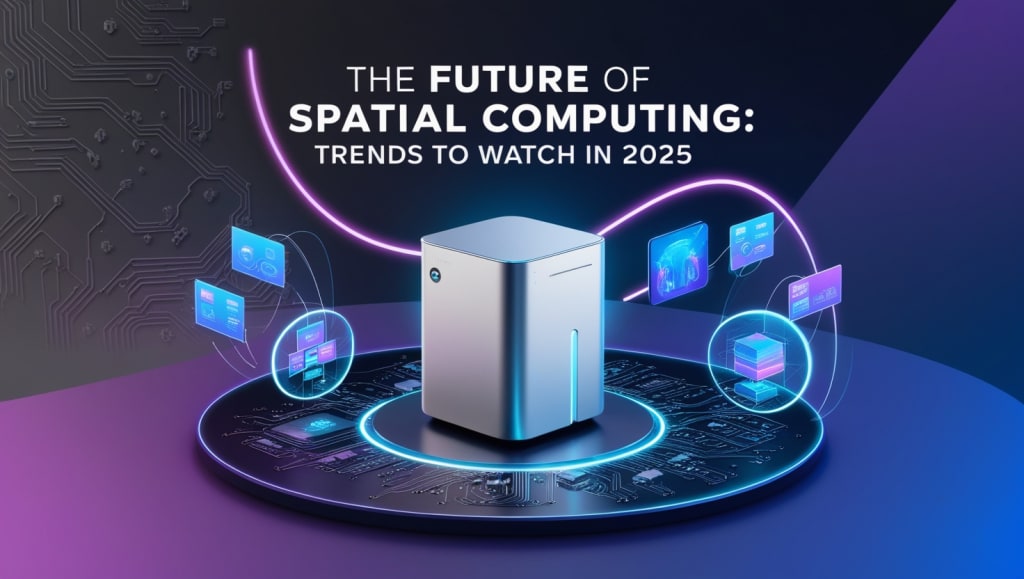
Spatial computing is rapidly reshaping how we interact with technology, blending the physical and digital worlds into a seamless experience. As we approach 2025, the evolution of spatial computing is set to revolutionize industries and redefine how we live, work, and play. Below, we explore the key trends that will dominate the spatial computing landscape in the coming year.
1. Rise of Mixed Reality (MR) Devices
Mixed Reality (MR) devices, which combine elements of augmented reality (AR) and virtual reality (VR), are expected to see significant advancements in 2025. With tech giants like Apple, Meta, and Microsoft leading the charge, these devices are becoming more affordable and accessible to businesses and consumers alike.
Enhanced Hardware: Next-gen MR headsets will feature lighter designs, improved battery life, and ultra-high-definition displays.
AI Integration: AI-driven features will make MR devices more intuitive, enabling real-time language translation, gesture recognition, and predictive modeling.
Enterprise Applications: Industries such as healthcare, manufacturing, and retail will leverage MR for training, remote collaboration, and interactive customer experiences.
2. Spatial Computing in the Metaverse
The metaverse, a collective virtual shared space, is becoming a primary driver of spatial computing innovation. In 2025, spatial computing technologies will enhance how users interact with the metaverse, offering more immersive and personalized experiences.
Virtual Workspaces: Businesses are creating virtual offices where employees can collaborate in real-time, mimicking the dynamics of in-person meetings.
Digital Twins: The concept of digital twins, virtual replicas of physical assets, is expanding into urban planning, real estate, and product design.
Social Interactions: Enhanced avatar customization and spatial audio will make social interactions in the metaverse more engaging and lifelike.
3. Advancements in 3D Mapping and Spatial Data
Precise 3D mapping and spatial data collection are crucial for spatial computing. In 2025, we anticipate groundbreaking improvements in this area, powered by advancements in LiDAR technology, computer vision, and cloud computing.
Autonomous Vehicles: Enhanced 3D mapping enables safer navigation for self-driving cars, with better obstacle detection and route optimization.
Smart Cities: Urban areas will use spatial data to optimize traffic management, public safety, and energy consumption.
Retail Transformation: Stores will adopt spatial mapping for dynamic layouts, personalized shopping experiences, and inventory management.
4. Integration of IoT with Spatial Computing
The Internet of Things (IoT) is merging with spatial computing to create hyper-connected environments. This integration is paving the way for intelligent spaces where devices interact contextually with their surroundings.
Smart Homes: IoT-enabled spatial computing will automate lighting, heating, and security systems based on user behavior and environmental factors.
Healthcare Monitoring: Wearables and smart sensors will use spatial computing to monitor patient movements, providing critical insights for preventive care.
Industrial Applications: Factories will deploy IoT-integrated spatial computing for predictive maintenance and real-time asset tracking.
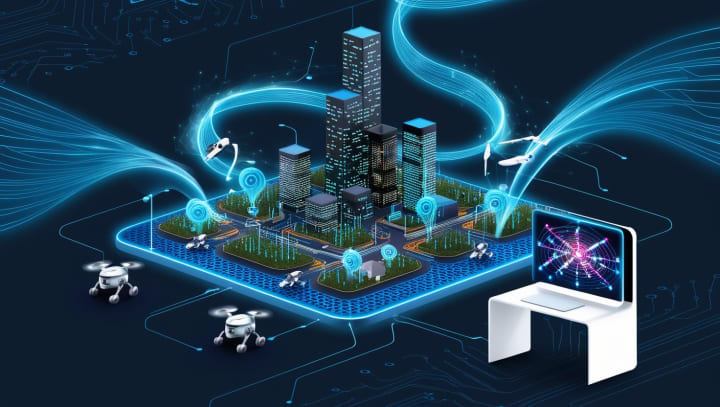
5. Spatial Computing and Artificial Intelligence
Artificial Intelligence (AI) is playing a pivotal role in advancing spatial computing capabilities. In 2025, the synergy between AI and spatial computing will drive innovations across multiple domains.
Context-Aware Computing: AI algorithms will enable devices to understand spatial contexts, enhancing navigation, object recognition, and user interactions.
Content Generation: AI will assist in creating dynamic AR/VR environments, reducing development time and improving user experiences.
Predictive Analytics: Spatial AI will allow businesses to analyze movement patterns and predict trends, driving smarter decision-making.
6. Expansion of AR and VR in Education
Education is embracing AR and VR technologies to provide immersive learning experiences. In 2025, spatial computing will redefine how knowledge is imparted and retained.
Virtual Classrooms: Students can participate in lifelike simulations, from historical events to scientific experiments, offering a hands-on learning experience.
Remote Learning: AR and VR will make distance education more engaging, bridging the gap between physical classrooms and virtual environments.
Skill Development: Training programs will utilize spatial computing to provide real-world scenarios, enhancing vocational and professional skills.
7. Ethical and Privacy Challenges
As spatial computing becomes ubiquitous, ethical concerns around data security, privacy, and inclusivity will take center stage. In 2025, addressing these challenges will be a critical focus for governments, organizations, and developers.
Data Ownership: Clear policies will be needed to define who owns the spatial data collected by devices.
Bias in AI Systems: Efforts will focus on reducing bias in AI algorithms to ensure equitable experiences for all users.
Regulation and Standards: Governments will establish frameworks to regulate spatial computing technologies, ensuring compliance with ethical standards.
8. Future Prospects for Spatial Computing
The future of spatial computing extends beyond 2025, with possibilities limited only by imagination. Emerging technologies like quantum computing, 6G networks, and advanced biometrics will further enhance spatial computing capabilities.
Immersive Entertainment: Expect more interactive gaming, virtual concerts, and cinematic experiences powered by spatial computing.
Personalized Healthcare: Spatial computing will enable precision medicine by integrating spatial data with genetic information.
Sustainable Solutions: Spatial computing will contribute to environmental conservation through efficient resource management and sustainable design practices.

Conclusion
Spatial computing is not just a technological trend but a transformative force shaping the future of humanity. As we step into 2025, businesses, developers, and consumers must embrace these advancements to stay ahead in this rapidly evolving landscape.
About the Creator
Epicsoft Technologies
Epicsoft Technologies is your trusted partner in innovative IT solutions. Our dedicated team specializes in cloud consulting, data analytics, software development, and more.
https://epicsoft360.com/
Keep reading
More stories from Epicsoft Technologies and writers in Confessions and other communities.
2025 Insurance App Development
Introduction In the fast-evolving digital landscape, insurance companies are turning to mobile apps to stay ahead of the curve. With the insurance app market projected to grow exponentially in 2025, these apps are becoming indispensable for providing seamless customer experiences and efficient service delivery.
By Epicsoft Technologiesabout a year ago in Chapters


Comments
There are no comments for this story
Be the first to respond and start the conversation.