
The Emotionally Intelligent Life: What Nobody Taught Us, But We All Desperately Need
Life Lesson

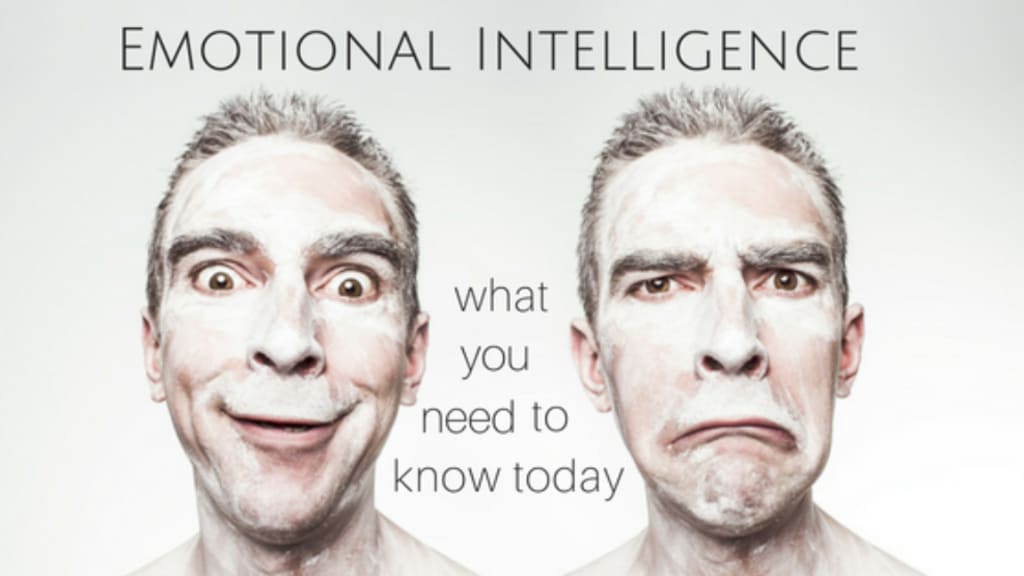
By the time I finally learned what emotional intelligence was, it was already too late to save a few things that mattered most.
A friendship. A romance. A part of myself I didn’t know I was slowly breaking.
i. The Volcano
I remember the first time I lost my temper in public. I was eight years old and my cousin beat me at a video game in front of all our older siblings. I flipped the controller, screamed something incoherent, and stormed out of the room.
The older kids laughed. But my cousin? He just looked at me with a mix of pity and fear.
That look stayed with me.
My outburst lasted maybe two minutes.
His wariness lasted years.
Nobody pulled me aside afterward to ask what I was feeling or teach me how to sit with frustration. No one told me that anger is often a mask for shame, and that losing feels like a threat when you think your worth comes from being the best.
Nope.
I got scolded, grounded, and told to behave.
Lesson learned? Stuff it down. Smile when you’re seething. If someone’s better than you, just try harder next time.
But emotions don’t die when ignored — they mutate. They go underground and reappear when you least expect them, often in relationships that matter most.
ii. Growing Up Emotionally Illiterate
Like many of us, I grew up emotionally illiterate.
Sure, I could label feelings: happy, sad, mad, scared. But understanding why I felt things, or how to deal with them when they surged through my body like fire? That was another story.
I knew how to ace exams, follow rules, and write essays.
But I didn’t know how to tell someone they hurt me without sounding like I was accusing them.
I didn’t know how to take criticism without crumbling into self-loathing.
I didn’t know how to say “I’m scared of losing you,” without making it a manipulative plea.
It wasn’t until my late 20s — in therapy, heartbroken, burned out, and confused — that I started piecing together what emotional intelligence even was.
And once I did?
I realized how many of us are walking around in adult bodies with toddler emotional tools.
iii. What Is Emotional Intelligence, Really?
- Let’s keep it simple. Emotional intelligence is:
- Understanding what you’re feeling.
- Knowing how to handle those feelings.
- Understanding what others might be feeling.
- Responding in a way that strengthens connection, not breaks it.
It’s not about suppressing your feelings.
It’s not about being endlessly nice.
It’s definitely not about pretending to be okay when you’re falling apart.
It’s about choosing how you act on your emotions, rather than letting them act through you.
Here’s a radical thought:
Your emotions are not the enemy.
They’re messengers. Signals. Clues.
When you ignore or silence them, they just get louder, angrier, or sadder — until your body can’t take it anymore.
That’s why emotionally intelligent people are usually more resilient, more confident, and more connected to others.
They listen to the messages.
iv. The Hardest Lessons Come Wrapped in Pain
I once dated someone who brought out every insecure part of me.
They weren’t unkind — but they were distant. Noncommittal. Unpredictable.
And me? I was a ticking bomb of anxious attachment.
When they’d go a day without texting, my thoughts spiraled.
Did I do something wrong? Are they losing interest? Should I pull back too?
I didn’t talk to them about it. I didn’t ask for clarity.
I just played games. Waited twice as long to reply. Made passive-aggressive jokes.
I thought I was being cool. In control.
But inside, I was terrified.
And my lack of emotional awareness — of honesty, vulnerability, and communication — eventually burned that relationship to the ground.
Emotional intelligence would’ve told me:
- “You’re feeling insecure because this reminds you of being neglected.”
- “It’s okay to ask for reassurance.”
- “You can express needs without demanding or punishing.”
But I hadn’t learned that yet.
Pain taught me.
And it always teaches harder than love.
v. What No One Taught Us — But We Must Learn
Here are just a few things we should’ve learned in school, but didn’t:
1. How to pause instead of react.
A deep breath. A walk. A journal entry. Anything that gives your brain time to feel instead of explode.
2. How to name what’s really going on.
“I’m not actually angry — I’m scared.”
“I’m not bored — I’m lonely.”
“I’m not fine — I’m numb.”
3. How to apologize without defensiveness.
Not “I’m sorry you feel that way.”
But “I can see how my actions hurt you. That wasn’t my intent, but I take responsibility.”
4. How to accept an apology without weaponizing it.
Real grace is rare. It’s easier to punish someone than to rebuild trust. But emotional intelligence isn’t about revenge — it’s about repair.
5. How to self-soothe.
How to sit with your sadness without needing to numb it with scrolling, snacks, or snapping at people you love.
6. How to receive feedback without collapsing.
Not all criticism is an attack. And even if it is — how you respond reveals your strength.
7. How to talk about your feelings like an adult.
Not “You never make time for me,”
But “I miss you. I feel disconnected and I want us to reconnect.”
These are skills. They can be practiced. They can be learned.
It’s never too late.
vi. The Quiet Power of Emotional Mastery
Emotional intelligence doesn’t make life easier.
But it makes you stronger.
It doesn’t stop grief, but it gives you tools to walk through it with grace.
It doesn’t prevent conflict, but it helps you turn a fight into deeper understanding.
It doesn’t silence your inner critic, but it teaches you not to believe everything it says.
It teaches you that you are not your emotions — you are the observer of them. The translator. The captain.
And once you understand your own waters, you can help others sail theirs too.
vii. The Life That Waits on the Other Side
I still lose my temper sometimes. I still get jealous. I still catch myself trying to avoid hard feelings by doomscrolling or diving into work.
But now I notice.
I pause.
I reflect.
And more importantly — I repair.
I say “I’m sorry” faster. I ask “What are you feeling?” more often.
I choose response over reaction.
This, to me, is what being grown-up really means. Not paying bills or owning property.
But knowing how to love without destroying.
Knowing how to hurt without hiding.
Knowing how to feel without fear.
If you ask me, emotional intelligence is the most valuable skill we will ever learn.
And it’s never too late to start.
FAQs
Q: Can emotional intelligence really be learned, or is it innate?
A: 100% learnable. Like a muscle, the more you train it, the stronger it gets.
Q: What’s a good first step to building emotional intelligence?
A: Start with naming your emotions. Use a feeling wheel. Get specific. The more accurately you can name what you feel, the better you can work with it.
Q: What books or tools help with emotional intelligence?
A: Try “Emotional Agility” by Susan David, “Nonviolent Communication” by Marshall Rosenberg, or even journaling daily with prompts like “What am I feeling right now, and why?”
Call to Action
If this resonated with you, I’d love for you to share it with someone who’s on the journey of growing up emotionally — a friend, a partner, a younger version of yourself.
Drop a comment about a moment when emotional intelligence changed your life — or a lesson you wish you’d learned earlier. Let’s build this wisdom together.
About the Creator
Olivia Chastity
Hi, I’m Olivia — a writer who explores everything from the dark and tragic to the silly, sexy, and downright absurd. I create fiction, poetry, reviews, and more. If you’re into bold, emotional, or unexpected storytelling, come take a look!
Keep reading
More stories from Olivia Chastity and writers in Confessions and other communities.


Comments (1)
I can really relate to growing up emotionally illiterate. Like you, I could name feelings but struggled to understand and handle them. Losing my temper as a kid, I never got taught how to deal with frustration. It's eye - opening how emotions ignored can mess things up. Do you think schools should start teaching emotional intelligence from an early age? It's crazy how long it took for us to figure out emotional intelligence. By then, so much had been damaged. I wish someone had pulled me aside back then too. How do you think we can better help the next generation avoid these emotional pitfalls?