
The Day My Phone Died — And I Actually Lived
What 24 hours without a screen taught me about presence, silence, and paying attention.

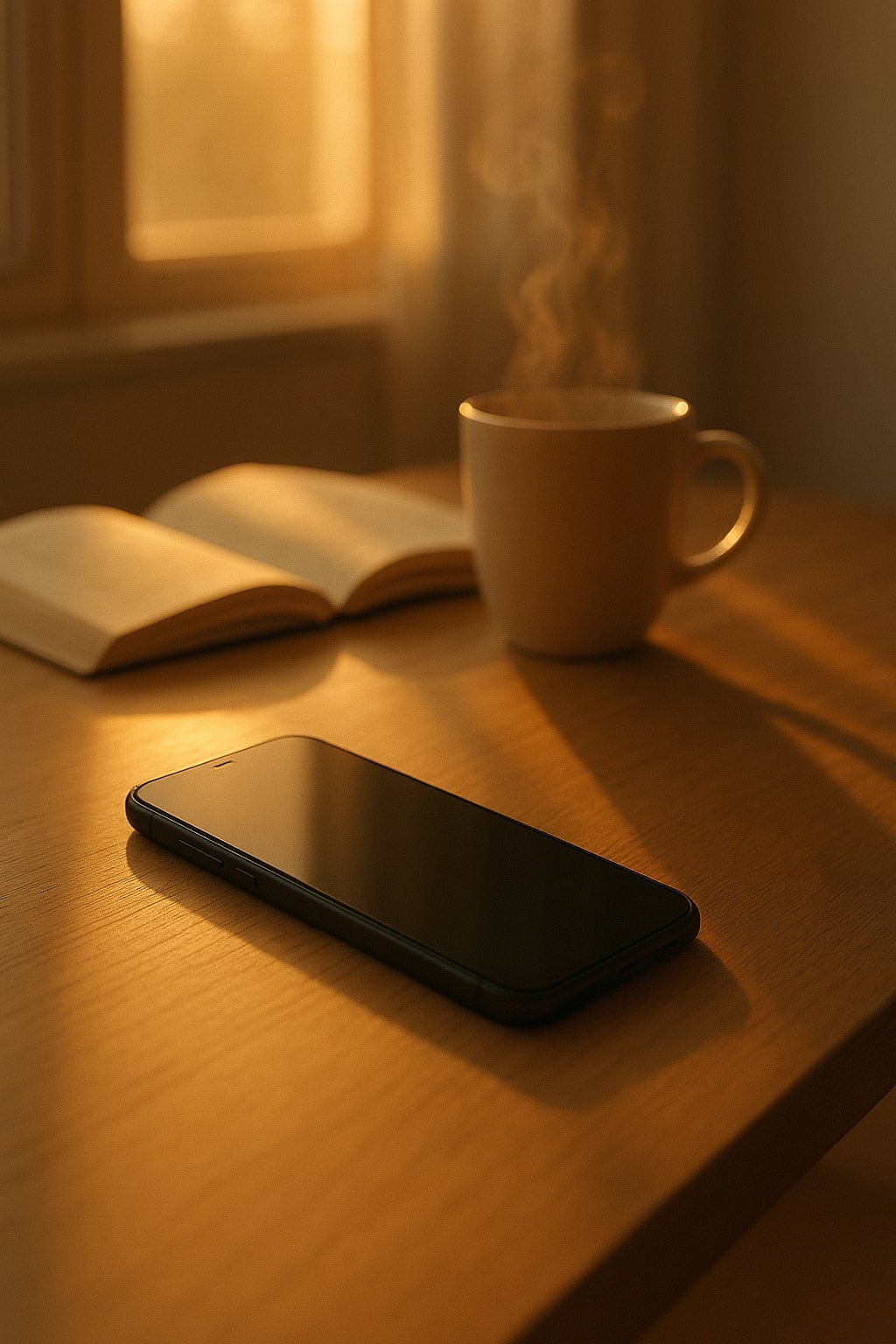
I didn’t realize how much my phone was a lifeline until it gave up on me.
It was a random Tuesday morning. I rolled out of bed, half awake, reached for my phone, and pressed the power button. Nothing. I plugged it in, tapped the screen, shook it a little like a stubborn remote. Still nothing. My phone was dead.
Panic was my first reaction. No texts, no news updates, no alarm clock, no quick scroll through Instagram to wake me up. It felt like the world had cut me off in an instant. I told myself I’d get it fixed later that afternoon, but I had a full 24 hours before I could get a replacement.
At first, I hated it.
I left the house without my usual podcast in my ears. The walk to the bus felt strangely long. Everyone else on the street was staring down at glowing screens, their thumbs moving in quick, practiced flicks. I didn’t know where to put my eyes. I caught myself looking up — at the actual sky. It was a soft blue with thin white clouds scattered across it. I couldn’t remember the last time I noticed that.
On the bus, I couldn’t scroll. I couldn’t refresh the news. Instead, I watched people. A woman balanced a coffee cup with one hand and her toddler’s backpack with the other. A man tapped his foot nervously, rehearsing lines for what I guessed was a job interview. I realized how many little stories were always unfolding around me, stories I usually ignored.
At work, things got complicated. Without my phone, I couldn’t text my coworker to ask if she wanted coffee. I had to actually walk over and ask her in person. She smiled, surprised. “Sure, thanks,” she said, and we ended up chatting for five minutes about nothing and everything. Normally, it would have been a quick emoji exchange. But standing there, face-to-face, it felt more… human.
The real challenge came during lunch. Usually, I scroll while I eat, half-reading articles I’ll never finish. But that day, my food was my entertainment. I actually tasted it — the crunch of the salad, the tart sweetness of the apple. I felt weirdly grounded.
By evening, I started to notice something new: silence. My apartment was quiet without the constant buzzing of notifications. Normally, I fill every gap — music while cooking, a podcast while folding laundry, YouTube videos before bed. But without a phone, I just… sat there. The silence was uncomfortable at first, like a friend I hadn’t talked to in years. But then it softened. I started thinking. Not in tweets, not in captions, just… thoughts. Messy, unfiltered thoughts.
That night, instead of scrolling myself to sleep, I picked up a book I hadn’t touched in months. I read two chapters before drifting off. I didn’t even miss the blue glow of the screen.
The next day, I finally got my phone fixed. When the screen lit up again, a flood of notifications poured in — texts, emails, social media updates. For a moment, I felt that familiar rush, the dopamine hit of being “back online.” But then I caught myself. Just 24 hours without it had shown me how much I’d been missing.
I’m not going to lie — I still use my phone every day. I’m not ready to throw it in a drawer and live like it’s 1995. But I’ve started leaving it behind for small stretches: a walk to the park, dinner with a friend, the first hour after I wake up. Those little breaks remind me that life is happening in front of me, not just on the screen.
The day my phone died, I thought I’d lost everything. Instead, I found something I didn’t know I was missing — the quiet, the details, the chance to actually live in the moment.
And honestly? I might let my phone “die” a little more often.
About the Creator
Keep reading
More stories from arsalan ahmad and writers in Confessions and other communities.
When the Algorithm Knows You Better Than You Do
I didn’t plan to spend the night with an algorithm. Honestly, I just wanted background noise while I tried to convince myself to finish a job application I’d been putting off. But when I opened my music app, it showed me a new feature: “Hyper-Personalized Playlist: Just for You, Tonight.”
By arsalan ahmad6 months ago in Confessions
Inside the Palace: The Moment I Realized the Royal Story Was More Complicated Than We Were Told
I still remember the moment when a single sentence from the palace changed the tone of a global conversation. At the time, it seemed simple. Calm. Diplomatic. But looking back now, that moment carried more weight than most people realized.
By CelebCast Central4 days ago in Confessions
The Forsyth House Fire
Since 1851, Forsyth House has stood on the corner of Union Street and Gordon Street in the heart of Glasgow. Its iconic, or was... because on Sunday 8th of March, 2026, a fire broke out in a small, seemingly un-named shop in the building and tore all that history down. As I write, the rubble is still unsettled and the street is still blocked off. Central Station is quiet on the upper level, and around 30 small businesses have quite literally gone up in smoke.
By S. A. Crawford3 days ago in The Swamp



Comments
There are no comments for this story
Be the first to respond and start the conversation.