
The Day Innocence Took the Controls: The Tragedy of Aeroflot Flight 593
How a father’s small act of love led to one of aviation’s most haunting disasters—when playtime in the cockpit turned into a catastrophe

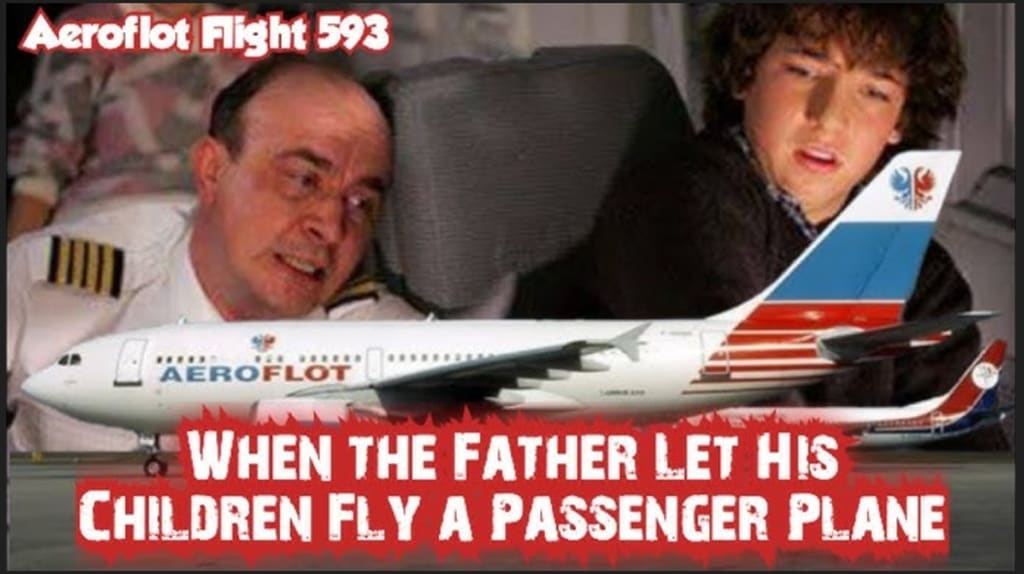
The Day Innocence Took the Controls: The Tragedy of Aeroflot Flight 593
On March 23, 1994, Aeroflot Flight 593 took off from Sheremetyevo International Airport in Moscow, bound for Kai Tak Airport in Hong Kong. It was supposed to be a routine flight across Siberia, piloted by an experienced Russian crew aboard a modern Airbus A310. But what transpired in the skies that night was anything but routine—it would become one of the most haunting and preventable aviation disasters in modern history.
The aircraft was operated by Aeroflot, Russia’s flagship airline, which had recently started using Western aircraft to improve safety and compete internationally. Flight 593 was relatively new, having only begun flying that route a few months earlier. The crew onboard that day included Captain Yaroslav Kudrinsky, a skilled pilot and father of two. On this particular flight, Kudrinsky had brought his children along—his 15-year-old son Eldar and his 11-year-old daughter Yana—an uncommon but not unheard-of practice in post-Soviet aviation.
For much of the flight, everything proceeded smoothly. The aircraft cruised at 33,000 feet. The weather was clear. But somewhere over the remote wilderness of southern Siberia, things took a devastating turn—not due to terrorism, engine failure, or sabotage—but because of something far more human.
Captain Kudrinsky, in a quiet moment, allowed his children to step into the cockpit and sit in his seat. Eldar, curious and excited, took the captain’s chair and placed his hands on the controls. What no one realized was that the Airbus A310’s autopilot system was sensitive to control inputs, even gentle ones. When Eldar slightly moved the yoke, the autopilot system partially disengaged—silently and without any loud alarms. The aircraft was no longer flying itself; it was now being unknowingly steered by a teenager with no flight training.
Initially, the changes were subtle—barely noticeable to the inexperienced eye. But soon, the plane began to bank sharply to the right. Within minutes, it had entered an unusual attitude—rolling at an angle that would eventually lead to a stall. The flight data recorder later revealed the aircraft had rolled to a dangerous 90 degrees—almost completely sideways.
The pilots tried to recover as soon as they noticed the irregularity, but by then, the situation had spiraled out of control—literally. The aircraft was plunging through the sky, alarms blaring, the plane’s structure groaning under intense aerodynamic stress. The black box recordings captured the desperate voices of the crew trying to regain control. But their efforts came too late. At 00:44 local time, Aeroflot Flight 593 slammed into a remote mountainside in the Kemerovo Oblast of Siberia. All 75 people onboard were killed instantly.
When Russian investigators finally reached the crash site, they found wreckage strewn across the snowy forest—scorched metal, tattered seats, and haunting silence. But it wasn’t until they recovered the cockpit voice recorder that the full, tragic picture came into focus.
What they heard was devastating: laughter, casual conversation, and then confusion, panic, and chaos. The presence of the captain’s children in the cockpit was confirmed. A brief moment of playful curiosity—just a father sharing his world with his son—had accidentally disengaged the autopilot and sent the aircraft into an irrecoverable spin.
The aftermath of the investigation sent shockwaves through the aviation world. It confirmed there were no technical malfunctions. The plane was fully functional. The crash had been caused solely by human error—and the breakdown of cockpit discipline. As a result, Aeroflot and other airlines around the world instituted stricter policies regarding cockpit access and reinforced the importance of CRM (Crew Resource Management) protocols.
To this day, pieces of Aeroflot Flight 593 remain scattered in the Siberian forest, untouched by time, a silent memorial to the lives lost in a crash that should never have happened. It's not just the story of a plane crash—it’s the story of how one small, well-meaning act can spiral into unimaginable tragedy.
It’s a reminder that in aviation, there are no small mistakes.
And that sometimes, even innocence can be deadly.
Suggested Tags: #AviationDisaster #AeroflotFlight593 #TrueStory #PlaneCrash #HumanError #VocalMedia #RealTragedy #AirDisaster #CrashInvestigation #EmotionalStories
Cover Image Prompt:
A haunting scene of a snow-covered forest at dusk, with scattered aircraft wreckage partially buried in the snow. A lone, child-sized teddy bear lies in the foreground. The image should feel somber and frozen in time, capturing both the tragedy and the chilling silence of the crash site.
About the Creator
Salar Khan
✨ Storyteller | 🖋️ Writer of Words That Matter
A writer fueled by curiosity, creativity, and a love for powerful storytelling.Diving into cultural commentary. My goal is simple: to connect, inspire, and spark meaningful conversations.
Keep reading
More stories from Salar Khan and writers in Confessions and other communities.
The Stranger Who Taught Me How to Live
I was ready to disappear. Not in the dramatic, storming-out-of-the-house kind of way. More like… fading. Quietly. One ignored text at a time. One missed call. One more morning waking up without a real reason to. I didn’t want to die. I just didn’t want to keep feeling like I wasn’t really alive.
By Salar Khan10 months ago in Motivation
‘It caught up with me’: In midst of recent online drama, Doja Cat makes vulnerable admission about borderline personality disorder
Doja Cat’s borderline personality disorder (BPD) is yet another example of a celebrity having a mental disease. She seems to have it under control as she rants about Chappell Roan, though. She has come a mighty long way from “Moo” to now. A global superstar, Doja is handling her disorder with grace.
By Skyler Saundersa day ago in Confessions


Comments
There are no comments for this story
Be the first to respond and start the conversation.