
The Circle of Tomorrow
How one community discovered the power of togetherness
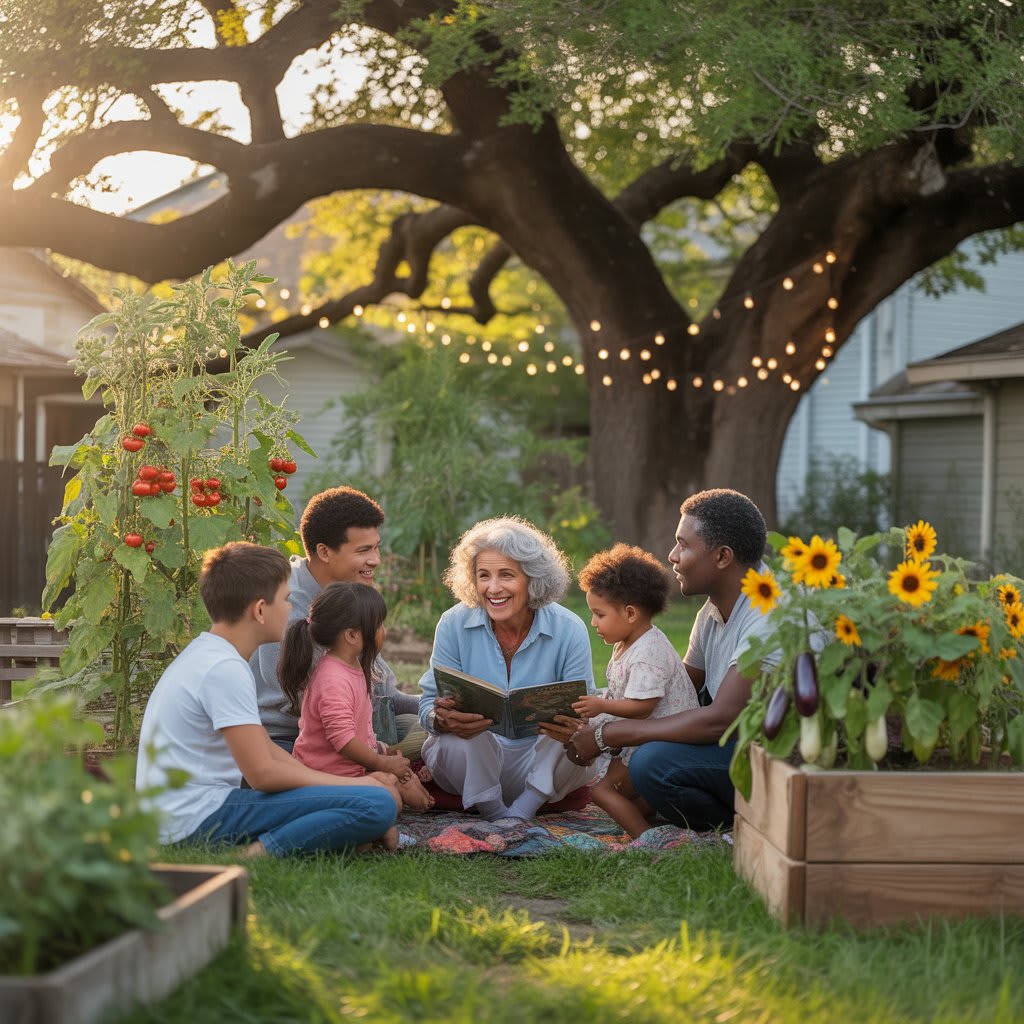
In the heart of a bustling town, there was a small neighborhood called Willowbrook. From the outside, it looked like any other ordinary place—lined streets, small gardens, children playing—but beneath the surface, a quiet loneliness had taken root. People passed each other every day with polite nods, but real connections had faded. Conversations were brief and shallow, and a sense of isolation had settled over the community like a soft fog.
Among the residents was Maya, a young woman who had recently returned from traveling abroad. She had spent several years exploring distant cities, volunteering in various programs, and witnessing how communities thrived when people genuinely cared for one another. When she walked through Willowbrook, she noticed the silent tension, the guarded smiles, and the lack of warmth between neighbors. Something inside her stirred. She believed this community had untapped potential—a spark that could be reignited with patience and care.
Maya began with small, thoughtful steps. She posted a handwritten note on the community board: “Sunday Gathering at My Backyard—Bring Something That Tells Your Story.” She didn’t expect much—just a handful of people, maybe—but she hoped it would start a conversation.
At first, people were hesitant. Old Mr. Thompson, a man who had lived in Willowbrook for more than fifty years, muttered to himself about wasting an afternoon. Young couples exchanged skeptical glances. Teenagers rolled their eyes. But curiosity, as it often does, overcame hesitation. Slowly, people began to show up, each carrying something meaningful to them.
Some brought photographs, capturing moments from their pasts. Others brought recipes that had been passed down for generations. A few carried instruments, ready to play music that resonated with their memories. Children arrived, eager to share drawings and stories about their school projects. The backyard, simple and unassuming, began to feel alive with anticipation.
As the gathering unfolded, something magical happened. Leila, a single mother who had struggled to balance work and parenting, shared her story openly for the first time. She spoke about the challenges she faced, the moments she felt invisible, and the strength she found in little victories. Neighbors listened, some moved to tears, others nodding in silent recognition.
Then Rahim, a retired teacher, stepped forward. He spoke about the history of Willowbrook, about the joys and hardships he had witnessed over decades, and about the importance of kindness and patience. His voice carried wisdom that was both gentle and firm, and the younger residents found themselves inspired to see their community through his eyes.
The teenagers shared their dreams, their fears, and their frustrations, and for the first time, they were heard without judgment. The elders, in turn, listened and offered guidance not through commands but through stories of their own youthful adventures and mistakes. Each person’s experience became a thread, weaving the community closer together in a fabric of understanding and empathy.
The Sunday gathering became a monthly tradition, and with it came small but meaningful initiatives. A community garden took shape in a shared plot of land, where everyone contributed seeds, soil, and effort. People learned to work together, planting, watering, and nurturing life in both the soil and their relationships. Skill-sharing sessions were organized—cooking lessons from experienced chefs, storytelling sessions, and even coding tutorials from tech-savvy teenagers.
Children planted trees alongside the elders, learning lessons about patience, growth, and responsibility. They sang songs taught by their grandparents, bridging generations in ways that had seemed impossible before. Slowly, the street that had once felt like a collection of houses began to feel like a living, breathing network of care and trust.
Maya observed quietly, often at the edge of these gatherings, her heart swelling with hope. She realized that a society’s strength was not measured by its wealth or its buildings, but by the relationships it nurtured. When people connected authentically, when empathy guided their interactions, communities became resilient, creative, and joyful.
Years passed, and Willowbrook transformed. The residents celebrated each other’s successes and comforted one another in times of hardship. Festivals were no longer commercialized events but heartfelt celebrations of unity and culture. People greeted each other by name, remembered stories, and lent a helping hand without hesitation. The simple act of showing up for one another had multiplied into a powerful social force.
Newcomers arrived and were welcomed not just as neighbors but as integral threads in the fabric of Willowbrook. They brought fresh perspectives, new ideas, and vibrant energy, and in return, they found a community ready to embrace them with open hearts. The streets buzzed with conversation, laughter echoed in backyards, and the shared garden flourished as a symbol of cooperation and collective growth.
Maya, now older and content, often walked through Willowbrook with a quiet smile. She understood that the transformation she had dreamed of wasn’t about grand gestures or instant results. It was about consistency, listening, empathy, and small acts of care repeated over time. Willowbrook had become a circle of tomorrow, a living testament to the power of togetherness, proving that a society thrives when its people choose connection over isolation, kindness over indifference, and shared purpose over solitary ambition.
And so, Willowbrook became more than a neighborhood—it became a model of social harmony, where every story mattered, every voice was heard, and the circle of care continued, growing stronger with each passing day.
---
About the Creator
Keep reading
More stories from Abuzar and writers in Confessions and other communities.
The Little Light That Could
In a small town tucked between rolling hills and winding rivers, there lived a boy named Sami. He wasn’t the tallest, nor the strongest, nor the loudest in school, but he had something that set him apart—a spark of curiosity that refused to be dimmed. While other children chased games and toys, Sami found joy in observing the world around him, noticing the small details others overlooked.
By Abuzar 6 months ago in Confessions
The Weight of Almost
There is a particular kind of ache that does not scream. It does not demand attention the way heartbreak does. It does not bruise the way failure does. It lingers quietly, settling somewhere between memory and imagination. It is the ache of almost.
By Aiman Shahid7 days ago in Confessions




Comments (1)
❤️ ❤️ ❤️