
The Art of Letting Go: Finding Freedom in Simplicity
How Releasing What No Longer Serves You Opens the Door to Peace and Possibility
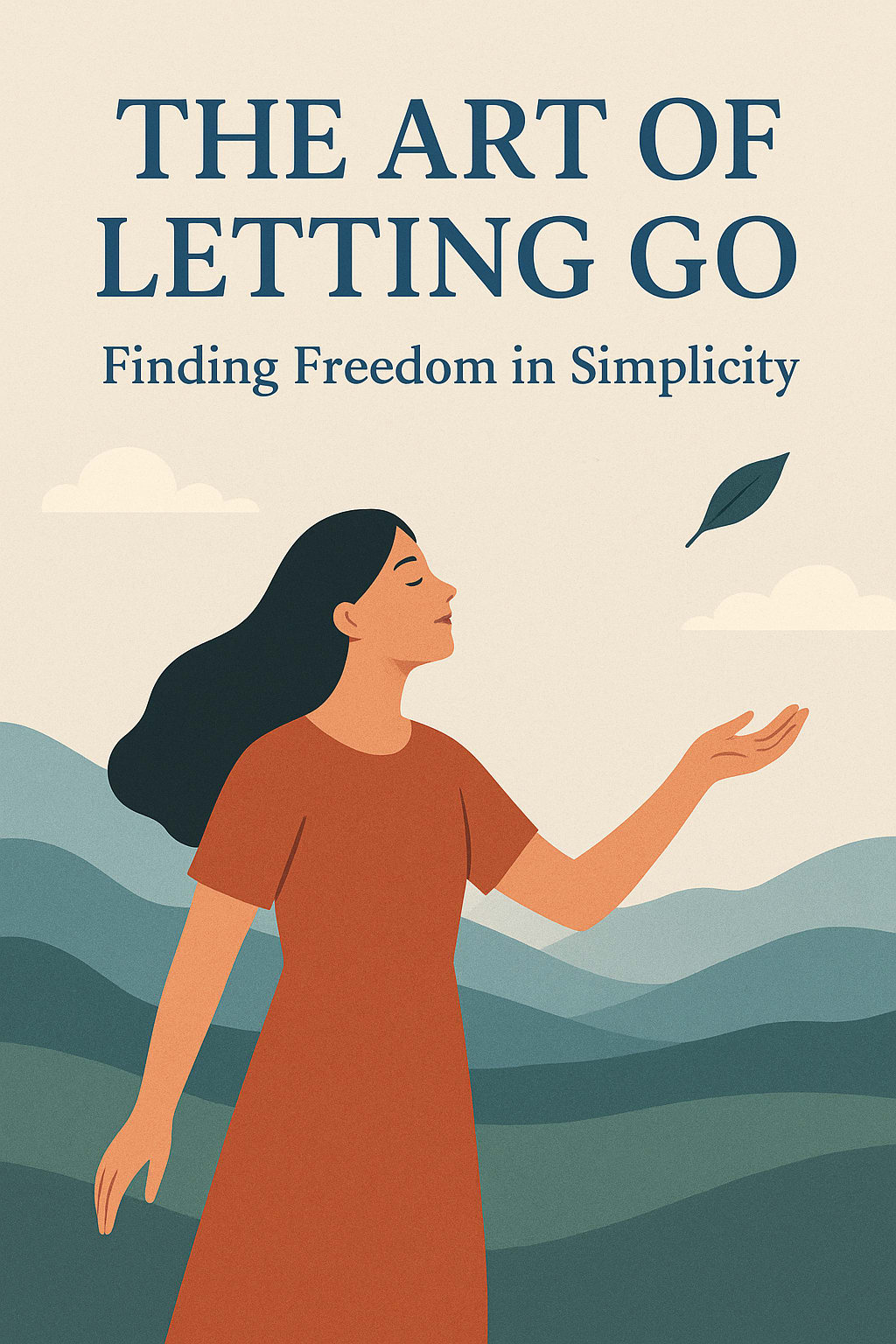
We live in a world that teaches us to hold on. We cling to possessions, relationships, routines, achievements, and even the stories we tell ourselves about who we are. Our hands, our hearts, and our minds are often too full—overflowing with what we think we need to keep in order to feel safe, successful, or loved. Yet paradoxically, this very act of holding on tightly can weigh us down, suffocate our joy, and keep us from stepping into the freedom we long for.
Letting go isn’t about giving up. It’s not a sign of weakness, failure, or indifference. Instead, letting go is a practice of wisdom. It’s the conscious choice to release what no longer serves us so we can make space for what does. This could mean letting go of toxic relationships, outdated goals, unnecessary possessions, negative self-beliefs, or the illusion of control over things we cannot change.
In this journey of release, simplicity becomes the byproduct. When we let go, we naturally move toward a life that feels lighter, calmer, and more intentional. Simplicity doesn’t mean living with nothing—it means living with what matters most. The art of letting go, then, is also the art of creating a life aligned with peace and possibility.
The Weight of Holding On
Why is letting go so hard? Part of the answer lies in fear. We fear the emptiness that might follow. We worry that if we let go of something—whether it’s a relationship, an ambition, or a familiar habit—we might never find anything better to replace it. There’s comfort in the known, even if the known is hurting us.
Another reason is identity. Many of us attach who we are to what we hold on to. “I am my career,” “I am my achievements,” “I am my possessions,” or “I am this relationship.” To release these attachments feels like losing part of ourselves. Yet, true freedom often lies in realizing that our worth exists beyond what we cling to.
And finally, culture plays a role. We live in societies that praise accumulation—more wealth, more success, more things, more connections. Rarely are we taught that subtraction can be just as powerful as addition. Letting go, therefore, requires courage to go against the grain.
Letting Go of Possessions: The Outer Simplicity
One of the most tangible areas where we can practice letting go is with physical possessions. Many of us have closets stuffed with clothes we no longer wear, drawers overflowing with forgotten items, and homes filled with things that silently drain our energy.
Minimalist movements have gained popularity in recent years, not because people love empty rooms, but because they crave the freedom that comes from uncluttered living. When we let go of unnecessary possessions, we discover that we don’t need as much as we thought to live fully.
Outer simplicity creates inner calm. A clear space often leads to a clearer mind. It also allows us to focus on what we truly value—whether that’s relationships, creativity, rest, or meaningful work. By letting go of the things that no longer serve us, we invite in space for what does.
Letting Go of Relationships: Choosing Peace Over Proximity
Not all relationships are meant to last forever. Some connections nourish us, while others drain us. Yet many people hold on to toxic, unhealthy, or one-sided relationships out of fear of loneliness or guilt.
Letting go of a relationship doesn’t always mean cutting someone off completely. It can mean loosening the grip, redefining boundaries, or shifting expectations. Sometimes it means creating distance to protect our peace.
When we release relationships that no longer honor our well-being, we create room for healthier, more authentic connections. We also learn to stand stronger in ourselves—finding peace not in another person’s presence but in our own sense of worth.
Letting Go of Control: The Inner Release
Perhaps the hardest thing to let go of is control. We plan, predict, and strive to bend life into our desired shape. Yet life, by nature, is unpredictable. Trying to control everything leads only to frustration and burnout.
Learning to let go of control is an act of trust. It doesn’t mean giving up responsibility—it means accepting that we cannot dictate outcomes. We can show up fully, give our best effort, and then allow life to unfold.
This inner release often brings profound peace. It allows us to live in the present moment instead of obsessing over the past or the future. Letting go of control is, in essence, learning to flow with life rather than fight against it.
Letting Go of Old Stories: Redefining the Self
Beyond possessions and relationships, one of the heaviest things we carry is the story of who we think we are. These stories often come from past experiences, mistakes, or the labels others have given us.
We tell ourselves: “I’m not good enough.” “I always fail.” “I’m the strong one, so I can’t ask for help.” “I need to prove my worth.” These stories become prisons, trapping us in cycles of behavior that don’t serve our growth.
Letting go of these old stories doesn’t mean erasing our past. It means acknowledging what happened but refusing to let it define our future. It means rewriting our narrative with compassion and openness. In doing so, we step into a life shaped by choice, not by chains.
The Freedom of Simplicity
When we let go—whether of possessions, relationships, control, or old stories—we inevitably arrive at simplicity. A life uncluttered by excess feels lighter and freer. Instead of being scattered in a thousand directions, we can focus on what matters most.
Simplicity doesn’t mean a life without ambition or desire. It means aligning our energy with what truly resonates with our values and well-being. It means living intentionally, not reactively.
The freedom of simplicity shows up in small but profound ways: more time for rest, deeper presence with loved ones, reduced stress, and a greater sense of inner peace.
How to Practice the Art of Letting Go
Letting go is not a one-time event—it’s a lifelong practice. Here are some ways to cultivate it:
Start small. Release one item, one commitment, or one thought at a time. Build your “letting go” muscle gradually.
Notice resistance. Pay attention to what you struggle to release. Often, what we resist most holds the greatest potential for freedom.
Ask: Does this serve me? Whether it’s a relationship, habit, or belief, ask yourself if it aligns with your well-being and growth. If not, consider letting it go.
Create rituals of release. Journaling, meditation, or even symbolic acts (like writing a fear on paper and burning it) can help anchor the process.
Practice presence. Letting go is easier when we stay grounded in the now. The past cannot be changed, and the future is unknown—the present is where peace lives.
Conclusion: Opening the Door to Peace and Possibility
The art of letting go is not about losing—it’s about gaining. By releasing what no longer serves us, we gain clarity, freedom, and space for new possibilities. We gain simplicity, which is not emptiness, but fullness of the right kind.
In letting go, we are not abandoning life; we are embracing it more fully. We are choosing peace over chaos, authenticity over pretense, and freedom over fear.
Life will always ask us to release—whether it’s possessions, people, plans, or perceptions. The more gracefully we can let go, the more lightly we can walk through the world. And in that lightness lies true freedom—the freedom to live simply, deeply, and joyfully.
About the Creator
Keep reading
More stories from Aiman Shahid and writers in Confessions and other communities.
The Silent Superpower: Why Listening More Can Transform Your Life
In a world where noise is constant and everyone seems eager to speak, true listening has become a rare skill. Most of us think of communication as the art of expressing ourselves—finding the right words, the clever comeback, or the powerful speech. But communication is not only about speaking; it is equally, if not more, about listening. Listening is often underestimated, overlooked, and underpracticed. Yet it holds a silent superpower—the ability to transform relationships, unlock opportunities, and bring profound peace into our lives.
By Aiman Shahid5 months ago in Confessions



Comments
There are no comments for this story
Be the first to respond and start the conversation.