
Syria and the world in the shadow of the war in Ukraine
As in the month of March of every year, the memory of the 2011 revolution was recalled by various means, demonstrations in and outside Syria

As in the month of March of every year, the memory of the 2011 revolution was recalled by various means, demonstrations in and outside Syria, writings and other cultural activities. This year, a statement emerged by a group of European countries and the United States, which carried some verbal fairness to that betrayed revolution and the victims of its brutality. The Assad regime may have revived some faint hopes that the Syrian issue might regain some international attention, on the occasion of the Russian war on Ukraine and in the context of the unprecedented Western campaign to tighten the screws on Putin.
And perhaps “on the same occasion” some pillars of government in the United Arab Emirates received the Syrian president on his first visit to an Arab country, after eleven years of Arab isolation imposed on him. The repercussions of the Russian war, here too, may be one of the factors that played an important role in the occurrence of this visit, specifically in the context of the alignments imposed by that war between Russia and its Western opponents.
While the tripartite summit that was held two days ago in Sharm el-Sheikh between Sisi, Bennett and bin Zayed remains the subject of speculation, albeit the motive is the same, the sharp international polarization between Russia and the West, and another, no less important motive is added here, which is the eagerness of the Americans to finish the Vienna negotiations on the file The Iranian nuclear program renewed the 5 + 1 agreement, and the fears this raised for the three countries, especially Israel and the UAE. Did Bashar al-Assad attend the Sharm el-Sheikh talks, through his host in Abu Dhabi, two days ago, Mohammed bin Zayed, or not? This is what we do not know currently, but it can be assumed, given that he can be considered a representative of the Russians and the Iranians together, and his virtual presence may interest Bennett in particular, given that the Iranian military targets that Israel regularly strikes are in Assad’s control areas of Syria, and he does not know the extent of the possible impact of the war In Ukraine, on the freedom of Israeli air traffic in Syrian airspace.
Another weak indication that the Syrian issue has regained some international attention is the presence of a representative of the US State Department for the sessions of the “Constitutional Committee” held in Geneva in a new session, for the first time in a series of meetings of the aforementioned committee that Russia formed years ago to circumvent Security Council resolutions on Syria. Here, too, we note that this urgent American interest comes within the framework of its efforts to restrict Russia, and if this American presence helps in anything, it will be a side benefit of the conflict in Ukraine.
The sudden positive change in the speech of the “Syrian Democratic Council” regarding the Syrian revolution, and the raising of its flags in the popular demonstrations in the areas controlled by the “Syrian Democratic Forces” enjoying American protection, on the anniversary of the March 2011 revolution, can be included in the same framework, which can be described as a “return.” American to Syria” with great reservation. The reason for the reservation is the clarity of the American position in support of the plan of the international envoy to Syria Geir Pedersen, known as “step for step.” It was announced in the statement issued by the last “Friends of Syria” meeting in Washington weeks ago, in which it also announced its support for the work of the Constitutional Committee.
In general, Putin's war on Ukraine led to a mobilization in the West that recalls recent precedents that followed the end of the Cold War, as happened after the Iraqi occupation of Kuwait in 1991, and the September 11, 2001 attacks on New York and Washington. And if the two mentioned occasions have led to the launching of unequal wars by the sole superpower against opponents much weaker and far from its borders, Iraq, Afghanistan and Iraq once again, then the current mobilization appears defensive in the military sense and is not expected to turn into an American-Atlantic war against Russia, unless it takes the initiative The latter, led by Putin, has expanded its war to include other countries that are members of the Atlantic Alliance, and this is also unlikely given the great losses that Russia has incurred in its war on Ukraine so far and its faltering progress in the field, and given the non-military losses, but exorbitant, against the West.
The direct impact of these developments on the Syrian issue is related to the Assad regime’s subordination to Russia. The head of the regime expressed, in a way that favored Putin himself, his absolute bias towards his mentor’s war, and against the West, regardless of his weightlessness in any international accounts. Except for his recruitment of Syrian mercenaries to fight in Ukraine for the Russian army, nothing he could add to Russia. On the other hand, the American interest in Syria returned from the angle of not leaving the Syrian arena to Russia, after it had been unique in it since 2015 with the approval of Washington. In addition to the American participation referred to above in the constitutional committee discussions, it is possible that the American forces present in symbolic numbers in the north-east will remain for an invisible period, after their possible withdrawal was raised on every occasion, and it does not rule out increasing their numbers and arming them in light of the developments of the ongoing conflict in Ukraine. And on it.
The regional interventionists in the Syrian conflict are also recalculating in light of the war in Ukraine, Turkey, Israel, the Emirates and others. The intervention of these countries in Syria is no longer limited to the Syrian map and its immediate surroundings, but rather determines the bias of each of these countries to the Russian axis or The Western axis, and the implications of these biases for the position of each of them in a new international system that succeeds the post-World War II system, has begun to take shape from now on.
About the Creator
Keep reading
More stories from Zernouh.abdo and writers in Confessions and other communities.
Passing pictures from captive Palestine
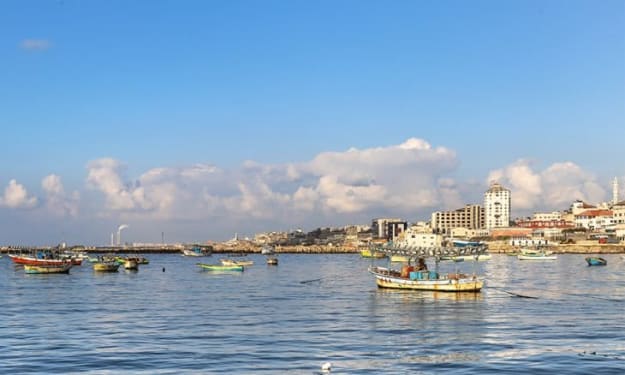
The lightning visit to occupied Palestine raises you many questions and pains, more than it provides you with answers. My arrival coincided with a severe cold wave that almost pierces the bones, the like of which the country had not seen in March for a hundred years. The homes here are not prepared for such cold, and the farmers these days are separated from the fire and the use of firewood, and what is added to it from the remnants of the olive yield after its pressing, and it is called locally “peat”, which was added to the wood and kept the fire for hours and spread warmth throughout the small houses. People have generally replaced it with electric or gas heaters, which are hardly enough for anyone who puts them directly in front of them. Try to scoop as much information as possible and meet as many stakeholders, activists and thinkers as possible, to understand the picture for what it is as possible.
By Zernouh.abdo4 years ago in Confessions
Word of the Day: ホチキス
I don't know the word for Staples. I remember I used to think that Hochikisu was an Onomatopoeia for a stapler rather than a brand name. I am pretty sure I already have this title as a theme, which is making me feel many sort of ways as Vocal is harassing me about payments currently.
By Kayla McIntosh23 days ago in Confessions
He Left Without Goodbye — But He Took My Heart With Him
He didn’t just leave me. He vanished from my life as if he never existed. One day, he was sleeping next to me with his arm wrapped around my waist, making me feel safe and wanted. The next day, he was nothing but a memory that refused to fade away. There was no goodbye, no fight, and no explanation. He simply disappeared, taking every piece of my heart with him.
By Rosalina Jane2 days ago in Confessions
Center Stage with Paul Stewart
*** I'm keen to republish the interviews I did for my series with Vocal creators. It's been a few years and I thought it might be nice to revisit these wonderful conversations. I'll be releasing them one at a time for a few weeks/months.
By Heather Hubler4 days ago in Interview


Comments
There are no comments for this story
Be the first to respond and start the conversation.