
Prince Harry’s Diana Obsession: Tribute or Personal Branding?
How the Duke of Sussex’s repeated attempts to mirror his late mother’s legacy are raising questions about authenticity, respect, and family tension.

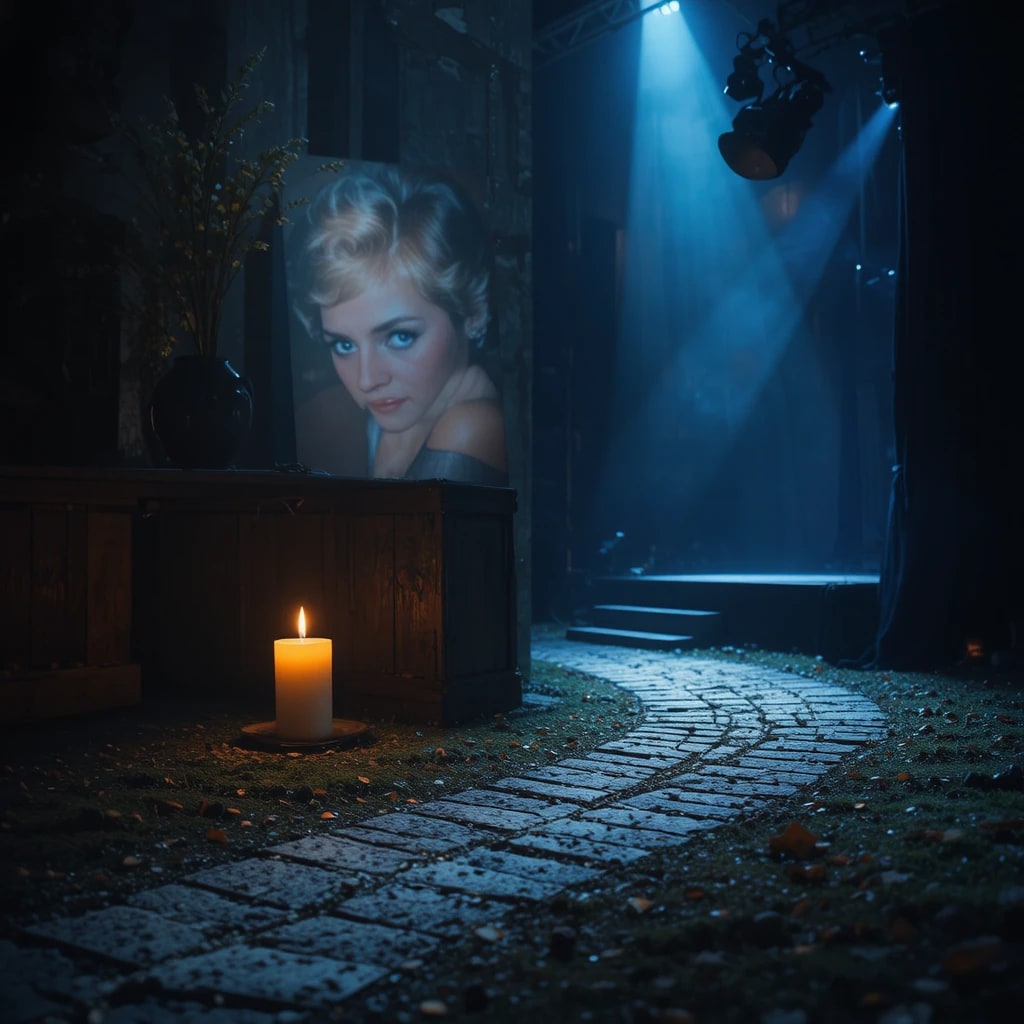
When Prince Harry appeared in a new video campaign for HIV and AIDS awareness, many praised the intent. Standing beside global celebrities and calling for action sounded noble. Yet, for others, the focus wasn’t on the cause—it was on Harry himself. Once again, his public actions stirred the same debate: is he honoring Princess Diana’s legacy, or turning it into his own brand?
The comparison to Diana is inevitable. She broke royal barriers, hugging AIDS patients when the world still recoiled, and walking through minefields when danger was real. Her compassion was raw, fearless, and deeply human. Harry, however, often retraces her steps under very different circumstances. On his 2019 Southern Africa tour, he wore protective gear in Angola to recreate Diana’s famous minefield walk. The difference? By then, the area had long been cleared. For critics, the moment felt more symbolic than sincere—an echo of Diana’s courage, without the risk or authenticity.
This pattern has repeated itself. From HIV awareness projects to carefully staged photo ops, Harry’s public life is consistently framed around Diana’s most iconic moments. What feels troubling to many is the shift from homage to replication. Diana’s story was one of lived bravery, not rehearsed symbolism. For Harry, the repetition increasingly feels like performance.
Prince William, by contrast, has chosen a quieter path in honoring their mother. He supports the Diana Award and speaks occasionally of her legacy, but avoids turning her memory into a centerpiece of his own public image. For William, respect comes in restraint. For Harry, it often comes in spectacle. That difference in approach has only deepened the divide between the brothers.
The struggle isn’t just about personal grief—it’s about ownership of a legacy. Harry has, at times, implied that he carries Diana’s spirit more strongly than William. In his memoir Spare, he even suggested that physical resemblance ties him more closely to her. To some, that framing felt less like tribute and more like competition. Can anyone truly “own” their mother’s legacy? Or is Harry trying to claim emotional ground that should be shared?
The controversy also extends to Meghan Markle. Her fashion choices have long drawn comparisons to Diana’s wardrobe. From jewelry worn during royal tours to echoes of Diana’s iconic styles, observers often note the similarities. For some, these parallels seem like strategic signals, reinforcing the idea that Meghan and Harry see themselves as carrying forward Diana’s narrative. While imitation can be flattering, it also raises questions: at what point does inspiration cross into calculated branding?
What makes this dynamic so complex is the public’s memory of Diana herself. She was loved not because she sought attention, but because she often seemed vulnerable in the spotlight. Her authenticity was magnetic precisely because it wasn’t planned. Every time Harry or Meghan replicate her imagery, they invite comparison to a standard that cannot be reproduced. The public can sense when moments are lived versus when they are staged.
Even Diana’s charitable legacy has faced turbulence under Harry’s involvement. Reports around Sentebale, the charity tied to her memory, suggested that internal struggles became public through Harry himself, complicating the work rather than protecting it. Instead of strengthening Diana’s causes, some argue, Harry has unintentionally turned them into extensions of his personal story.
The larger issue is perception. Even when Harry participates in meaningful work, it is filtered through a lens of doubt. People wonder: is this about the cause, or about Harry? Is this a sincere tribute, or a way of keeping his mother’s memory alive in service of his own relevance? Those questions linger precisely because his gestures are so often visual reenactments of Diana’s most iconic acts.
Meanwhile, William continues with his own path—quieter, steadier, and less dependent on symbolism. The contrast grows sharper each year. One brother commemorates privately; the other performs publicly. Both grieve in their own way, but only one is seen as turning grief into a narrative strategy.
There is also the unspoken competition between the two families. Meghan’s jewelry nods to Diana, her public speeches sometimes mirror Diana’s compassion, and together, the Sussexes seem to weave Diana’s memory into their identity. Yet, it risks coming across less as reverence and more as repetition.
The danger is that Diana’s image, once a symbol of hope and courage, becomes diluted. What was once a living memory risks becoming a brand asset, repeated until it loses meaning. And that may be the saddest part. Diana never intended to become a figure recreated by her children for public positioning. She wanted her work to inspire, not to be recycled.
In the end, authenticity is what separates Diana from her imitators. Her presence was real, unfiltered, and powerful in ways that can’t be duplicated. For Prince Harry, the challenge is to move beyond copying moments and toward creating his own. Honoring Diana doesn’t mean repeating her steps—it means continuing her values with new courage. Until then, every staged reenactment risks being seen not as tribute, but as branding.
About the Creator
Keep reading
More stories from Norul Rahman and writers in Confessions and other communities.
Jam Wars: How the Beckhams Quietly Outshined Meghan Markle’s Lifestyle Ambitions
When Meghan Markle introduced her lifestyle venture as ever, it seemed designed to reframe her image through a mix of artisanal aesthetics and aspirational products. Among its first releases was a jar of jam that carried the promise of simplicity and elegance. Yet, instead of inspiring excitement, the product struggled to gain the traction Markle might have hoped for.
By Norul Rahman4 months ago in Confessions
The Time I Never Had
There are things you understand late, sometimes too late. Like the fact that I grew up long before I was old enough. Not by choice. Not to prove anything. Just because life pushed me there. In a few weeks, I will be 32. And yet, deep inside, something resists, something asks for the time I never had.
By Baptiste Monnetabout 18 hours ago in Confessions



Comments
There are no comments for this story
Be the first to respond and start the conversation.