
My Sad 20s
Lessons, Loneliness, and the Long Road to Finding Myself


“They say your 20s are for finding yourself—what no one tells you is, sometimes, you find someone else instead.”
I always thought sadness was loud—something that screamed through closed doors and kept you awake at night. But in my 20s, I learned that sadness can be quiet too. It whispers. It lingers. And sometimes, it wears your own face.
I turned 21 in a city I barely knew, surrounded by people who barely knew me. The job I moved across the country for turned out to be more desk than dream. New York had always seemed like the kind of place where stories happened. Mine just hadn’t started yet—or maybe it already had, and I hadn’t noticed.
The apartment I rented was on the top floor of an old brownstone in Brooklyn. The building creaked like it had secrets, and some nights, I could swear I heard soft knocks on the walls—too deliberate for pipes, too faint to be neighbors. I chalked it up to city noise. Everything in New York makes a sound, even silence.

I started dreaming about a woman I’d never met. She was always standing at the foot of my bed, hair damp, lips slightly parted like she wanted to say something but couldn’t. I’d wake up at 3:17 a.m. every time. Without fail. That number became an obsession. I Googled it. Angel numbers. Warnings. Biblical verses. But nothing felt right. Nothing explained why I felt watched.
One night, I stayed up past 3:17. I wanted to see if anything would happen if I was awake. The room was dim, lit only by the orange haze of streetlamps leaking through my blinds. When the digital clock flipped to 3:17, I held my breath.
Nothing happened. No knocks. No whispers. Just the soft hum of the radiator.
I laughed to myself—until I turned toward the hallway and saw her.
She wasn’t in my dream this time. She was real. Or something close to it. Same damp hair. Same silent mouth. But her eyes... her eyes were mine. Exactly mine. Like looking into a cracked mirror.
I blinked, and she was gone.

The next morning, I found a photo wedged between the floorboards near my bed. It was old, faded, and curled at the edges. In it, a girl stood in the very room I was sleeping in, her hand resting on the same window frame. Written on the back, in careful cursive, was a name: Clara, 1927.
I became obsessed. Library archives. City records. I learned Clara had lived in that apartment during the Great Depression. She died in her 20s. No known family. No obituary. Just a whisper in the records.
My days started to blur—commute, coffee, coworkers I didn’t connect with. But my nights were hers. I researched, wrote, documented. I started recording myself sleeping. On the fourth night, I caught a whisper on tape.
"Finish it."
That was all. Two words. Barely audible.
I didn’t know what she meant, but I started writing her story. I pieced together every detail I could. Her dreams. Her heartbreaks. The final weeks of her life. I filled in the gaps with imagination, but it felt like memory. Like she was feeding me the words.
The closer I got to the end, the more the apartment changed. It felt warmer. Lighter. The knocking stopped. The air stopped feeling heavy.
And on the night I wrote the last line—"She was never truly seen, until now"—I slept through 3:17 for the first time in months.
When I woke, the apartment felt... empty, but in a peaceful way. Like something had left.
Like someone had.
I published the story anonymously on a small online journal. A week later, I received a letter—handwritten, postmarked from Pennsylvania.
It simply read:
"Thank you. I remember now."
No name. No return address.
My 20s were sad, yes. But they were also strange and sacred. I didn’t find success, or love, or clarity—not the kind I was looking for.
But I found a story.
And maybe… I helped someone else be remembered.
About the Creator
USAMA KHAN
Usama Khan, a passionate storyteller exploring self-growth, technology, and the changing world around us. I writes to inspire, question, and connect — one article at a time.
Keep reading
More stories from USAMA KHAN and writers in Confessions and other communities.
Rain on Her Wedding
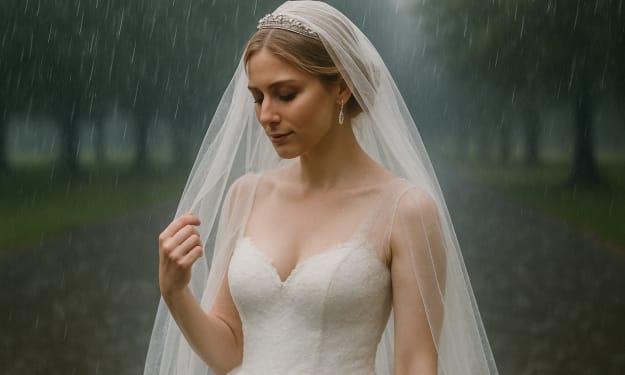
They say rain on your wedding day is good luck — a symbol of cleansing, new beginnings, and eternal bonds. But as Emma stood beneath the gray, weeping sky, her white gown soaked and clinging to her like second skin, luck was the last thing she believed in.
By USAMA KHAN10 months ago in Confessions
daily habits for successful folks
I used to beg for affection from some girls that pleased me and still do, but at certain happened event, I figured out through experience and progress practice to apply a master mind attitude even from leaders that inspired me to be their model. We have to protect our wellness and heart pressure attack, so some process are required to be applied properly.
By Hermano Badete4 days ago in Confessions


Comments (1)
amazing