
My Double Life as a Perfect Student and a Chronic Procrastinator
I was the perfect student

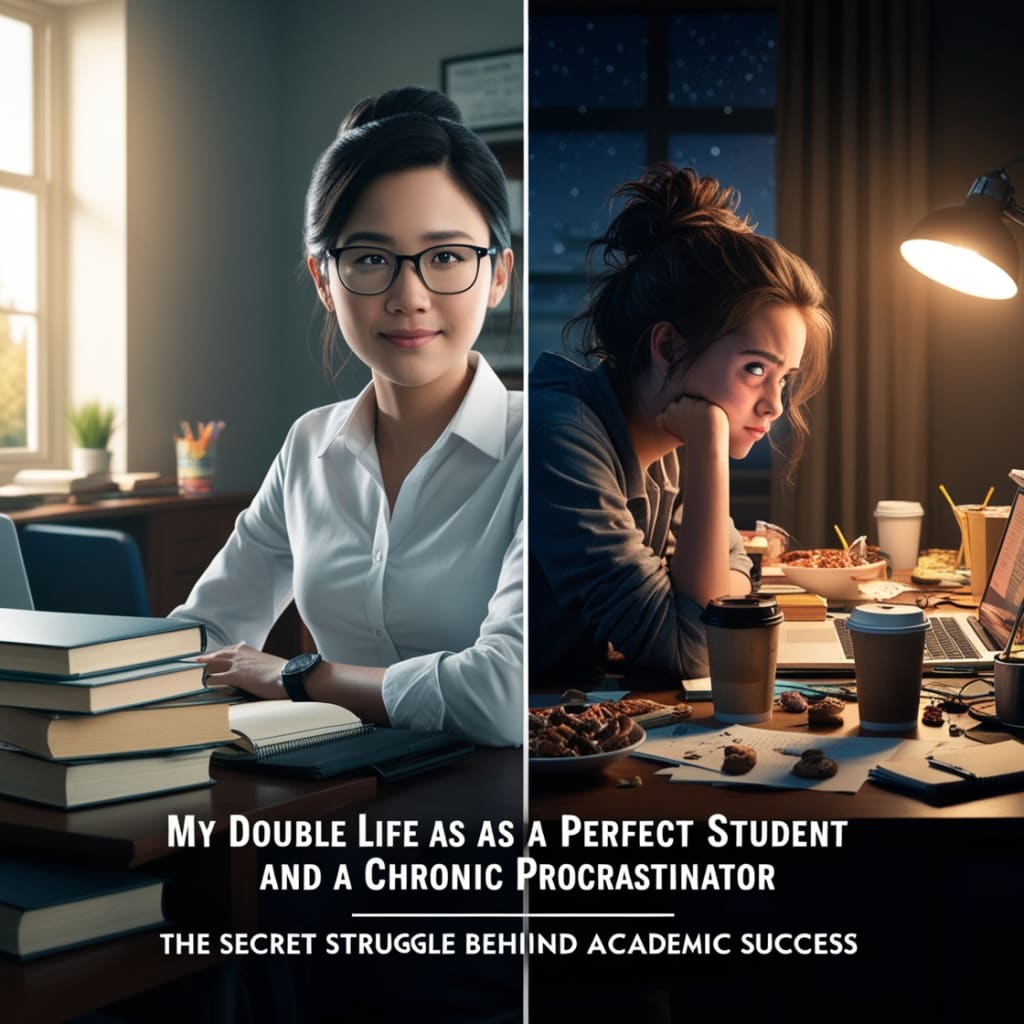
By all outward appearances, I was the perfect student. My grades sparkled, my teachers smiled approvingly, and my classmates often turned to me for help. I carried color-coded binders, aced presentations, and handed in assignments on time. To the outside world, I looked like the kind of student who had everything figured out. But no one saw the chaos behind the curtain. Beneath the surface, I was locked in a constant battle with procrastination—delaying tasks until the last possible moment, then scrambling frantically in a storm of caffeine, panic, and late-night regrets. I lived a double life: one as the model student, the other as a master of procrastination.
The truth is, procrastination doesn’t always look like failure. It’s not always skipped assignments or missed deadlines. Sometimes, it hides behind excellence. I had learned how to weaponize panic. I’d push things off for days, sometimes weeks, then enter an intense zone of hyper-productivity, fueled by adrenaline and anxiety. Somehow, I’d produce polished results. But the cost was immense—lost sleep, constant stress, and the nagging fear that one day, my luck would run out.
Ironically, procrastination didn’t stem from laziness. It was often perfectionism in disguise. I wanted everything I produced to be flawless, and that pressure made starting unbearable. If I couldn’t do it perfectly right away, I just didn’t do it—until the deadline loomed too close to ignore. Then, under pressure, my inner critic quieted down. There was no time for self-doubt. There was only time to act. And somehow, I thrived in that pressure cooker. But the cycle repeated endlessly. I’d promise myself I’d start earlier next time. I’d set reminders, make schedules, even try productivity apps. And still, when the moment came, I’d freeze. Delay. Distract myself. Tell myself I “worked better under pressure.”
I remember one vivid moment during my second year of university. I had a major research paper due at 8 a.m. I hadn’t written a single word by midnight. While my roommates slept, I sat alone in the kitchen with my laptop, typing like my life depended on it. The sun was rising by the time I submitted it, hands trembling from exhaustion. I got an A. But instead of feeling proud, I felt hollow. I had survived another round—but I knew I couldn’t keep this up forever.
Living this double life takes a toll. It chips away at your confidence, even as your outward success grows. I felt like a fraud. How could I be celebrated as a high-achieving student when I knew I was barely holding it together behind the scenes? I envied students who seemed genuinely organized, who started things early, who finished their work without the looming threat of panic. I wanted to be like them, but I didn’t know how. The more I succeeded in spite of procrastinating, the more the behavior was reinforced. The system worked—for now—but at the cost of my peace of mind.
Over time, I began to understand that procrastination wasn’t just a bad habit. It was an emotional coping mechanism. I wasn’t avoiding the work; I was avoiding the discomfort that came with starting it—fear of failure, fear of not being good enough, fear of disappointing others. Procrastination gave me temporary relief from those fears. But the relief was short-lived, and the aftermath was always worse. When I started looking at procrastination through a lens of self-compassion rather than shame, everything shifted.
I began experimenting with small changes. I stopped trying to be perfect. I set 20-minute timers just to start a task, even if I didn’t finish it. I gave myself permission to write messy first drafts. I stopped idolizing productivity gurus and started listening to my own patterns. I accepted that I might never be the kind of student who starts essays three weeks early. But I could be someone who starts them three days early instead of three hours. Progress, not perfection, became my new mantra.
Slowly, my double life began to merge into one. I still procrastinate sometimes, but not as often, and not with the same intensity. I’ve learned to forgive myself for the days I fall short, and to celebrate the days I show up early. I’ve realized that being a “perfect student” doesn’t mean always being ahead. Sometimes, it means facing your weaknesses with honesty and working with them, not against them. I don’t live in the extremes anymore. I live in the middle—a little messy, a little late, but much more at peace.
If you’re reading this and you see yourself in my story, know that you’re not alone. So many high-achieving students silently battle procrastination, hiding their struggles behind top grades and tidy planners. But we don’t have to keep pretending. We can talk about the pressure. We can admit that we’re tired. We can redefine what success looks like—not as perfection, but as progress. Not as constant productivity, but as sustainable growth.
The student procrastination struggle is real, and it’s more common than you think. But it doesn’t have to define your identity. You can still be brilliant, even if you’re not always early. You can still excel, even if you write your best work the night before. You can be both a work in progress and a work of art. And maybe, just maybe, that’s the most honest kind of student there is.
About the Creator
Muhammad Asim
Welcome to my space. I share engaging stories across topics like lifestyle, science, tech, and motivation—content that informs, inspires, and connects people from around the world. Let’s explore together!
Keep reading
More stories from Muhammad Asim and writers in Confessions and other communities.
I’m Still Not Over My First Love
It’s been years since we parted ways, yet I still find myself thinking about them—my first love. Not every day, but often enough that I feel it in the quiet moments. A song, a smell, a random memory in the middle of the afternoon, and suddenly I’m right back in that chapter of my life. It’s strange how time can move on while the heart remains stuck in a moment. I’ve loved others since then, but I can’t say I’ve ever felt the same. The truth is, I’m still not over my first love, and I’m finally beginning to understand why.
By Muhammad Asim8 months ago in Confessions
Icons: Between Belief and Doubt-Part 9
The apostles as saints… ‘Built on the foundation of the apostles and prophets…’ (Ephesians 2:20). Yes! In the Old Testament, holiness comes from God’s choice and ritual consecration. In the New Testament, holiness becomes accessible to all believers through grace and life in Christ. It shifts from an external status to an inner transformation.
By CA'DE LUCEabout 22 hours ago in Confessions




Comments
There are no comments for this story
Be the first to respond and start the conversation.