
King Faisal’s Wisdom: How a Saudi King Silenced Western Critics on Justice and Human Rights
A true story of King Faisal’s remarkable response to Western journalists—teaching the world a timeless lesson about justice, safety, and human dignity.

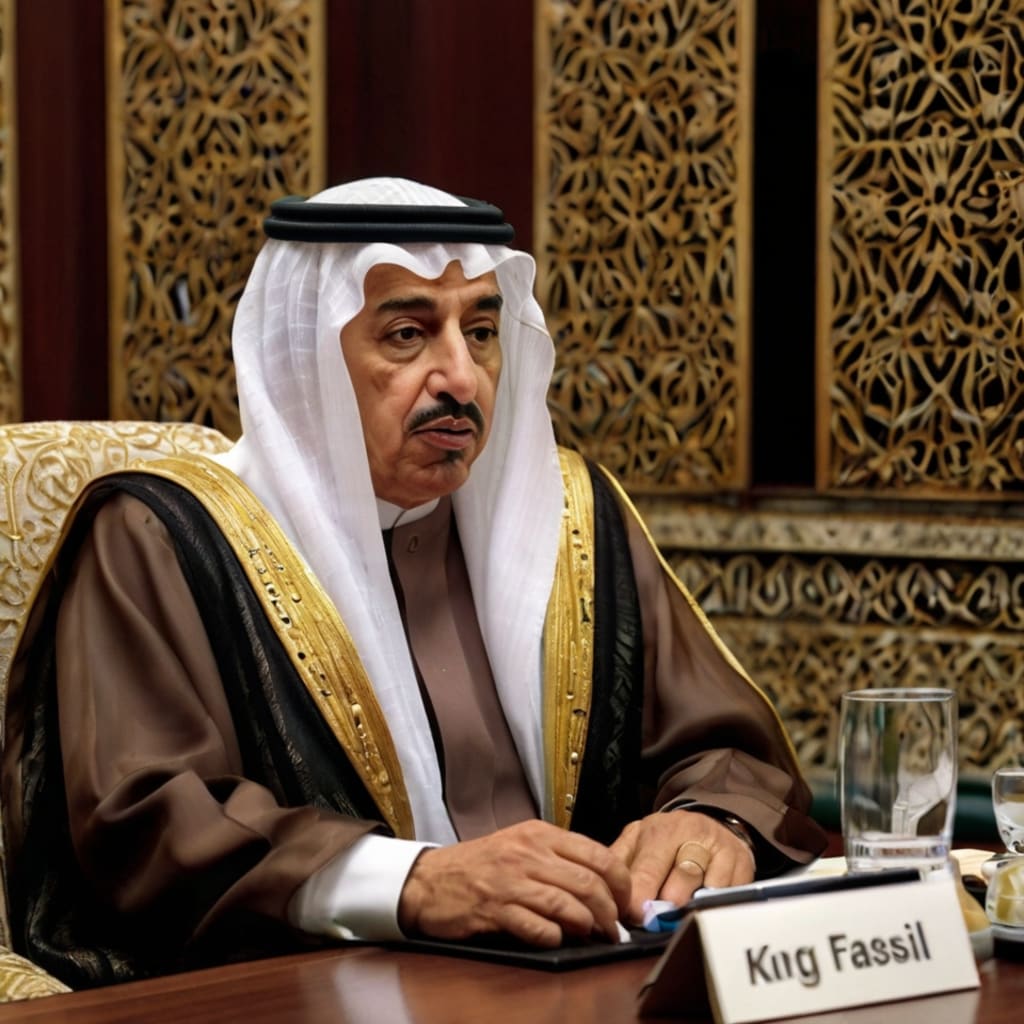
King Faisal’s Wisdom: A Lesson to the West
BY:Khan
On an official visit to the United Kingdom, King Faisal of Saudi Arabia (may Allah have mercy on him) was invited to a grand state banquet. The dining table was decorated with exquisite dishes, sparkling silver cutlery, and crystal glasses that reflected the glow of the chandeliers. When the meal began, all the dignitaries and guests naturally picked up their forks and spoons.
But King Faisal, without hesitation, chose a different way. He ate with his hands—calmly, gracefully, and in line with the Sunnah of the Prophet Muhammad (peace be upon him).
This unusual sight did not go unnoticed. As the meal ended, a group of journalists approached the Saudi monarch. One of them asked, “Your Majesty, why did you not use the spoon and fork placed before you? Why did you prefer to eat with your hands?”
King Faisal smiled gently and replied with words that reflected both simplicity and profound wisdom:
“Why should I use something that goes into my mouth today, but tomorrow might go into someone else’s? My fingers, however, are my own. They will always belong to me, and they will always serve me. For this reason, I prefer eating with my hands.”
The journalists were taken aback by his reasoning. What seemed at first like a simple cultural difference turned out to be a statement of personal dignity, hygiene, and authenticity.
---
The American Delegation
Some time later, an American delegation of journalists visited Saudi Arabia. Their stay lasted a full week, and during this time, they carefully observed the culture, the streets, and most importantly, the law and order of the Kingdom.
One thing stood out to them, and it left them unsettled: the Islamic legal punishments enforced in Saudi Arabia. They discovered that those caught stealing could have their hands amputated. They also learned that criminals guilty of certain offenses were flogged publicly.
To the American journalists, these punishments seemed excessively harsh, even barbaric. In the United States, such measures were unthinkable. For them, the idea of “human rights” clashed with what they saw in the Kingdom.
When their official meeting with King Faisal finally came, one journalist raised the question boldly. He said:
“Your Majesty, why have you enforced such strict punishments in your country? Cutting off hands? Public flogging? Don’t you think such practices violate human rights and the dignity of the individual?”
The room fell silent. Everyone waited for the King’s reaction. Would he become defensive? Would he turn away the question?
But King Faisal’s face remained calm and serene. He listened patiently without interrupting. When the journalist finished, the King paused for a few seconds in thoughtful silence. The journalist assumed he had left the King speechless.
Then King Faisal spoke.
---
A Brilliant Response
“Tell me,” he asked, “did some of you bring your wives along on this trip?”
Several members of the delegation nodded.
“Good,” the King continued. “Before your stay in Saudi Arabia ends, take your wives to the gold market in Riyadh. Allow them to choose any jewelry they like. Do not worry about the cost—I will pay for everything. Then, let your wives wear these gold ornaments, and all of you should walk freely in the streets and markets of this city. Observe what happens.”
The journalists were surprised. This was an unexpected invitation. The King’s voice grew firmer as he added:
“Not a single person will dare to touch them. No thief will dare to snatch a necklace. No criminal will dare to harass them. They will walk freely, in peace and dignity, guarded not by policemen, but by the strength of justice and law.”
Then King Faisal leaned slightly forward and said:
“Now, when you return to America, try doing the same. Let your wives wear expensive gold jewelry and walk from the airport to your homes, alone and unguarded. Tell me—will they reach safely?”
At these words, the delegation fell silent. They looked at each other awkwardly. A few of them whispered, “Forget reaching home safely—our wives would not even make it past the airport without being harassed or robbed.”
King Faisal’s response was clear, logical, and irrefutable. He smiled gently and said:
“You have answered your own question. The punishments you call harsh are the very reason that safety and peace prevail in our streets. They are not cruelty—they are justice. They protect the dignity, property, and honor of our people. This is the true meaning of human rights.”
---
The Legacy of a Just Leader
The delegation returned to America carrying more than memories. They carried with them a lesson in wisdom. They had expected to expose a flaw in Saudi justice, but instead they encountered a leader whose reasoning cut through their doubts with undeniable clarity.
King Faisal’s leadership was not merely about politics or diplomacy. It was about preserving a way of life built on justice, respect, and the guidance of faith. His calm responses revealed not only his intelligence but also his deep connection to values greater than himself.
Even today, his words echo as a reminder that human rights are not only about individual freedom. They are also about the collective right to live without fear, to walk the streets safely, and to know that justice protects the weak from the strong.
In a world still struggling with crime, corruption, and insecurity, King Faisal’s wisdom remains timeless.
About the Creator
Keep reading
More stories from Khan and writers in Confessions and other communities.
Word of the Day: ホチキス
I don't know the word for Staples. I remember I used to think that Hochikisu was an Onomatopoeia for a stapler rather than a brand name. I am pretty sure I already have this title as a theme, which is making me feel many sort of ways as Vocal is harassing me about payments currently.
By Kayla McIntosh22 days ago in Confessions
I Was Almost Forgotten by Life, Until I Chose to Remember Myself
Story There was a time in my life when I felt invisible. Not the kind of invisible where people accidentally overlook you, but the kind where it feels like the world has already decided you don’t matter. I walked through my days quietly, carrying thoughts I never shared and dreams I didn’t dare to speak aloud.
By On that5 days ago in Confessions



Comments
There are no comments for this story
Be the first to respond and start the conversation.