
"I Lied, I Loved, I Let Go: A Confession Years in the Making"
An Honest Look at Guilt, Love, and Healing
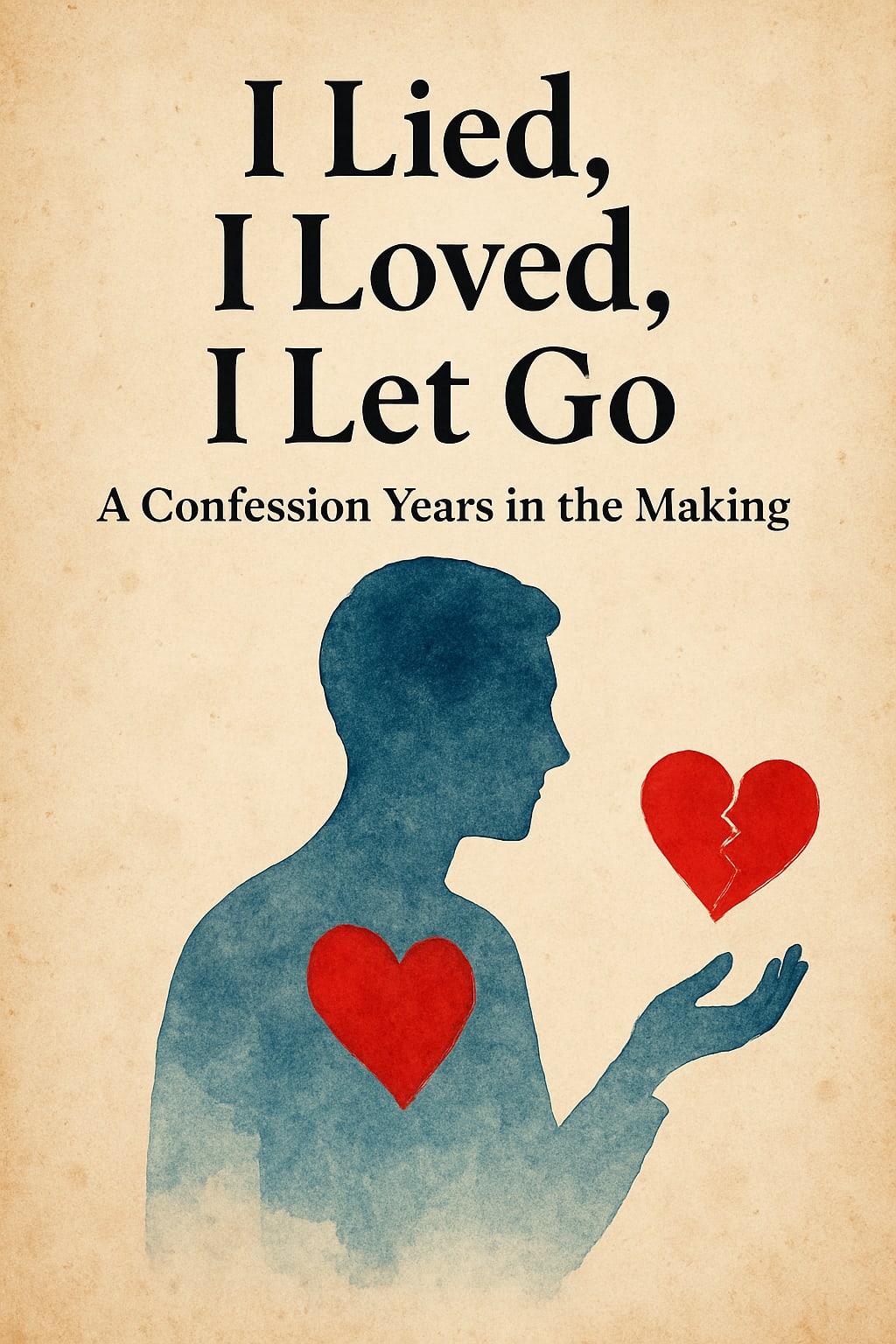
Introduction: The Weight of an Unspoken Truth
Some truths are not easy to tell. They sit in the heart like stones, heavy and unmoving. We carry them for years, hoping time will lighten the load. But it doesn’t. Instead, they grow heavier with silence. This is a story about one of those truths — a confession I’ve carried for too long. It is about a lie that changed everything, a love that felt real and raw, and the painful yet necessary act of letting go. Writing this is not about seeking forgiveness. It’s about finally finding freedom.
Part One: The Lie That Started It All
The lie wasn’t planned. It wasn’t spoken with cruel intent. Like most lies, it started small — almost harmless. A skipped detail, a hidden message, a truth I bent just slightly. I told myself I was protecting someone. In reality, I was protecting myself — from shame, from consequences, from the fear of being seen for who I really was.
It began during a relationship that felt more like a dream than reality. We laughed, talked for hours, shared secrets, and built plans for the future. But underneath all that connection was a truth I was hiding: I wasn’t fully honest about my past. I had told stories that weren’t mine to tell. I presented myself as someone I wasn’t — stronger, cleaner, more whole.
At first, I believed the lie didn’t matter. I told myself, “It’s in the past,” or “Everyone has baggage.” But the more I loved, the more it mattered. Every time my partner said, “I trust you,” it stung a little deeper. The guilt became a quiet companion — one I learned to live with, until I couldn’t anymore.
Part Two: When Love Was Real
Despite the lie, the love was real. That’s what makes this story so complicated. People often think if you lie, the love wasn’t true. But I know that’s not the case. I loved with everything I had — deeply, honestly, and intensely. I memorized the little things: how they liked their coffee, the shows they binge-watched, the way their voice changed when they were tired.
There were moments I felt completely seen — and moments when I wished I could show my real self too. But shame kept the mask glued to my face. I feared that if they knew everything, they would leave. I feared they wouldn’t love the broken parts, the messy truths, the imperfect history.
Ironically, that fear is what destroyed us. Not the truth itself, but my unwillingness to tell it. It built walls where there should have been doors. Slowly, cracks began to show. My partner sensed the distance, the hesitation, the secrets I wasn’t ready to name. Trust, once broken, is hard to rebuild — especially when you’re still hiding behind layers of fear.
Part Three: The Breaking Point
Eventually, the truth came out. Not all at once, but in pieces. A conversation that didn’t add up. A timeline that didn’t make sense. I remember the moment they looked at me, not with anger, but with hurt in their eyes. That was worse than yelling. Silence cuts deeper than shouting.
“I don’t even know who you are,” they said.
And in that moment, I didn’t either. I had become so caught up in being who I thought they needed that I lost who I actually was. The lie had changed me. It didn’t just break their trust; it broke something in me too.
The relationship ended, as you probably guessed. There were tears, apologies, late-night texts, and promises to change. But some damage is too deep. Some wounds can’t heal while they’re still bleeding. Letting go was the hardest part — not just of the person, but of the future we had imagined together.
Part Four: The Aftermath and the Healing
For a long time, I walked with guilt like it was a shadow. I replayed every moment, wondering what I could’ve done differently. Regret became my routine. I missed them every day, but more than that, I missed the version of me that felt loved — even if it was built on a lie.
It took years to understand what really happened. I didn’t lie because I wanted to hurt someone. I lied because I didn’t know how to love myself honestly. I was afraid that my real story — the one with mistakes, shame, and scars — wasn’t worthy of love. So I created a version of myself I thought was.
But healing doesn’t come from pretending. It comes from sitting with the truth — the ugly, painful, messy truth — and choosing to grow from it. I went to therapy. I wrote letters I never sent. I forgave myself slowly, day by day. I began telling the truth in small ways, even when it scared me. Especially when it scared me.
Conclusion: Letting Go to Live Again
“I Lied, I Loved, I Let Go.” These are not just words. They are a roadmap of my emotional journey. I lied, yes — and I’ve owned that. But I also loved, and that love wasn’t fake. It taught me what connection feels like, even when it’s fragile. And finally, I let go. Not just of the person I hurt, but of the shame that kept me from being honest in the first place.
Letting go doesn’t mean forgetting. It means making peace with the past so it no longer controls your future. It means saying, “This happened, but it doesn’t define me.”
If you’re reading this and you’re carrying a truth you’re scared to speak, I hope you know it’s never too late. Honesty is hard, but silence is heavier. And sometimes, the only way to truly love — yourself or someone else — is to first let go of the lies.
This confession has been years in the making. Not because I didn’t care, but because I finally do. I care enough to tell the truth. To be real. To move forward, lighter than I’ve ever been.
About the Creator
Idea hive
Article writer and enthusiast sharing insight and knowledge on nature, human behavior, technology, health and wellness, business, culture and society and personal development.
Keep reading
More stories from Idea hive and writers in Confessions and other communities.
BREAKING NEWS
A tragic hit-and-run incident in East London has led to a 12-year prison sentence for rapper and television personality Justin Clarke-Samuel, widely known as Ghetts. The case has shocked many and highlighted the devastating consequences of reckless driving.
By Shirley Oyiadom5 days ago in Confessions
TUS NUA - ch 53
TUS NUA – ch 53 New Beginnings – Mia and Midnight (*)(*)(*) Finola knew Ali’s brother-in-law needed to put his mind at rest. She fed her arm through his and led him outside. “We’ll sit here. If you like, I can put a block around us so our conversation will be private.”
By Margaret Brennan7 days ago in Fiction


Comments
There are no comments for this story
Be the first to respond and start the conversation.