
How To Keep Dreaming While Staying Realistic
Confessions Of An Optimist

I grew up without a father. Not that he's dead or that he abandoned me. No, not at all. He was very present—but only while I was asleep.
It's during our childhood that, what truly makes us human beings, shines the brightest. Our curiosity, our fondness, our openness, our innocence—our idealism about life. Maybe it's just Mother Nature's way of urging us to learn about how to survive. So we look for guidance. For role models. And with or without their consent, those that are the closest to us are given this responsibility. We give them an idealistic air. We put them on a pedestal. We make them more than they actually are.
Our urge to learn, combined with our innocence, blinds us. We don't see people as they truly are. And somewhere, we don't want to. We don't want our hopes to be crushed by the teeth of reality. So we cling to our ways. As time goes on, we live according to these patterns—we identify with them.
Suddenly, our view of how things should be—becomes absolute—and whatever goes against it, turns into another reason to suffer, to blame, to get angry, to substitute.
When we face an unacceptable truth—our first reaction is to deny it, to reject it, to refuse it. We don't want to question ourselves, to look at the facts—because it would threaten our very foundations. So we blame whatever situation brought the truth to light.
Because it's always the other's fault, we believe that by changing the person—we solve the problem. Our inner structure remains the same, and we keep looking for another savior. This is the art of substitution.
As I grew up, I came to see life from the viewpoint of my father. Seeing him as he really was—a human being—created a sense of bitterness in me, one that was too heavy to carry. Could my father be just this? Another, normal, person? Seeing this for the first time shook me to the core. I wasn't going to accept it. It would mean throwing away everything that sustained my world. So I substituted.
Being in my early twenties, I just entered the world of money. And somehow, as if to bring this pattern to my awareness, life brought me closer to a wealthy uncle—the right person, at the right time.
The same dynamics repeated themselves. There was an immediate fondness and naivete on my part about the relationship. I projected my visions, my ideals, my hopes—my fantasies about life on him. I had a fixed view of how a wealthy person should be, what she should do, how she should behave. My standards were too high. I made my uncle more than he was, as I did in the past with his predecessors. And when he acted like a normal person, it felt bizarre. The same bitterness that I felt with my father came back. And again, I didn't want to accept it. I didn't want life to just be this.
We call something dead when it doesn't move. And we call it alive when it does. We're all moving, all the time, whether physically or psychologically. Yet, we expect people and situations to remain the same, to not move—to be dead. Our attachment to the familiar can delay our growth, but it can't stop it.
It wasn't until a few years later that I realized money wasn't going to give me the answers I was looking for. And it's at that point that I started questioning things, which eventually brought me to the world of spirituality.
Great lessons were learned. Great people were met. And again, one of them took the role, for the last time.
This person was an advanced spiritual practitioner. Through demonstrations and authenticity, I was 'hooked'. My attitude, once again, exposed my naivete. My new 'spiritual' ideals found another home. But something was different this time. The more I tried to project my fixed views on this person, the quicker she dissolved them. My expectations were never met. I tried everything. And the harder I did, the tighter the Chinese trap got.
A lot of misery and suffering was generated by this relationship. I became compulsive, irritated and my patience was always tested. I acted like an addict even if my drug wasn't tangible. And this was the worst part. Why was I so miserable for nothing? Was it the person, was it the situation, was something wrong with me?
Despite repeatedly asking myself so many questions, and finding temporary relief through absurd reasoning, nothing worked. It felt like I was standing face-to-face with a wall that wouldn't move. I had to admit it to myself. I didn't know what to do anymore. Eventually, I came to a point where I couldn't do anything except accept where I was. I had to surrender. This time, I had to open my eyes and see for myself what I've been denying for so long.
We're always trying to frame life and people within our narrowed view of how things should be. We want security. We want to feel safe, and we believe that by being controlling—even through our perception— that we protect ourselves. To what extent can we control others before it becomes illegal? It's not only impossible for people to meet all our expectations, but it's also disrespectful to them. It's a disservice to life, in all its manifestations.
We all want to love, and to be loved. But how are we to make it happen unless we learn to look at people as they truly are? How are we to make it happen unless we learn to accept people in their wholeness—whether or not it fits our paradigm? How are to love, and be loved, unless we learn to accept ourselves and others, as we truly are?
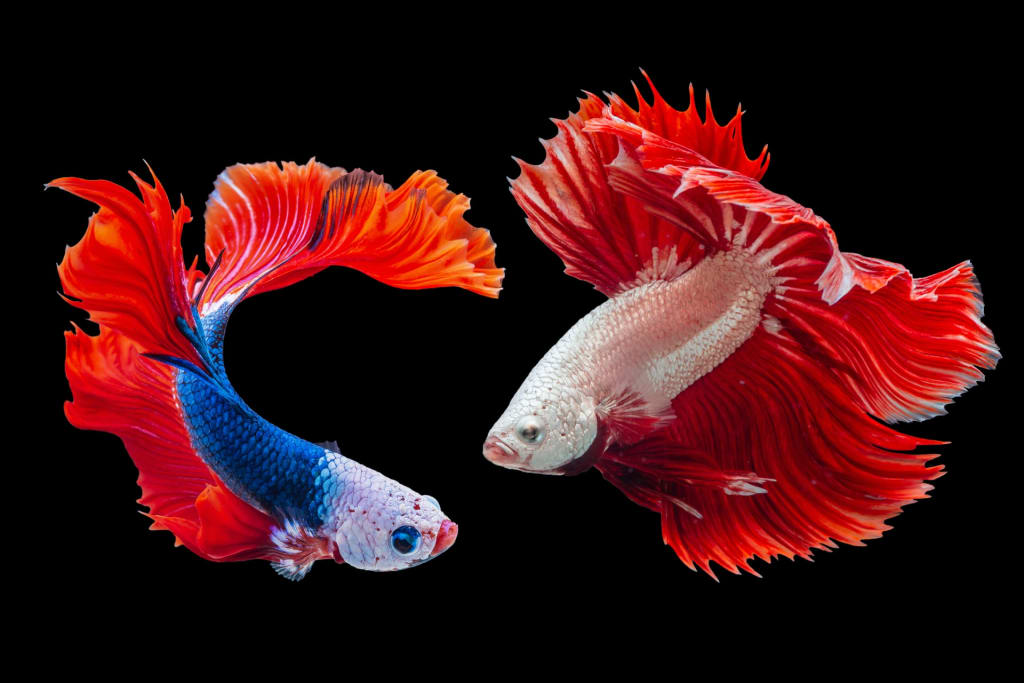
As people go against our expectations, we blame them for some reason that we come up with. There is an interesting saying in French, "se séparer en queue de poisson", which means—to end a relationship in a 'fishtail'. Opposing directions. This is what I've been doing so many times. This is what we all do at some point in our lives. We choose to lose those we love for our pride. Now, I had to change it.
As I kept interacting with her, I noticed how a part of me begged that she responded in a certain way, acted in another, and so on. I may not have been completely aware of the reason behind this. But I started to notice things, it was becoming more obvious.
When we see 'undesirable' things within ourselves, our first reaction is to discard them, to refute them. Pretend nothing happened. And keep the repression cycle going. I didn't want to play tricks with myself anymore. I wanted to know the truth. Judging and criticizing myself only made the cycle continue. So I stopped. Whenever such thoughts would pop up, just like a timid rabbit getting out of its hole—I'd watch from afar, without reaction. These patterns exist within me. They live within me. They are me.
By continuously paying attention, I eventually came to realize that ideals are fictions of the mind that raise expectations unnecessarily high. We create ideals when we want to escape from facts, from reality. Just like a dictator that tries to control everything; we try to control life by imposing an ideal on it. As long as we have ideals, what we're saying to life and people is 'I control you. You cannot be anything else but this'.
The desire for control comes from our insecurity, our fears, our craving for safety. By trying to control everything in my life, especially in how I perceived it—I was trying to protect myself. In forming ideals about life and how it should be, I tried to block out reality as it really is. Fear made me fall in love with my delusions.
We never see each other as long as we look through the lenses of our ideals. We may know our names, ages, hobbies, and so on. But it never creates the atmosphere of intimacy we all crave.
This realization freed me from an unbearable weight, one that I couldn't carry anymore. To relinquish control, to see life in its purest colors—this is freedom. This is strength.
Since going through this transmutation, I feel freer, lighter, compassionate, and grateful. Not just for a specific person or object, but for everything. We believe that love needs an object to exist. We believe that we should be compassionate or grateful. In trying to conform to those ideals, we rarely get to experience these states. Because yes, love, compassion, gratitude are not emotions. They're not created by an object. They just naturally come out once we allow objects, people, life to be as it is.
I'm still in touch with the spiritual teacher.
I am forever grateful to her, and everyone I meet. Without a single exception, we're all teachers to each other. Once we learn to embrace life to the fullest, we realize that we truly have nothing else to do, except, to live.
This respect, this reverence, not only for ourselves but also for others, as well as everything that surrounds us, is true love.
About the Creator
Rabih
I write about spirituality, not only to inform but most importantly to transform.
Keep reading
More stories from Rabih and writers in Confessions and other communities.
If You Let Fear Control You, It'll Bring The Worst Out Of You
A great mistake we make during self-reflection is, trying to understand our emotions separately. It's true that when we feel angry as an example, it's hard not to just let that anger get the best out of us. Thus, once the damages have been done, we solely focus on our anger.
By Rabih4 years ago in Confessions
Word of the Day: 冷戦
Yea, needless to say, from my previous story about Ghosts and Gods, the fact I live near a fucking airplane museum is actually very disturbing for me when... the Ether becomes turbulent.. I have been pinged by those graves before. Also I had a dream about an air raid recently so... I don't think that was me necessarily predicting anything, it might've been residual energy from those machines.
By Kayla McIntosha day ago in Confessions


Comments
There are no comments for this story
Be the first to respond and start the conversation.