
Gender Bias or Subject Bias?
In addition to the increasing statistics on gender imbalance in classrooms, the issue of gender disparity among students participating in different subjects is also a matter of concern. Where does it come from, and what needs to be done to address it in the long term?


In addition to the data on gender imbalance in classrooms, the issue of gender disparity among students participating in different subjects is also noteworthy. This is particularly evident in specialized schools or advanced classes, where subjects oriented towards Social Sciences often have a predominantly female student body, while subjects focused on Natural Sciences, such as Mathematics, Physics, Chemistry, and Computer Science, show a stark contrast with more male students. In the United States, for example, from 2015 to 2016, the proportion of female students in STEM (Science, Technology, Engineering, and Mathematics) fields was only 35.5%, 32.6% in master’s programs, and 33.7% at the doctoral level, reflecting a global trend [1]. In Vietnam, this discrepancy is further entrenched in the traditional mindset of previous and current generations, becoming more pronounced after the Ministry of Education's 2018 curriculum reform, which emphasized "students' right to choose subjects according to their career orientation" [2], resulting in a clearer division into academic streams from high school.
In the U.S., there are notable differences in the proportions of men and women working in scientific fields. Women make up about 48% of all professional workers but only 25% of all scientists. The underrepresentation of women is most pronounced in physical sciences and engineering, where women constituted only 10% and 3% of the workforce in 1983, respectively [3].
Differences in career aspirations related to science become apparent even before students enter college. Among SAT examinees planning to pursue advanced studies in physics, 72% were male and 28% female (College Board, 1987). Among those planning to major in the physical sciences, only 30% were female, and among those intending to major in engineering, just 16% were female [4].

So, what causes the gender imbalance in subject choices that has developed over time and remains a challenging issue?
Firstly, the nature of the subjects plays a role. Social sciences such as Literature, History, and Geography often involve understanding, appreciating beauty, and analyzing life issues, which require a certain sensitivity and refinement. Research has shown that women tend to excel in emotional and intuitive aspects due to their more developed Limbic System compared to men. According to neuroscientist Antonio Damasio: "Happiness is a mental state activated by the limbic system," highlighting the limbic system's crucial role in processing, perceiving, and regulating emotions in the human body.
On the other hand, Natural Sciences that involve logical thinking may align better with men. Neuroscientific studies have identified that the inferior-parietal lobule (IPL), responsible for logical thinking and learning, is more developed in men than in women.
Additionally, family expectations and the presence of role models significantly influence students' subject choices. For women, families often encourage them to pursue humanities and social sciences, based on traditional beliefs that these fields are better suited to their soft skills and future family responsibilities. Family members, particularly mothers and older sisters, often act as role models, guiding them towards these fields. This can create a "positive" feedback loop, boosting female students' confidence in pursuing humanities and social sciences.
Conversely, male students are typically encouraged to pursue science and technology fields, based on the belief that these areas offer better job opportunities and higher income. Masculine traits such as being a family provider, strength, and financial capability are often associated with these fields. Additionally, male role models in the family, such as fathers and older brothers, pursuing engineering and science, further influence male students to explore these areas from an early age. This leads to entrenched stereotypes about gender characteristics in subject choices globally and specifically in Vietnam.
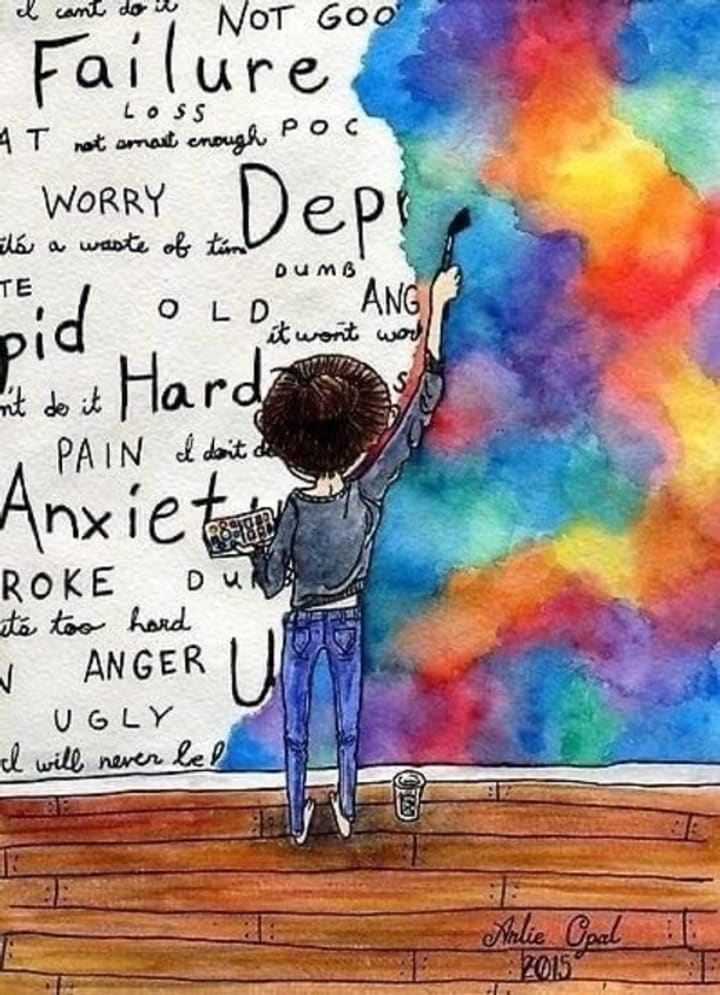
For example, society may have biases against boys studying literature, labeling them as "effeminate" or "non-conforming to gender norms." While girls studying science might not face as much stigma as boys studying humanities, they may still be perceived as "masculine" or less capable compared to boys. This explains why classes often have more female students than male students, or even lack male students entirely. Furthermore, these societal influences can affect students' subject and career choices, potentially leading to studying fields that do not align with their abilities or interests. This can result in psychological consequences such as feelings of inadequacy, alienation, or dissatisfaction in their educational environment.
So, what solutions can address the deep-rooted issue of gender imbalance in subject choices?
First, it must be acknowledged that those who hold biases may not always have a deep understanding or thorough research about the subjects in question. In reality, social sciences are not entirely about emotions; literature or history, for example, also require logical analysis. For instance, the detail of “Bát cháo hành” in the short story "Chí Phèo" (Nam Cao, 1941) can be analyzed through the framework of Maslow's Hierarchy of Needs. Furthermore, literature contains a form of linguistic logic—choosing appropriate forms, expressions, and structuring arguments and evidence—which can be more complex than numerical logic in mathematics. Therefore, it is not the case that boys cannot study social sciences; they can approach these subjects from diverse and enriched perspectives.
Similarly, natural sciences also offer beauty that women can appreciate. Science involves decoding details and discovering the practical uses of phenomena. Mathematics can be applied to visualize space or create sculptures and architectural designs. Moreover, studying natural sciences can bring intellectual satisfaction from solving research problems. These feelings contribute to how people perceive and enjoy their subjects.
From a practical standpoint, men studying literature and the arts, as well as social sciences, can positively impact their lifestyle. They can learn patience and flexibility, avoiding the pitfalls of "toxic masculinity," as research shows that men often face greater psychological burdens from being taught to always appear tough and strong. This can lead to unhealthy habits like smoking and drinking, or more severe behaviors as stress relief. Conversely, women, constrained by emotional stereotypes, might suppress their feelings, leading to isolation or prolonged stress. If women can overcome these biases and be themselves, they too can avoid being victims of "toxic femininity" and other psychological issues.
In addition to raising awareness, implementing action campaigns for gender equality in education is crucial. This can include establishing clubs or engaging with passionate experts about various subjects to discuss their merits, thereby changing perspectives among youth and previous generations. Organizing talks with professionals in their fields can demonstrate that passion and deep understanding can open many doors to success. For instance, Dr. Nguyễn Kim Sơn (Minister of Education and Training, 8/4/2021), who has studied and taught Vietnamese Literature, exemplifies pursuing studies based on passion and personal thinking.
Finally, to achieve gender balance in various fields of study, societal and family perceptions must change, and diverse learning environments need to be created to support both men and women. Educational institutions and communities play a crucial role in shaping students' subject choices by offering diverse learning and practice opportunities, thereby enabling students to explore and develop their personal interests.
About the Creator
Keep reading
More stories from Jim Smith and writers in Confessions and other communities.
Half a Year of Working Full-Time: A Personal Reflection
It’s been more than half a year since I received my university diploma and started working full-time as a Mechanical Design Engineer—right in the field I studied for four years. Everything seems to be going smoothly for someone fresh out of university with little experience: a dynamic work environment, practical exposure, and a diverse range of tasks that touch on construction, electrical systems, and more. On the whole, it’s been fine, in a “I work for you, I learn new things, you pay me, and we’re both happy” kind of way. However, there’s one thing I find troubling... I have to work six days a week, often with overtime, for the past six months.
By Jim Smithabout a year ago in Confessions
Word of the Day: ホチキス
I don't know the word for Staples. I remember I used to think that Hochikisu was an Onomatopoeia for a stapler rather than a brand name. I am pretty sure I already have this title as a theme, which is making me feel many sort of ways as Vocal is harassing me about payments currently.
By Kayla McIntosh20 days ago in Confessions
I Stole Something I Regret
I never thought I would be the kind of person who stole. Not in a big, dramatic way, like the movies show, but small—the kind of theft that whispers its way into your conscience quietly, almost unnoticed. But last year, I did. And the memory of it gnaws at me every time I remember.
By Luna Vaniabout 16 hours ago in Confessions


Comments (1)
Interesting