
Europe and Ukrainian refugees
With the Russian war on Ukraine, Europe found itself facing an unprecedented challenge, not only in the strategic and military sense
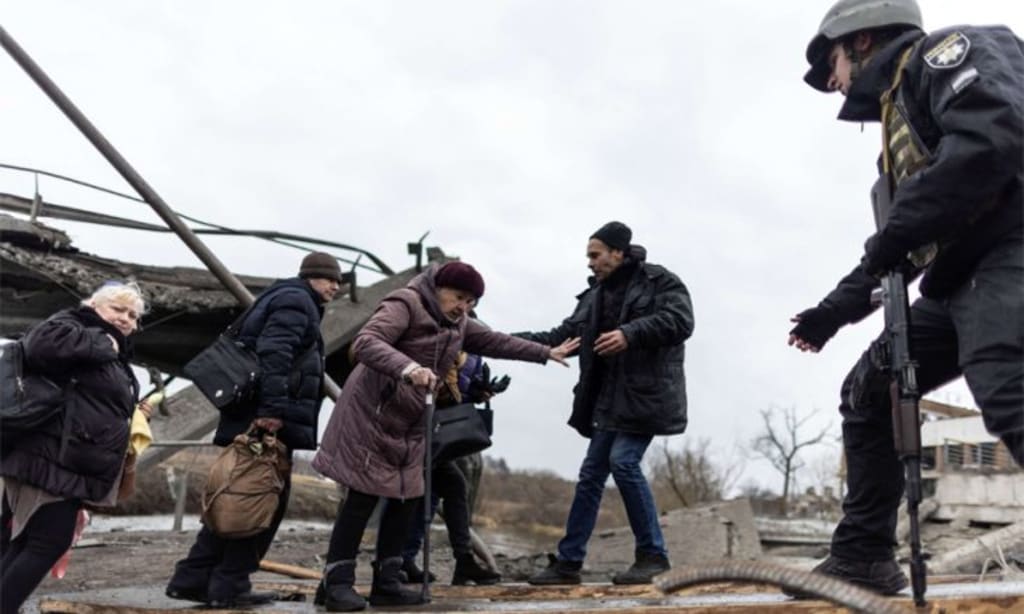
With the Russian war on Ukraine, Europe found itself facing an unprecedented challenge, not only in the strategic and military sense, but also in the humanitarian and societal sense, with this large and continuous influx of Ukrainian refugees towards its various countries.
The European media has been preoccupied since the beginning of the war with its developments on the ground and its possible repercussions on the future of the continent. Then it quickly turned to the suffering of hundreds of thousands who settled among them, with many questions about the length of time that their residencies could reach and the entitlements of that.
Of these refugees, more than ten times the number of refugees who arrived in 2015 from Afghanistan, Syria and Iraq, which prompted the interior ministers of the twenty-seven European Union countries for the first time in history to activate the “temporary protection” system that was established in the wake of the war of disintegration of the former Yugoslavia in the mid-1990s And what was accompanied by a massive wave of immigration to escape a hateful ethno-genocide war. This system was established in 2001 so that Europe would be ready, with full coordination among its countries, to deal quickly and effectively with any similar scene in the future.
“With Ukrainian refugees, Europeans found the meaning of reception,” wrote the French “Le Monde.” According to this system, which has not been tried before, Ukrainians can enter the EU countries even without a travel document, and stay there with a long-term residence permit, without the need to formally apply for asylum, while allowing For them to work and enjoy health and education services, the possibility of obtaining financial and social assistance from the government, as well as moving between the various countries of the Union without a visa to open the way for a significant number of people to go to areas where there are larger Ukrainian communities than others.
It is noteworthy that some European officials were quick to defame the truth of their positions on such immigration, even before the accusations of double standards against them increased in intensity and unity. Syrian and Afghan refugees: “We know the difference between an immigrant and a refugee. We stop the migrants, but the refugees we give them all the help they need.” Moreover, Hungary, where it is almost impossible to apply for asylum on its soil, is the same country that recently passed a decree to protect a mechanism for Ukrainians.
And in her bold article, Le Monde went on to review other paradoxes of a number of European countries. The change that occurred in Denmark, for example, was remarkable. Although Social Democratic Prime Minister Mette Frederiksen set “zero refugees” as her goal, we saw the Minister of Immigration in her government issuing a series of decisions It allows Ukrainians, upon arrival, to obtain the right to work, educate their children, and receive aid, at a time when in recent months the residencies of Syrian immigrants have been canceled and Afghan refugees expelled, as well as the enactment of a new law that further complicates the asylum procedure.
In Greece, the newspaper monitors other paradoxes, as the Minister of Migration called for solidarity with “real refugees” on the same day that the bodies of six people were found trying to enter the country through the shore of the island of Lesbos, and that Greece itself canceled in 2019 housing aid For official refugees registered with it, with a keenness to classify each person wishing to seek asylum as an “economic refugee.” The responsible authorities do not deal with him with the logic of whether he meets the criteria for asylum or not, but with another approach that is keen to know whether the refugee would be in danger or not if he were deported to Turkey from which he often came.
This time, Europe finds itself facing an unprecedented challenge, although it was prepared for it. It has become a duty for it, and not by favor or favour, to provide all Ukrainian refugees with all the necessities of a decent life, and for this we will not hear in the news bulletins about refugee camps or shabby camps in conditions Harsh nature, or disrupts entry procedures, queues, and so on. Moreover, European countries will find themselves facing unknown bets to respond to an “unexpected situation that expands with the years,” according to the French TV news channel (BMF), because if the war continues, “the current refugee migration may turn into a work migration and permanent residence.”
"Europe stands by all who need protection". Thus, European Commission President Ursula von der Leyen declared that "anyone who escapes from Mr. Putin's bombs is welcome in Europe". So far, Europe seems successful in raising the humanitarian challenge posed by the Ukraine war, but it is difficult to ascertain from now on whether it will pass the test to withstand the continuation of this situation for many years to come. , so that the children of Ukraine continue their education.
About the Creator
Keep reading
More stories from Zernouh.abdo and writers in Confessions and other communities.
Asymmetry in the cyber threat between Russia and Ukraine
In the weeks leading up to Russia's invasion of Ukraine, Ukraine was hit by a distributed denial of service (DDoS) attack, in which servers were flooded with illegal requests by loading the server infrastructure too high, causing it to stop working. A day before the Russian invasion of Ukraine in particular, important government sites in the capital, Kyiv, were paralyzed, as well as the headquarters of the government, parliament, the Ministry of Foreign Affairs and other state institutions. Ukraine has blamed Moscow for the cyber attack.
By Zernouh.abdo4 years ago in Confessions
The Piggy Project
I’ve had so many names in this life I lose track of which ones were ever really mine and which ones I wore because someone needed me to. Some were handed to me before I had words to refuse them, before I knew what they meant, before I knew I could say no. Most weren’t meant to hurt. That doesn’t mean they didn’t leave marks. Marks that told me who I belong to, who I am by way of who claims me, recognizes me in the good and bad, who walks beside me.
By Fatal Serendipitya day ago in Confessions
Tatt~Master
— Assembly Line Tatt Machine ~ Impressions to Impress — As I begin to understand more about the Tattoo Phenomenon. I've written silly, yet verbatim, dating site anecdotes in 'Frazzled.' So let me ask you: Would you be More attracted to someone slathered with tattoos, or Less?
By Jay Kantor5 days ago in Humor


Comments
There are no comments for this story
Be the first to respond and start the conversation.